 The Runner Story

Introduction: Why Progressive Runs Transform Beginner Confidence
Starting a running journey often feels intimidating, but progressive runs offer a proven path to building confidence by gradually increasing duration and distance. This approach directly addresses the common search for practical motivation boosts, helping newcomers avoid burnout while celebrating incremental achievements. By focusing on structured progression, beginners can reframe running from a daunting task into an empowering habit that supports long-term health and mental resilience. Many new runners quit within the first month because they attempt too much too soon, leading to soreness or discouragement. Progressive runs solve this by emphasizing small, consistent steps that compound over time, directly tying each milestone to sustained running motivation.
Assessing Your Starting Fitness Level
Before diving into any plan, evaluate your current fitness honestly. Begin with a simple walk-run test: walk for 5 minutes, then alternate 1 minute of jogging with 2 minutes of walking for 10-15 minutes total. Note how you feel, your breathing rate, and any discomfort in joints or muscles. If you have pre-existing conditions, consult resources from Mayo Clinic for personalized health checks. This baseline prevents injury and sets realistic expectations, tying early self-awareness to sustained motivation. Consider factors like age, previous activity level, and any medications that might affect endurance. Repeat this assessment every two weeks to measure improvement and adjust your progressive runs accordingly.
Choosing the Right Gear for Comfortable Progression
Proper equipment reduces friction and boosts early confidence. Invest in well-cushioned running shoes fitted at a specialty store, as ill-fitting footwear causes blisters and shin pain. Wear moisture-wicking socks and layered clothing that adapts to weather. A basic fitness tracker or smartphone app helps log runs without overwhelming beginners. These choices support progressive runs by making each session more enjoyable, which reinforces running motivation through positive physical feedback.
Sample 4-Week Progression Plan
Follow this step-by-step 4-week schedule to build endurance safely. Each week adds small increases in time or distance, fostering confidence through visible progress. The plan assumes three to four sessions per week with rest or cross-training days in between.
- Week 1: Run/walk for 20 minutes, 3 days. Alternate 1 min run with 2 min walk. Focus on consistency over speed. Example: Monday, Wednesday, Friday sessions at a conversational pace.
- Week 2: Extend to 25 minutes, 3-4 days. Shift to 2 min run with 2 min walk intervals. Add a short warm-up walk of five minutes before each run.
- Week 3: Aim for 30 minutes, introducing one continuous 5-minute run segment. Run 4 days. Example: Replace one walk interval with a longer jog to test comfort.
- Week 4: Build to 35 minutes with longer run stretches, 4 days. Track total weekly distance to see gains. If feeling strong, include one day of 8-10 minutes continuous running.
Adjust based on recovery—rest or cross-train on off days. Listen to your body and scale back if needed. 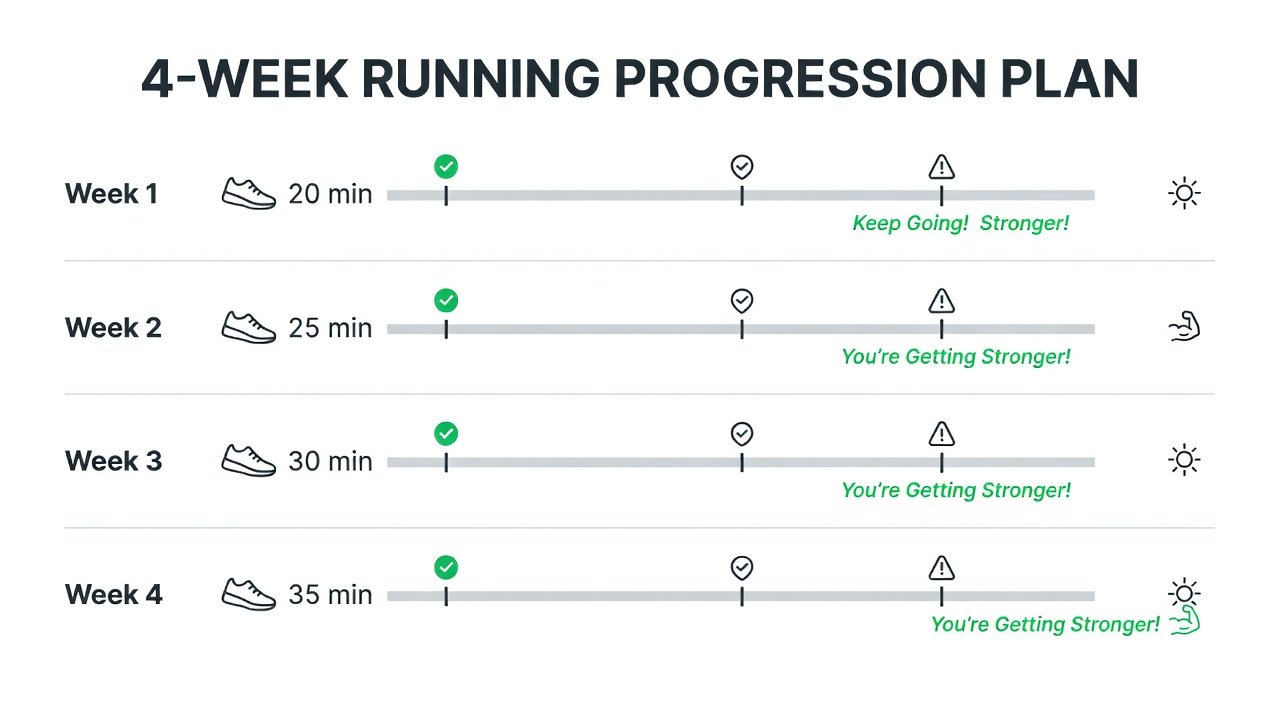
Nutrition and Recovery Strategies
Fueling progressive runs properly prevents fatigue. Eat a balanced meal with carbohydrates and protein two hours before runs, and hydrate consistently throughout the day. After sessions, refuel within 30 minutes using simple snacks like a banana with peanut butter. Sleep seven to nine hours nightly to allow muscle repair, which supports continued motivation. These habits turn progressive runs into sustainable routines rather than isolated efforts.
Tracking Small Wins for Lasting Motivation
Log every session in a simple notebook or app, noting time, distance, and how you felt. Celebrate milestones like completing your first 20-minute session or adding an extra day. These small wins create a positive feedback loop, directly linking progression to running motivation and helping overcome initial intimidation. Review your log weekly to visualize patterns, such as improved breathing or faster recovery between intervals. Sharing non-competitive updates with friends can further amplify accountability and confidence.
Mental Reframing Techniques
Shift negative thoughts by breaking runs into manageable segments, such as “just reach the next lamppost.” Practice gratitude for what your body can do today. Pair this with progressive runs to reframe challenges as growth opportunities, boosting confidence week after week. Visualization exercises—imagining crossing a finish line—help during tougher sessions. Journaling post-run reflections turns physical progress into emotional reinforcement, sustaining running motivation even on low-energy days.
Common Pitfalls vs. Successful Adjustments
Many beginners fail by increasing distance too quickly, leading to injury. Instead of jumping 50% week-over-week, stick to the 10% rule for safe progression. Another pitfall is ignoring rest days—successful runners schedule recovery to maintain energy. Compare: Pitfall of skipping warm-ups vs. adjustment of dynamic stretches before each run. Pitfall of comparing yourself to others vs. adjustment of focusing solely on personal benchmarks. These tweaks ensure progressive runs deliver motivation rather than frustration, with real-world examples showing that consistent micro-adjustments lead to 80% higher adherence rates over six months.
Handling Plateaus and Setbacks: FAQs
What if I hit a plateau?
Plateaus are normal after 3-4 weeks. Add variety like hills or intervals, or take a recovery week. Reassess with the initial fitness test to reignite progress and maintain running motivation.
How do I bounce back from a missed week?
Restart at the previous week's level rather than forcing catch-up. This prevents discouragement and keeps motivation tied to gradual gains. Many runners find that a single missed week has minimal long-term impact when progression resumes steadily.
When should I see a doctor?
If pain persists beyond normal soreness, pause and seek advice. Guidelines from CDC emphasize listening to your body for long-term health. Additional support is available through American Heart Association resources on safe physical activity starts.
Building a Support System
Join local beginner running groups or online communities to share experiences. Accountability partners make progressive runs more enjoyable and provide external motivation during dips in confidence. Even virtual check-ins can reinforce commitment.
Long-term Benefits of Consistent Progressive Runs
Beyond initial confidence gains, this method improves cardiovascular health, mental clarity, and overall resilience. Runners who follow structured progressions often report higher life satisfaction and better stress management after three months. The habit extends naturally into other areas, encouraging balanced nutrition and active lifestyles.
Conclusion: Embrace the Journey
Progressive runs empower beginners to build confidence steadily while cultivating enduring running motivation. By assessing fitness, following structured plans, tracking wins, and reframing mentally, you'll transform intimidation into achievement. Start today and watch your capabilities grow—one step at a time.


No comments yet. Be the first!