 The Runner Story

Introduction: Why Cross-Training Matters for New Runners
Starting a running routine is exciting, but many beginners face the same challenge: overuse injuries and fading motivation. Cross-training offers a smart solution by mixing running with complementary activities such as cycling, swimming, and strength circuits. This approach builds fitness while giving your body time to recover from repetitive impact. The result is sustainable progress without burnout. Research from the Centers for Disease Control and Prevention shows that varied physical activity improves adherence and reduces injury risk. For beginners, blending runs with other workouts keeps training fresh and enjoyable. Many new runners abandon their goals within the first month because of boredom or nagging aches. Adding variety through cross-training addresses both issues at once, creating a balanced routine that supports both physical and mental health.
Key Benefits of Cross-Training for Beginners
Cross-training delivers multiple advantages that directly support long-term running success. First, it reduces the risk of common running injuries like shin splints and runner’s knee by lowering weekly impact. Second, it improves overall cardiovascular fitness through low-impact options such as swimming. Third, it targets different muscle groups, creating balanced strength that supports better running form. Variety also combats mental fatigue. Repeating the same run every day quickly becomes monotonous, but alternating activities keeps workouts engaging and helps maintain consistency over months rather than weeks. For example, a beginner who cycles on off days often reports feeling stronger on run days because the legs receive active recovery without full rest. Strength circuits further enhance this by building core stability and glute power that translate directly into smoother strides and fewer side stitches.
How to Choose Cross-Training Activities
Selecting the right activities depends on your current fitness level, preferences, and available equipment. Beginners should start with low-impact options that complement running without adding excessive stress. Cycling is excellent for building endurance with zero impact. Stationary bikes or outdoor trails work well for all levels and allow you to control intensity easily. Swimming provides full-body conditioning and active recovery, making it ideal if you have access to a pool or open water. Strength circuits focus on bodyweight moves like squats, lunges, planks, and push-ups to build running-specific power. Yoga or Pilates improves flexibility and core stability while promoting relaxation. Match activities to your schedule and enjoyment level. If you dislike the gym, choose outdoor cycling or home-based strength sessions. Always begin at a moderate intensity and progress gradually. Compare options by asking yourself which ones you can realistically perform twice a week without dread. A runner who loves water might prioritize swimming twice weekly, while someone with limited space may favor bodyweight circuits performed in the living room.
Sample 4-Week Beginner Cross-Training Schedule
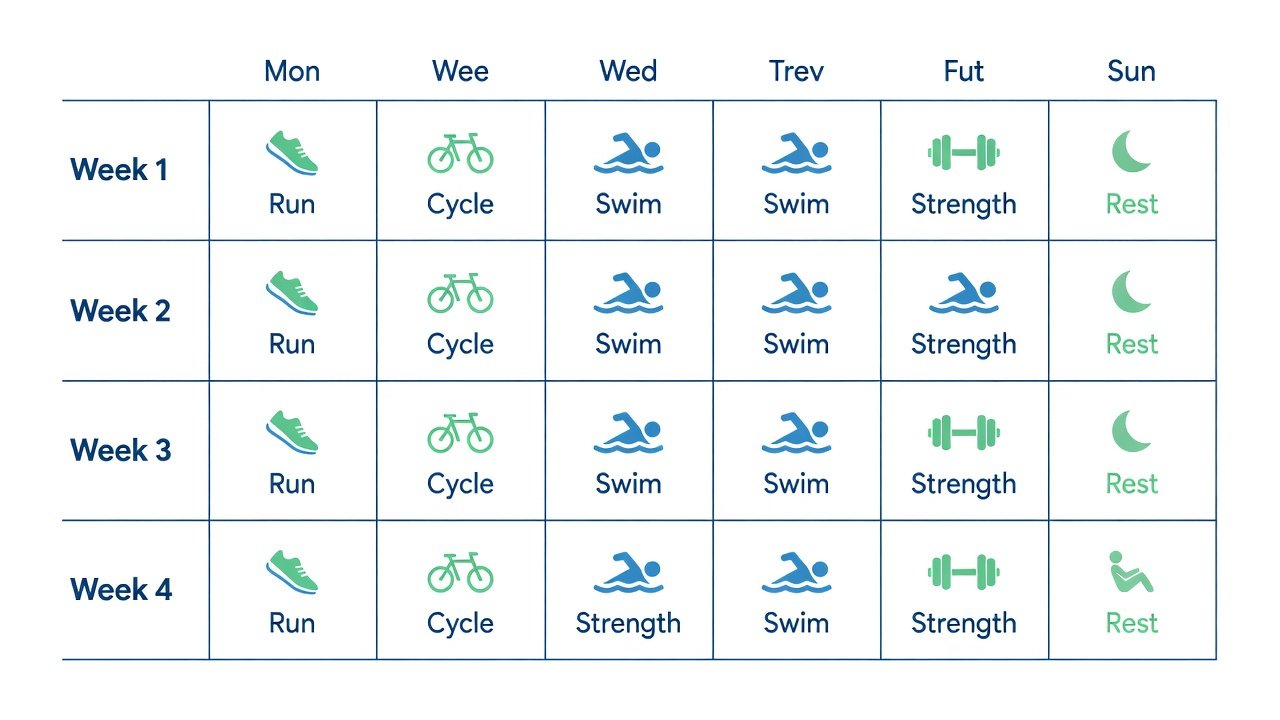
Here is a practical four-week plan that blends running with cross-training. Each week includes three run days, two cross-training days, and two rest or active-recovery days. Adjust distances and times based on your fitness. In Week 1, run 20 minutes at an easy conversational pace on Monday, Wednesday, and Friday. On Tuesday perform a 30-minute steady bike ride focusing on cadence rather than speed. Thursday features a simple strength circuit of three rounds: 10 bodyweight squats, 20-second planks, and 10 walking lunges per leg. Rest completely on Saturday and Sunday to allow adaptation. Week 2 increases runs to 25 minutes while keeping the same structure. Replace Tuesday cycling with a 30-minute swim using a mix of freestyle and backstroke. Lengthen the Thursday strength session to include push-ups and glute bridges for posterior chain development. By Week 3, runs reach 25 to 30 minutes. Swap one run for a 40-minute bike ride that includes short intervals of higher effort. Add a 30-minute yoga flow on one cross-training day to emphasize mobility. Week 4 consolidates gains with three 30-minute runs and a balanced mix of cycling plus strength circuits. Finish the week with one longer easy run to test improved endurance. Track each session in a simple notebook or app noting time, effort, and how your body responded. Increase run time by no more than 10 percent per week to stay safe and avoid setbacks.
Integrating Recovery Into Your Routine
Recovery is not optional—it is essential for progress. Schedule at least two full rest days weekly and use cross-training days as active recovery when possible. Prioritize sleep of seven to nine hours nightly, proper hydration throughout the day, and balanced meals rich in protein and complex carbohydrates. Gentle stretching or foam rolling after workouts helps manage soreness and maintain range of motion. Listen to your body: persistent pain signals the need for extra rest rather than pushing through. Beginners often overlook that cross-training itself serves as a recovery tool because it promotes blood flow without pounding the joints. Incorporating a short walk on rest days can further aid circulation without counting as structured exercise.
Improving Running Form Through Cross-Training
Many beginners struggle with inefficient form that leads to early fatigue. Cross-training addresses this indirectly but powerfully. Strength circuits targeting the hips and core reduce excessive torso rotation during runs. Swimming encourages rhythmic breathing patterns that carry over to better oxygen use on the road. Cycling strengthens the quadriceps and hamstrings in a non-weight-bearing environment, supporting a more stable knee drive. Over several weeks you may notice smoother cadence and reduced bouncing because supporting muscles have caught up to the demands of running. To maximize these gains, perform form drills such as high knees or butt kicks once a week after an easy run.
Tracking Progress and Avoiding Common Pitfalls
Measure success by consistency rather than speed alone. Note how you feel after each week and celebrate completing the schedule. Common mistakes include increasing mileage too quickly, skipping strength work, and ignoring rest days. Avoid these by following the plan above and consulting a doctor before starting if you have any health concerns. The American Heart Association recommends gradual progression for new exercisers. Another frequent error is neglecting nutrition on cross-training days, which can leave you fatigued for subsequent runs. Keep a weekly review where you assess energy levels, sleep quality, and any emerging aches to catch problems early.
FAQ
How do I fit cross-training into a busy schedule?
Start with two 30-minute sessions per week. Many beginners find early mornings or lunch breaks work best. Short, focused workouts are more sustainable than long sessions you cannot maintain. Consider combining strength circuits with family time by involving children or partners in bodyweight exercises.
Can I skip runs and only do cross-training?
While cross-training builds fitness, running-specific practice is still needed to improve running economy. Aim for at least two runs weekly once you feel comfortable. Pure cross-training works temporarily during injury recovery but will not fully prepare you for race distances.
How should I track progression?
Use a simple log noting duration, perceived effort, and how your body feels. Apps or journals help identify patterns and celebrate improvements over time. Review monthly to adjust intensity or add new activities that keep motivation high.
What if I experience joint pain during cross-training?
Stop the activity immediately and assess whether it is sharp or dull. Switch to even lower-impact options like water walking and consult a medical professional if pain persists beyond two days. Early intervention prevents small issues from becoming chronic problems.
Is it okay to do strength training on the same day as a run?
Yes, but separate the sessions by at least four hours when possible. Perform strength work after an easy run or on a dedicated day to avoid compromising run quality. Beginners often benefit from full rest between strength and run days during the first month.
Conclusion
Cross-training transforms running from a high-risk activity into a balanced, enjoyable habit. By mixing cycling, swimming, and strength work with your runs, you reduce injury risk, boost motivation, and build a stronger body. Follow the 4-week schedule, choose activities you enjoy, and prioritize recovery. With consistency, you will see steady progress and stay motivated for months and years ahead. The key is viewing cross-training not as extra work but as an investment in longevity as a runner.


No comments yet. Be the first!