 The Runner Story
Introduction: Making Running Stick Without Willpower
Starting a running routine as a beginner often feels overwhelming. Many people set ambitious goals only to quit after a few weeks because motivation fades. Habit stacking offers a practical solution by linking new running habits to existing daily routines. This approach reduces reliance on fleeting motivation and builds consistency through small, automatic triggers. In this guide, you will discover exactly how to apply habit stacking to running, why it outperforms standalone routines, and how to create personalized stacks that last through busy periods and changing conditions in 2026.
Habit stacking works because it leverages behaviors you already perform without thinking. Instead of carving out brand-new time slots that compete with your schedule, you attach running to something reliable like your morning coffee or evening commute. Beginners who use this method report higher adherence rates because the decision-making load drops dramatically. Over time, the stacked action becomes as automatic as brushing your teeth.
What Is Habit Stacking and Why It Beats Cold-Turkey Starts
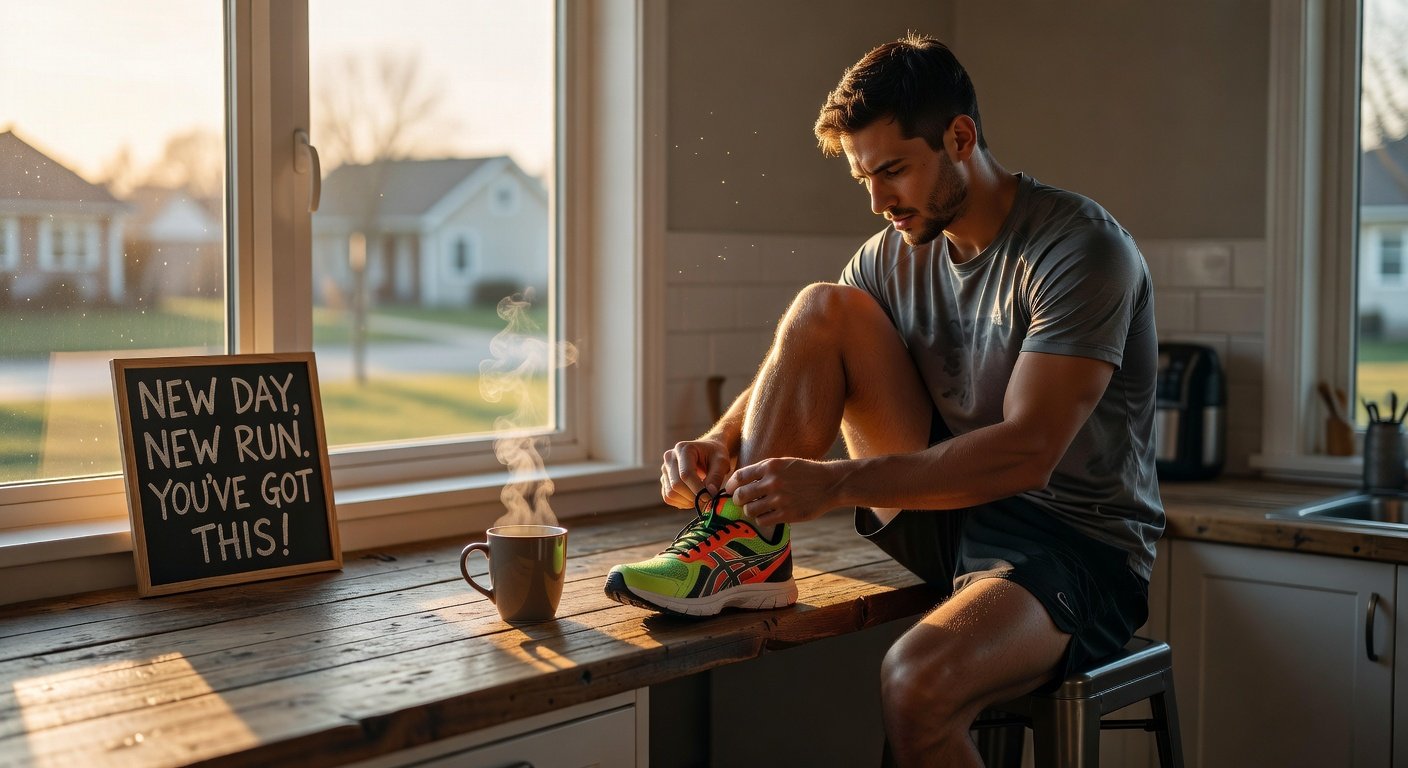
Habit stacking, popularized by James Clear in Atomic Habits, means pairing a new behavior with an existing one using the formula: "After [current habit], I will [new habit]." For runners, this could translate to "After I finish my coffee, I will put on my running shoes." This simple structure removes the need to decide when or whether to run each day.
Standalone routines often fail because they require creating a new context from scratch. Cold-turkey attempts demand high levels of motivation every single day, which is unsustainable for most beginners. Habit stacking lowers that barrier by piggybacking on autopilot behaviors. Research from behavioral psychology shows that anchoring new actions to established cues increases follow-through by making the new action feel like a natural extension rather than an extra chore. In contrast, forcing a run without an anchor often leads to skipped days and eventual abandonment of the goal.
Step-by-Step Process to Build Your Running Habit Stacks
- Identify your daily anchors. List three to five consistent activities you already do without fail, such as brewing coffee, finishing lunch, walking the dog, or closing your laptop at the end of the workday.
- Choose a tiny running action to stack. Start with something minimal like a five-minute jog or even just changing into running clothes to build momentum without pressure.
- Write the full stack using the clear formula and place it where you will see it daily, such as on a sticky note near your coffee maker.
- Test the stack for one week and adjust timing or duration based on how it feels, keeping the trigger consistent.
- Scale the action gradually once the stack feels automatic, adding distance or intensity only after the foundation is solid.
This structured process removes guesswork and keeps stacks simple enough for true beginners to maintain long term.
3-5 Practical Habit Stack Examples for Beginners
Here are ready-to-use examples that fit common lifestyles and can be adapted as your fitness improves:
- After I pour my morning coffee, I will walk outside for a five-minute jog around the block before returning to drink it.
- After I finish my workday lunch, I will change into running shoes and complete a 10-minute walk-run interval session in a nearby park.
- After I brush my teeth at 7 p.m., I will do a quick 15-minute neighborhood loop before settling in for the evening wind-down.
- After I drop the kids at school, I will run one mile on the nearby path before heading to work, using the time for mental clarity.
- After I close my laptop at the end of the day, I will stretch and jog in place for three minutes to unwind and transition out of work mode.
These stacks can be performed in any weather by adjusting intensity or moving indoors on a treadmill or even marching in place. The key is keeping the trigger identical every day so the running action becomes automatic over time.
Tracking Progress with Simple Tools
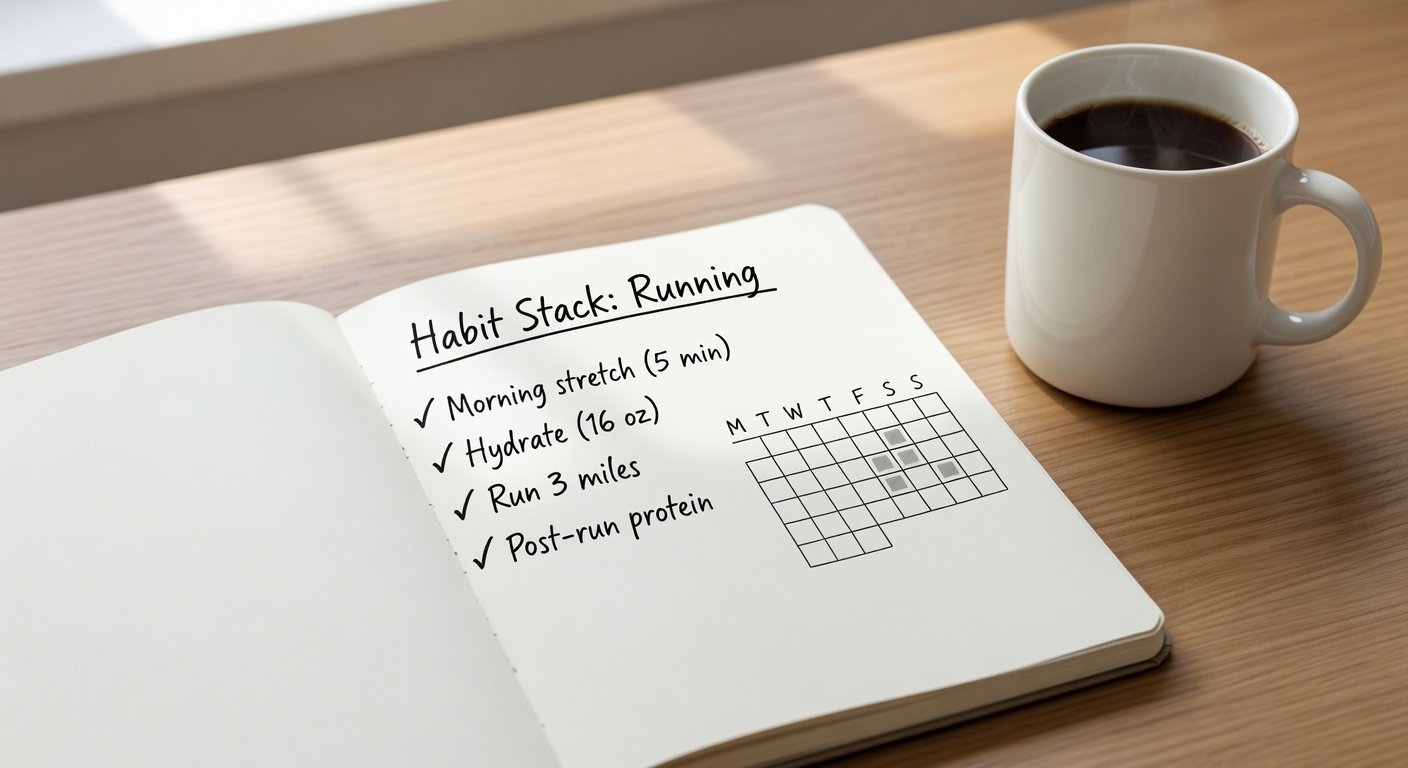
Tracking reinforces the habit without adding complexity. Use a basic notebook to mark each completed stack with a simple checkmark or choose free apps like Streaks or Habitica. Many runners also log distance and how they felt using the free version of Strava. Review your log weekly to celebrate consistency rather than speed or mileage. This positive feedback loop strengthens the neural pathways that make the stacked habit feel natural and rewarding.
Benefits: Reduced Decision Fatigue and Real Success Stories
Habit stacking dramatically cuts decision fatigue because the trigger cue handles the "when" question for you. Beginners who adopt this method often run three to four times per week within the first month, compared to the typical one-week dropout rate for unstructured plans. According to guidelines from the Centers for Disease Control and Prevention, regular physical activity like running supports overall health when done consistently, and habit stacking makes that consistency achievable.
Take Sarah, a 34-year-old office worker who struggled for years with starting and stopping. By stacking a short jog after her 6 a.m. coffee routine, she completed her first 5K three months later and continues running regularly. Another beginner, Marcus, linked evening runs to walking his dog and now logs consistent mileage even on demanding workdays. These stories highlight how small, anchored actions compound into lasting lifestyle changes that feel effortless after the initial weeks.
Mistakes to Avoid When Building Running Stacks
Many beginners make avoidable errors that derail progress. One common mistake is choosing an anchor that is not truly daily or consistent, such as "after I feel motivated," which defeats the purpose. Another is starting with too long a run instead of a tiny action. Always begin small. Finally, skipping the tracking step means missing the motivational boost from seeing progress accumulate. Avoiding these pitfalls keeps your stacks effective and sustainable.
FAQs: Adapting Stacks for Busy Schedules and 2026 Weather
How do I adapt stacks when my schedule changes?
Keep the trigger flexible. If your usual morning coffee time shifts, move the stack to after your new consistent anchor, such as finishing breakfast or arriving home from errands. Maintain the same tiny starting action so momentum does not break during transitions.
What if bad weather hits in 2026?
Prepare indoor alternatives in advance. Stack a treadmill jog or indoor marching routine after the same trigger. Many runners keep a yoga mat and running shoes visible near their coffee station as a visual cue for weather-proof days. Resources like those from the Mayo Clinic emphasize the importance of adapting exercise routines to maintain consistency year-round.
How long until the stack feels automatic?
Most beginners notice the behavior becoming automatic within 18 to 25 days when the stack remains small and the trigger stays consistent, though individual results vary based on daily adherence.
Can I stack multiple runs in one day?
Yes, but start with one stack to build the foundation. Once the first stack is solid, you can add a second one, such as an evening cool-down jog after dinner, without overwhelming your routine.
What gear do beginners need for stacked runs?
Minimal gear works best at the start: comfortable shoes, weather-appropriate clothing, and perhaps a basic fitness tracker. Focus on the habit rather than expensive equipment until the routine is established.
Conclusion
Habit stacking transforms running from a willpower battle into a seamless part of your day. By anchoring short runs to existing routines, tracking simply, avoiding common mistakes, and preparing for schedule or weather shifts in 2026, beginners can build motivation that actually lasts. Start with one stack today and watch your consistency grow into a lifelong habit that supports better health and energy.


No comments yet. Be the first!