 The Runner Story

Why Running Form Matters for New Runners
Proper running form is one of the most effective ways beginners can avoid early burnout and sustain long-term motivation. When your body moves efficiently, runs feel easier, injuries decrease dramatically, and the mental barrier to lacing up shoes shrinks over time. Poor form often leads to unnecessary fatigue, nagging aches, and the desire to quit before any real progress takes hold. This comprehensive guide focuses on practical technique fixes that directly address search intent around injury prevention, energy conservation, and building enjoyment from the first weeks onward.
Many new runners begin with high enthusiasm but stop within the first month because discomfort appears quickly. By aligning posture correctly, refining foot strike patterns, controlling arm swing, and syncing breath with steps, you create a smoother, more economical stride that conserves energy and reduces impact forces on joints. Over months these adjustments turn running into an activity you anticipate rather than avoid, setting the foundation for consistent training through 2026 and beyond.
Posture Alignment Basics
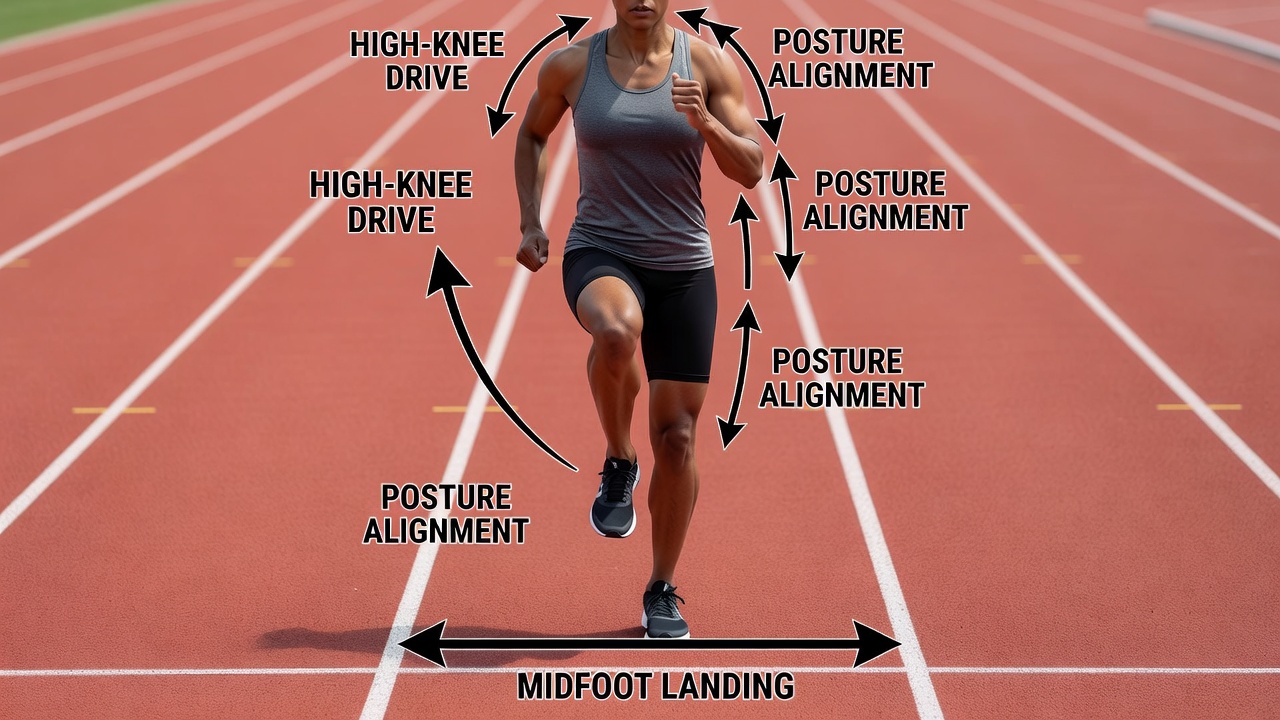
Stand tall with your head balanced over your shoulders and shoulders relaxed away from your ears. Imagine a string gently pulling the crown of your head toward the sky while keeping your gaze forward about 20 to 30 feet ahead, never down at your feet. Maintain a slight forward lean originating from the ankles rather than the waist to encourage forward propulsion without straining the lower back. Lightly engage your core to support the spine and prevent the common tendency to slouch, which compresses the diaphragm and makes breathing labored.
Real-world example: Sarah, a complete beginner, noticed her shoulders creeping toward her ears after only five minutes of running. After consciously relaxing them and performing a quick posture check every half mile, her easy runs extended comfortably from 15 minutes to 35 minutes within three weeks, and she reported feeling far less tension in her neck and upper back.
Foot Strike Patterns Explained
Many beginners land heavily on their heels, creating a braking effect and sending shock waves up the legs that contribute to shin splints and knee discomfort. Aim instead for a midfoot strike where your foot lands directly beneath your hips with a relatively flat foot. This distributes impact forces more evenly across the foot and promotes continuous forward momentum. Avoid overstriding, where the foot lands too far ahead of your body and acts like an inefficient brake on every step.
Step-by-step drill: Practice high knees in place for 30 seconds while focusing on landing midfoot with quiet steps. Transition immediately into slow jogging while maintaining the same light, quick touch. Perform this sequence three times during the first 10 minutes of each run for the initial month to rewire the movement pattern.
Arm Swing Mechanics
Keep elbows bent at approximately 90 degrees and swing your arms forward and backward in a straight line, never across the midline of your body. Hands remain relaxed with fingers lightly curled as though cradling a delicate butterfly. Excessive side-to-side arm movement wastes energy and can cause unwanted torso rotation that disrupts balance and rhythm. Drive the arms in sync with the legs to maintain an even cadence and minimize upper-body tension that often creeps in during longer efforts.
Example adjustment: Mark recorded his running form on video and observed his arms crossing his chest with each stride. After deliberately swinging them straight back and forth for two focused minutes every mile, his pace improved by nearly 20 seconds per mile with no additional perceived effort, and he finished runs feeling less fatigued in his shoulders.
Breathing Synchronization with Steps
Match your inhales and exhales to your footfalls to create a steady supply of oxygen and reduce the likelihood of side stitches. A reliable starting pattern is inhaling for two steps and exhaling for two steps, known as a 2:2 rhythm. This cadence keeps the body relaxed and prevents holding the breath, which many beginners do unconsciously when they feel winded. If breathing becomes rapid or shallow, slow your pace slightly while continuing the pattern until it stabilizes, then gradually increase effort again.
Drill: Begin by walking using a strict 2:2 count, then progress to jogging at an easy effort. Practice this synchronization during at least half of every easy run to make it an automatic habit within four to six weeks.
Common Mistakes to Avoid
New runners frequently make several form errors that compound fatigue and raise injury risk. These include looking down at the ground, which rounds the shoulders and restricts breathing; clenching fists tightly, which travels tension up the arms and into the neck; and bouncing excessively with each stride instead of maintaining a smooth, forward-moving motion. Another frequent issue is taking overly long strides on hills, which increases impact and quickly drains energy. Addressing these early prevents the frustration that causes many beginners to abandon running altogether.
Step-by-Step Drills with Descriptions
- Wall lean drill: Stand an arm’s length from a wall, lean forward from the ankles while keeping the body straight, then step away and jog while holding that lean. This ingrains proper forward posture.
- Butt kicks: Jog forward while gently kicking your heels toward your glutes to promote quick foot turnover and encourage midfoot landing.
- Single-leg balance: Stand on one leg for 30 seconds, then switch, to strengthen stabilizing muscles and improve core engagement during runs.
- Stride recovery drill: After every five minutes of running, take 20 seconds to focus exclusively on light, quick steps before returning to normal pace.
- Arm isolation drill: Run with hands lightly touching your shoulders for one minute to feel the correct 90-degree elbow bend and straight swing path.
Real-World Case Studies of Form Adjustments
Consider Lisa, who struggled with recurring calf tightness. After switching from a pronounced heel strike to a midfoot landing and shortening her stride slightly, the tightness disappeared within two weeks and she completed her first 5K without walking breaks. Another runner, Jamal, experienced side stitches on nearly every outing until he adopted a consistent 2:2 breathing pattern; the stitches vanished, allowing him to extend his longest run from 25 to 45 minutes comfortably.
Short FAQ on Common Beginner Mistakes
Q: Should I buy expensive running shoes right away? Prioritize learning good form first; visit a specialty running store for a professional gait analysis once you are running consistently three times per week.
Q: How often should I check my form during a run? Perform a quick mental scan every five to ten minutes until the habits become automatic, usually after four to six weeks of deliberate practice.
Q: Can bad form really cause knee pain? Yes, repeated heel striking combined with overstriding places extra stress on the knees; shifting to a midfoot strike under the hips often reduces this discomfort noticeably.
Q: What if I feel awkward when trying new form cues? Awkwardness is normal for the first two to three runs. Start with one cue per session and allow your body time to adapt before adding the next.
Q: How long until form improvements feel natural? Most beginners report noticeable changes in comfort and efficiency within three to four weeks of consistent attention.
Weekly Form Checklist
- Perform a posture check at the start and midpoint of every run
- Practice at least one foot-strike drill during the warm-up portion
- Monitor arm swing for two full minutes without distraction
- Maintain a 2:2 breathing pattern for a minimum of half the total run time
- Note any new discomfort and adjust the following session accordingly
- Record total minutes run and one positive form observation in a journal
- Watch a short form video once per week to reinforce technique
Track these items in a simple notebook or running app throughout 2026. Small weekly improvements compound into significant gains in both performance and enjoyment.
Consistent attention to these foundational elements builds confidence and turns running into a sustainable habit. Start with one or two focus areas per week, remain patient with the learning curve, and celebrate every smoother, pain-free outing. For additional evidence-based guidance on physical activity and injury prevention, visit Mayo Clinic, explore resources at CDC, and review recommendations from American Heart Association.


No comments yet. Be the first!