 The Runner Story

Why Rest Days Matter for New Runners
Starting a running routine is exciting, but many beginners make the mistake of running every day without breaks. This often leads to burnout, stalled progress, or injury. Strategic rest days are essential for sustainable habits. They allow muscles, tendons, and the cardiovascular system to repair and adapt, ultimately making you a stronger, more motivated runner. Recovery is not laziness—it is part of the training process. Research from authoritative health organizations shows that adequate rest improves performance and reduces overuse injuries common in new runners. Without planned recovery, enthusiasm quickly fades as fatigue builds.
Many new runners begin with high motivation but hit a wall within weeks because they overlook the body's need for downtime. Rest days create the foundation for consistent progress, helping you enjoy running for months and years rather than quitting after a short burst of activity.
The Science of Recovery in Running
When you run, you create micro-tears in muscle fibers. During rest, the body repairs these tears, building stronger tissue. This adaptation process is called supercompensation. Without rest, the body cannot complete this cycle, leading to accumulated fatigue. The Mayo Clinic emphasizes that rest is critical for preventing overtraining syndrome in endurance activities. Hormonal balance also plays a role. Chronic running without recovery elevates cortisol, which can increase stress and reduce motivation. Proper rest supports better sleep, lower inflammation, and improved mood through endorphin regulation.
Additionally, connective tissues like tendons and ligaments adapt more slowly than muscles. Rest gives these structures time to strengthen, lowering injury risk. Cardiovascular recovery also occurs during downtime, allowing heart rate and blood pressure to normalize. Studies consistently show that runners who incorporate rest see greater improvements in endurance and speed over time compared to those who train continuously without breaks.
Recognizing Signs of Overtraining
Beginners often ignore early warning signs. Common indicators include persistent muscle soreness lasting more than 48 hours, elevated resting heart rate, trouble sleeping, irritability, and loss of enjoyment in runs. If you notice declining performance despite consistent effort, it is time to insert rest days. Other symptoms can include frequent minor illnesses, mood swings, or a sudden drop in appetite. Addressing these signs early prevents full burnout and keeps motivation high.
- Persistent fatigue that does not improve with one easy day
- Nagging aches in knees, shins, or hips that linger
- Frequent colds or slow recovery from minor illnesses
- Loss of appetite or sudden weight changes
- Irritability or lack of motivation for daily activities
- Stiff joints or reduced range of motion during warm-ups
Tracking these signals in a simple journal helps beginners spot patterns before they become serious problems.
Sample Weekly Schedule with Rest Integration
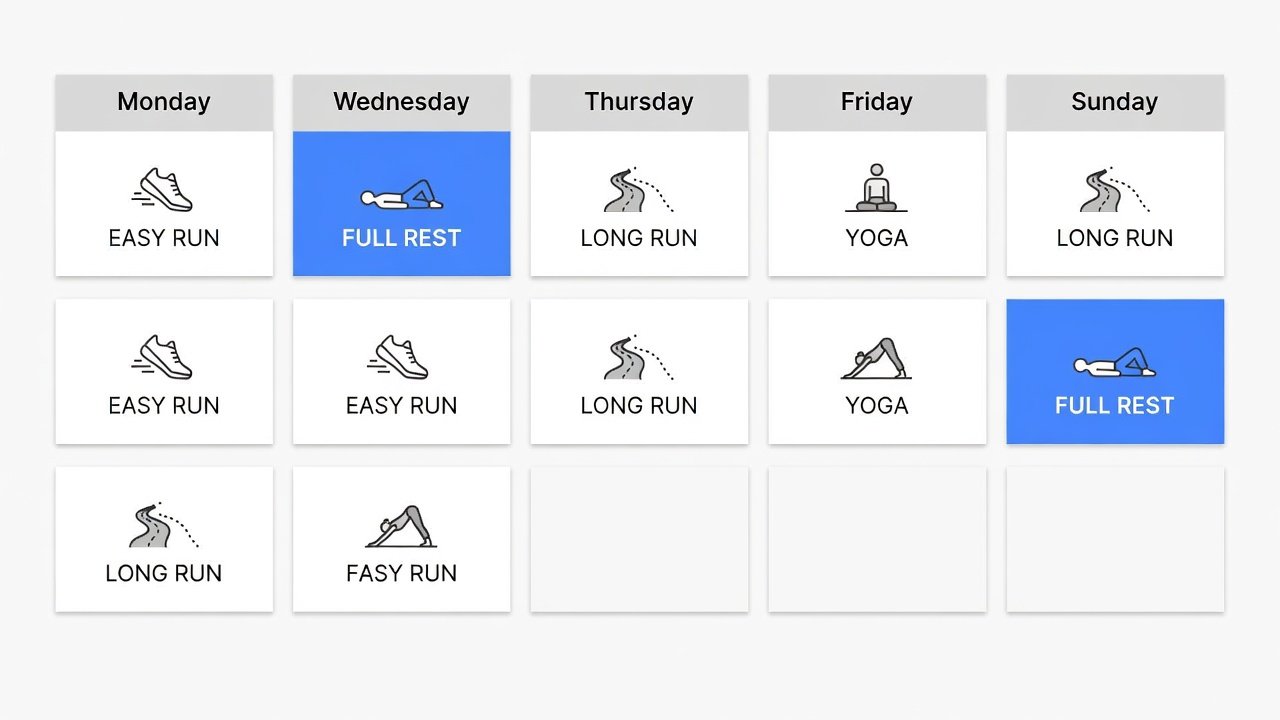
Here is a realistic beginner plan that includes two full rest days and one active recovery day. This structure provides four running sessions while protecting recovery. Adjust based on your energy levels each week.
- Monday: Easy 20-minute run at conversational pace
- Tuesday: Rest day (complete rest or light walking only)
- Wednesday: 25-minute run with walk intervals if needed
- Thursday: Active recovery (yoga or cycling at low intensity)
- Friday: Rest day focused on hydration and sleep
- Saturday: Longer run of 30-40 minutes with hills if comfortable
- Sunday: Gentle stretching or a short walk
A more advanced beginner variation might add a tempo run on Wednesday while keeping the same rest structure. Always listen to your body and swap a run for rest if soreness persists.
Active Recovery Options That Actually Help
Rest does not always mean lying on the couch. Active recovery promotes blood flow without adding stress. Effective options include 20-30 minutes of walking, swimming, gentle yoga, or foam rolling. These activities aid circulation and reduce stiffness while giving running muscles a break. For example, a slow 30-minute bike ride on Thursday can improve mobility without impact. Beginners should start with 15-20 minutes and gradually increase duration. The goal is gentle movement that leaves you feeling refreshed rather than tired.
Real Beginner Examples and Outcomes
Consider Sarah, a 35-year-old office worker who started running three times weekly with two rest days. After eight weeks, she increased her distance by 50% without injury and reported higher energy at work. In contrast, her friend Mark ran daily and developed shin splints by week six, forcing a two-week break that killed his motivation. Another beginner, Jamal, followed a similar rest-integrated plan and completed his first 5K feeling strong. The difference came down to respecting recovery. These examples illustrate how rest supports steady gains instead of setbacks.
Rest Days vs Continuous Training: A Clear Comparison
Runners who schedule rest days report higher consistency over six months. They experience fewer injuries and maintain enthusiasm longer. Those who skip rest often see early gains followed by plateaus or setbacks. The Centers for Disease Control and Prevention recommends including recovery in all physical activity plans for adults. Continuous training without rest increases injury rates by up to 30% in beginners according to general sports medicine observations. Rest-integrated runners also show better adherence because they avoid the mental exhaustion that comes from daily runs.
Overcoming Guilt About Rest Days
Many beginners feel guilty skipping runs. Reframe rest as productive training. Track non-running wins such as better sleep or improved mood on rest days. Remember that the goal is lifelong running, not daily streaks that lead to quitting. Practical steps include scheduling rest in your calendar like any other workout and celebrating completed rest days with a healthy meal or extra sleep.
Mistakes to Avoid When Adding Rest Days
Common errors include treating rest days as optional, filling them with high-intensity activities, or ignoring nutrition during downtime. Another mistake is returning to running too aggressively after rest. Always ease back in with shorter, easier sessions. Beginners should also avoid comparing their schedule to advanced runners who may need fewer rest days due to years of adaptation.
Tracking Progress and Maintaining Motivation
Use a simple app or notebook to log runs, rest days, and how you feel. Note energy levels, sleep quality, and any aches. This data helps you see the benefits of rest over time. Setting small, non-running goals like completing a full week with scheduled rest builds confidence and reinforces the habit.
FAQ: Common Concerns About Rest Days
Will I lose fitness if I take rest days?
No. Short rest periods preserve fitness while allowing adaptation. You may even return stronger after proper recovery.
How many rest days should beginners take?
Most new runners benefit from two full rest days per week, plus one active recovery session.
What if I feel guilty skipping a scheduled run?
Remind yourself that rest prevents burnout. Many experienced runners credit rest days for their longevity in the sport.
Can I cross-train on rest days?
Yes, low-impact activities like swimming or cycling are excellent for active recovery without overloading running muscles.
Should I eat differently on rest days?
Focus on balanced meals with protein and vegetables to support repair. You may need slightly fewer calories than on run days.
How do I know when to add an extra rest day?
If you feel unusually tired or notice any warning signs listed earlier, swap a planned run for rest without hesitation.
Conclusion
Incorporating rest days transforms running from a short-term activity into a sustainable lifestyle. By understanding recovery science, recognizing overtraining signs, and following structured schedules, beginners can avoid burnout and stay motivated. Prioritize rest as seriously as your runs, and you will build lasting habits that keep you moving forward for years.


No comments yet. Be the first!