 The Runner Story
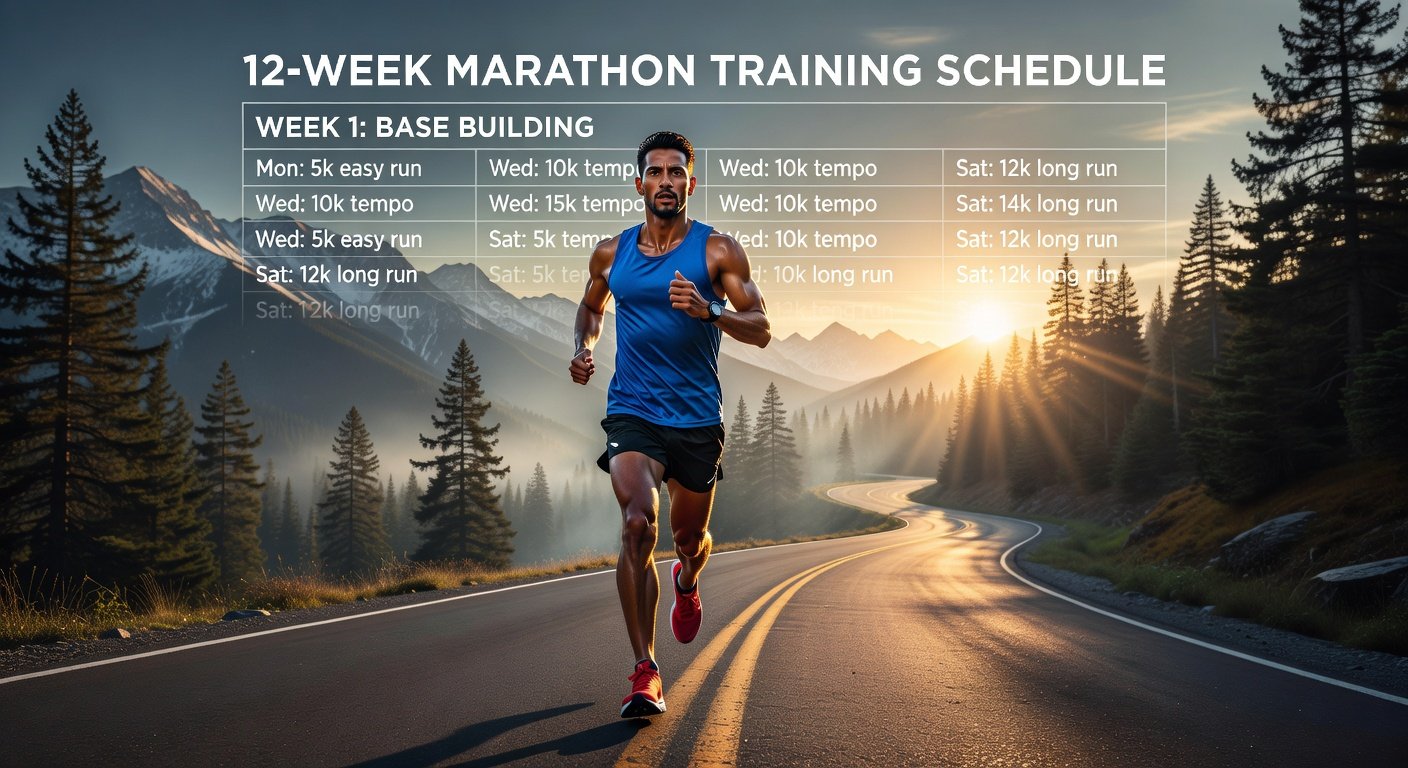
Introduction to Your 12-Week Marathon Training Plan
Preparing for a 2026 marathon requires a smart, progressive training plan that builds endurance safely while minimizing injury risk. This 12-week program is designed for runners with a basic fitness base—able to run 20-25 miles per week comfortably. It emphasizes structured runs, key workouts like long runs and intervals, cross-training, and recovery. Customize pacing based on your goal time: beginners aim for 5:00-6:00 min/km, intermediate 4:30-5:00 min/km, advanced under 4:30 min/km.
Before starting, consult a doctor, especially if new to running. Track progress with a running app like Strava or Garmin. Weekly mileage starts at 30 miles and peaks at 50-55 miles, following the 10% rule to avoid overuse.
Key Principles of the Plan
- Mileage Progression: Gradual increase to build aerobic capacity.
- Key Workouts: Long runs (endurance), intervals/tempo (speed), easy runs (recovery).
- Cross-Training: 1-2 sessions/week (cycling, swimming, yoga) to boost fitness without impact.
- Recovery: Rest days, foam rolling, sleep 7-9 hours/night.
- Customization: Adjust paces using a VDOT calculator based on recent 5K/10K times.
Weekly Training Schedule Overview
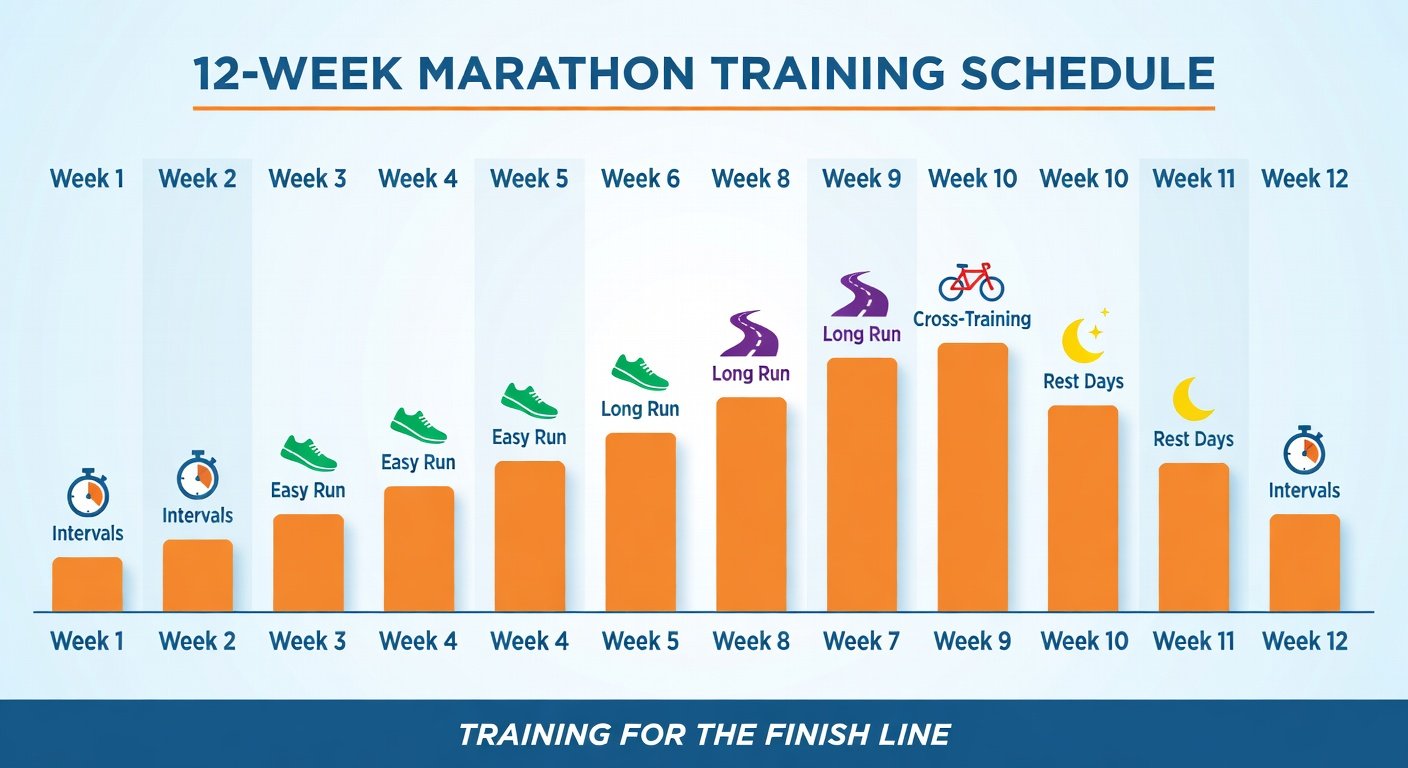
Each week includes 4-5 run days, 1-2 cross-training, and 1-2 rest days. Long run on weekends. Total weekly mileage:
- Weeks 1-4: 30-40 miles (Base Building)
- Weeks 5-8: 40-50 miles (Strength Phase)
- Weeks 9-11: 50-55 miles (Peak Phase)
- Week 12: Taper (20-25 miles)
Sample Weekly Structure (Adapt to Your Pace)
| Day | Workout | Purpose |
|---|---|---|
| Monday | Rest or Easy 4-6 miles | Recovery |
| Tuesday | Intervals: 8x400m @ 5K pace, 2min jog recovery | Speed |
| Wednesday | Cross-Train: 45min cycle/swim + strength | Aerobic base |
| Thursday | Tempo: 5-8 miles @ marathon pace | Lactate threshold |
| Friday | Easy 5-7 miles + strides | Active recovery |
| Saturday | Long Run: Progressive distance | Endurance |
| Sunday | Rest or Yoga | Recovery |
Detailed 12-Week Breakdown
Weeks 1-4: Base Building (30-40 miles/week)
Focus on consistency. Long runs: 8, 10, 12, 14 miles. Intervals: Build from 6x400m to 10x400m. Include 20min strength (planks, squats, lunges) twice weekly.
- Week 1: Total 30mi, Long 8mi easy.
- Week 2: 32mi, add hills to tempo.
- Week 3: 35mi, Long 12mi w/ last 2mi faster.
- Week 4: 40mi recovery week, Long 10mi.
Weeks 5-8: Strength Phase (40-50 miles/week)
Increase intensity. Long runs: 16, 18, 20, 14 miles (recovery). Tempo runs extend to 8-10 miles. Cross-train with yoga for flexibility.
- Week 5: 42mi, Intervals 6x800m.
- Week 6: 45mi, Long 18mi @ easy pace.
- Week 7: 50mi peak test, Tempo 10mi.
- Week 8: 40mi recovery, focus form.
Weeks 9-11: Peak Phase (50-55 miles/week)
Marathon simulation. Long runs: 20, 22, 20 miles. Include race-pace segments (e.g., 10mi @ goal pace).
- Week 9: 52mi, Long 20mi w/ 8mi MP.
- Week 10: 55mi, Intervals 4x1mi.
- Week 11: 50mi, Long 22mi steady.
Week 12: Taper (20-25 miles)
Reduce volume 40-50%. Shakeout runs, carb-load last 3 days. Long run 8mi easy. Rest, visualize success.
Nutrition Tips for Marathon Training
Fuel properly to sustain high mileage:
- Daily Carbs: 7-10g/kg bodyweight (pasta, oats, rice).
- Protein: 1.6-2.2g/kg (chicken, eggs, beans) for muscle repair.
- Hydration: 3-4L water/day + electrolytes on long runs.
- Pre-Run: Banana + peanut butter 1hr before.
- During Long Runs: Gels every 45min after 60min, practice race fueling.
- Post-Run: Chocolate milk or smoothie within 30min.
Track macros with MyFitnessPal. Iron-rich foods (spinach, red meat) prevent fatigue.
Injury Prevention and Recovery Strategies
80% of runners face injuries—don't be one.
- Warm-Up/Cool-Down: 10min dynamic stretches pre-run, static post.
- Strength Training: Core, glutes, calves 2x/week.
- Listen to Body: Ice sore spots, reduce if pain persists >2 days.
- Footwear: Rotate shoes every 300-500 miles.
- Recovery Tools: Foam roller, compression socks, massage gun.
- Sleep & Stress: Prioritize; consider meditation apps.
Common issues: IT band, shin splints—strengthen hips early.
Customizing for Your 2026 Race
Peak 3 weeks before race day. Use a pacing band for goal time (e.g., sub-4hr). Test gear/nutrition in long runs. Join a running group for motivation. Post-taper, trust training—negative split your race!
Final Thoughts
This plan transforms fitness into marathon readiness. Consistency beats intensity. Track, adjust, recover. Your 2026 finish line awaits—lace up and conquer!

No comments yet. Be the first!