 The Runner Story

Introduction: Beyond the Miles
Marathon training often centers on accumulating running miles, yet many athletes discover that strategic cross-training delivers superior endurance gains while protecting against overuse injuries. Activities like cycling and swimming complement running by engaging different muscle groups, improving cardiovascular efficiency, and allowing higher training volumes without the repetitive impact of pavement pounding. This approach suits intermediate runners who have already completed a few marathons and want sustainable progress toward their next goal race.
Traditional high-mileage plans can lead to plateaus or burnout when the body cannot recover adequately from daily pounding. Cross-training offers a proven way to increase overall aerobic work while giving running-specific tissues time to adapt. Research from sources such as the National Institutes of Health highlights how non-impact cardio modalities enhance aerobic capacity and recovery. The following sections detail mode selection, weekly integration, physiological advantages, comparisons with run-only programs, progression tracking, common mistakes, and answers to frequent transition questions.
Selecting Compatible Cross-Training Modes
Choose activities that build aerobic base while minimizing stress on running-specific tissues. Top options include cycling, swimming, elliptical training, and rowing. Each mode targets slightly different physiological systems, allowing runners to address individual weaknesses such as weak upper body or limited hip mobility.
Cycling provides excellent leg endurance work with zero impact. Focus on steady-state efforts at 80-90 percent of threshold power for 45 to 90 minutes. Swimmers gain full-body conditioning that improves lung capacity and shoulder stability, making it ideal for recovery days after hard runs. Elliptical training or rowing mimics running motion patterns when weather or schedule constraints arise. Avoid high-impact sports like basketball or soccer during peak marathon blocks to keep injury risk low. When selecting a mode, consider your current injury history, access to equipment, and personal enjoyment, because consistency matters more than the specific activity chosen.
Physiological Benefits Backed by Research
Cross-training increases mitochondrial density and capillary networks across more muscle fibers than running alone. Studies show swimmers and cyclists often maintain or improve VO2 max during periods of reduced running volume. The Mayo Clinic notes that varied movement patterns reduce repetitive stress injuries common in marathoners. Additional support from the American Heart Association emphasizes that mixed aerobic training improves overall cardiac output and lowers resting heart rate faster than single-mode programs.
Runners who mix modalities report better sleep quality, lower perceived fatigue on long-run days, and stronger immune function during heavy training blocks. These benefits compound over a 16-week cycle, often resulting in faster marathon times because the body arrives at race day with fresher legs and greater resilience.
Sample Weekly Integration Schedules
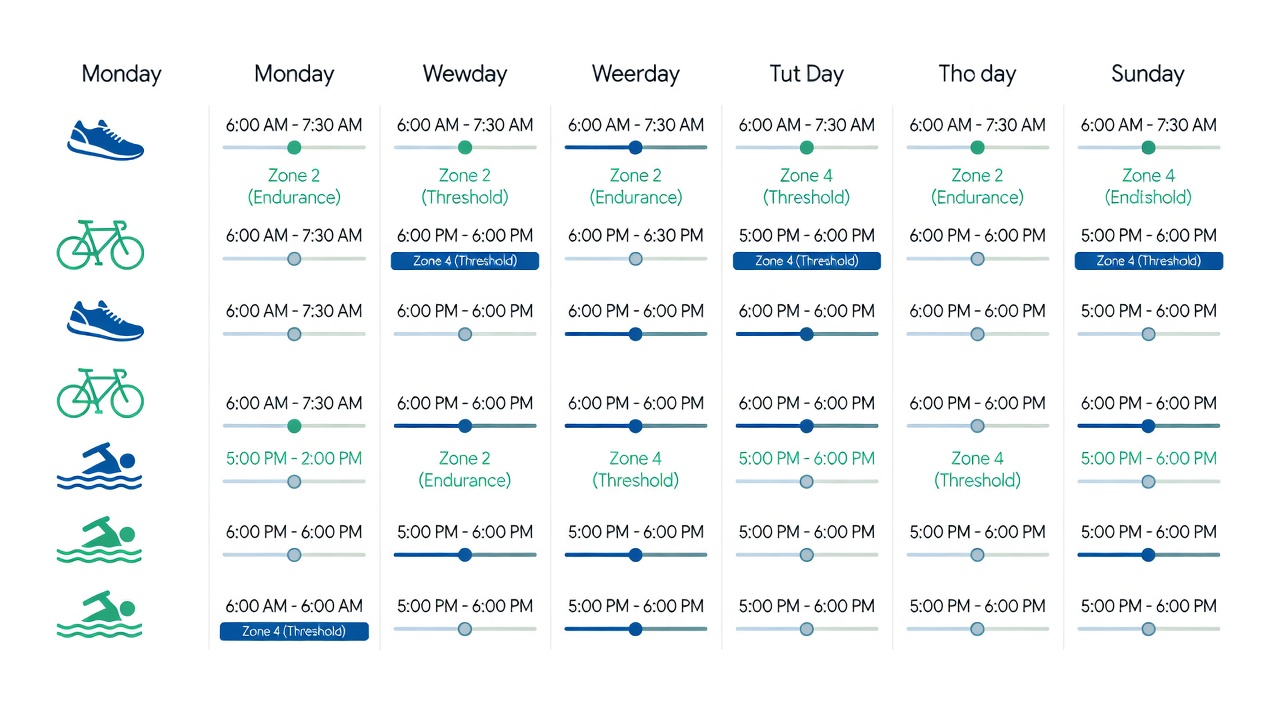
Here is a practical 16-week marathon block example for an intermediate runner targeting a sub-4-hour finish. The plan balances three running days with three cross-training sessions.
- Monday: Easy 5-mile run plus 30-minute swim recovery
- Tuesday: Interval session on track or treadmill
- Wednesday: 45-60 minute steady bike ride at moderate effort
- Thursday: Tempo run of 6-8 miles
- Friday: Rest or light 30-minute elliptical
- Saturday: Long run progressing from 10 to 20 miles
- Sunday: 90-minute recovery bike or swim at low intensity
For runners entering the peak phase, replace one easy run with a longer bike session of 90-120 minutes. A second schedule for those returning from minor injury replaces Tuesday intervals with 60 minutes of rowing intervals while keeping the long run intact. Adjust volume by no more than 10 percent every three weeks and monitor how legs feel the day after cross-training sessions. These examples demonstrate how to maintain or increase total aerobic hours without increasing running mileage.
Direct Comparisons to Run-Only Approaches
Run-only programs can produce strong results but often lead to higher rates of shin splints, IT-band syndrome, and stress fractures. Cross-training athletes typically complete 15-20 percent more total aerobic work each week while logging fewer running miles. This balance frequently translates to stronger finishes in the final 10K of the marathon because legs remain fresher. Runners who stay healthy through varied training also accumulate more consistent weeks, leading to superior race-day fitness compared with athletes forced to take unplanned rest due to nagging injuries.
Progression Tracking and Practical Examples
Use simple metrics such as weekly cross-training minutes alongside running mileage. A runner starting at 40 running miles plus 60 cross-training minutes can aim for 45 running miles plus 90 cross-training minutes over eight weeks. Log heart-rate recovery after each session and note any nagging aches. Apps that export data to spreadsheets help visualize trends and prevent overreaching. Practical example: an athlete who added two 60-minute bike sessions per week saw average long-run pace improve by 8 seconds per mile within six weeks while cutting total running volume by 5 miles. Track subjective feelings on a 1-10 scale each morning to catch early signs of overtraining.
Mistakes to Avoid When Adding Cross-Training
Common errors include choosing intensities that are too high on cross-training days, which then interferes with key running workouts. Another frequent mistake is neglecting strength work entirely; adding two 20-minute core and hip routines per week complements the endurance benefits. Finally, some runners abandon cross-training too early because they do not see immediate running improvements. Patience is required, as adaptations typically appear after three to four consistent weeks.
Short FAQ: Transition Concerns for Intermediate Runners
How quickly will I notice endurance improvements?
Most athletes report better long-run stamina within three to four weeks when cross-training replaces one quality run per week.
Will I lose running-specific fitness?
No. When cycling and swimming intensities match running efforts, running economy remains stable or improves slightly due to better recovery between hard sessions.
What if I dislike swimming?
Substitute with rowing or elliptical intervals that keep heart rate in the same zones as your easy runs.
Can I cross-train on the same day as a long run?
Yes, but keep the session short and low-intensity, such as a 30-minute easy spin, to aid recovery rather than add fatigue.
How do I know if I am doing too much?
Watch for persistent fatigue, declining run paces, or disrupted sleep. Reduce cross-training volume by 20 percent for one week and reassess.
Conclusion
Incorporating cycling and swimming into marathon training creates a resilient, well-rounded athlete. By following structured schedules, tracking objective progress, avoiding common pitfalls, and listening to your body, you can reach race day with higher endurance and lower injury risk than traditional mileage-only plans allow. The key is consistency and thoughtful integration rather than simply adding random sessions.


No comments yet. Be the first!