 The Runner Story

Introduction to Lactate Threshold Training for Marathons
Intermediate runners preparing for 2026 marathons often hit a performance plateau when relying solely on easy mileage or speedwork. Lactate threshold (LT) workouts provide the missing link by teaching the body to clear lactate more efficiently at higher intensities. This training method improves your ability to maintain a strong pace for the full 26.2 miles without hitting the wall prematurely. Unlike pure VO2 max sessions that emphasize short bursts, LT work builds sustainable endurance that directly supports race-day goals. Runners who incorporate one to two LT sessions weekly typically see improvements in marathon finish times of 5-10 minutes after a structured cycle, based on consistent application across training blocks.
The key is understanding your personal threshold and progressing intelligently through a 16-week plan aligned with major 2026 events such as spring marathons in March and April or fall races in October and November. This guide covers the physiology, testing methods, sample sessions, progression strategies, comparisons to other training types, real-world examples, and strategies to prevent overtraining.
The Science Behind Lactate Threshold Zones
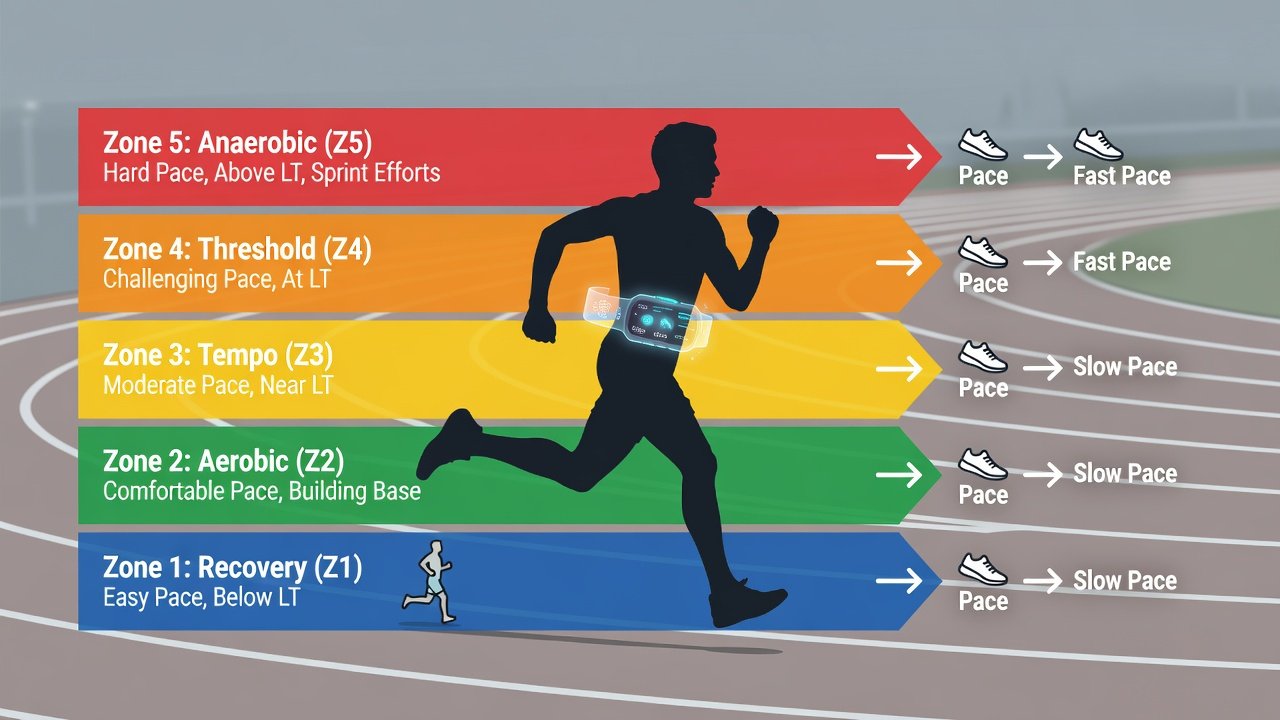
Lactate threshold represents the exercise intensity at which lactate begins to accumulate faster than the body can clear it, typically occurring between 80-90% of maximum heart rate for trained runners. At this point, blood lactate levels rise sharply, contributing to the burning sensation in muscles and eventual fatigue. Training at or slightly below LT stimulates adaptations including increased mitochondrial density, improved capillary networks, and enhanced lactate buffering enzymes. Studies available through National Institutes of Health confirm these physiological changes lead to better endurance performance. Heart rate zones for LT usually fall in Zone 3 to low Zone 4, where conversation becomes labored but sustainable for 20-60 minutes. Understanding these zones prevents training too easy or too hard, maximizing gains while minimizing injury risk.
Determining Your Personal Lactate Threshold
Accurate LT identification starts with simple field tests that require no lab equipment. Begin with a proper warm-up of 15 minutes easy running followed by dynamic drills. The most accessible test is a 30-minute time trial on a flat course or track: run the first 10 minutes at a perceived 8/10 effort, then push the final 20 minutes as hard as possible while maintaining even pacing. Your average pace or heart rate from the last 20 minutes approximates LT. Alternatively, use a recent 5K or 10K race result and calculate 85-90% of that effort. Modern wearables from Garmin, Polar, or Coros offer guided LT tests that analyze heart rate variability and pace data for estimates updated automatically. Retest every four to six weeks during your build phase to recalibrate zones, especially as fitness improves heading into 2026 peak training periods. Always perform tests when rested and on consistent terrain for reliable results.
Sample Lactate Threshold Workouts
Effective LT sessions balance duration and intensity to target the threshold without excessive fatigue. A classic tempo run begins with 15-20 minutes easy warm-up, followed by 20-40 minutes at LT pace (roughly your half-marathon effort), and ends with a 10-15 minute cool-down jog. For variety, try cruise intervals: after warming up, complete 4-6 repetitions of 1 mile at LT pace with 60-90 seconds easy jog recovery. Another option is the LT hill workout—find a steady 4-6% grade and run 5-8 minutes uphill at threshold effort, jogging down for recovery. These sessions should feel challenging yet controlled; you should be able to speak in short sentences. Progress by extending total LT time from 20 minutes in early weeks to 50-60 minutes closer to race day. Always include at least one full rest or easy day before and after LT work.
16-Week Progression Plan for 2026 Marathon Training
Structure your cycle around key 2026 race dates by front-loading base building in the first month. Weeks 1-4 focus on introducing LT with one 25-minute tempo session weekly alongside easy mileage and one long run. Weeks 5-8 increase volume to 35-40 minutes of LT work, adding cruise intervals on a second day if recovery allows. Weeks 9-12 combine LT efforts with long runs, such as 8 miles at LT embedded in a 20-mile weekend run, to simulate race conditions. Weeks 13-16 shift to maintenance with shorter 20-minute LT sessions and a full taper two weeks before race day. Adjust based on individual response: if soreness lingers, reduce intensity by 5-10 seconds per mile. Track weekly mileage increases no greater than 10% to support adaptation. This phased approach ensures peak fitness aligns with spring or fall 2026 events.
Comparing LT Sessions to VO2 Max Intervals
VO2 max intervals, typically 3-5 minutes at 95-100% effort with full recovery, develop maximal oxygen uptake and top-end speed but carry higher fatigue cost. LT training, by contrast, emphasizes sustained efforts that improve the fraction of VO2 max you can maintain for hours. Marathoners benefit more from frequent LT work because the race demands prolonged sub-threshold running rather than repeated all-out efforts. Many programs limit VO2 sessions to every 10-14 days while scheduling LT twice weekly during base phases. This balance yields better race specificity and faster recovery between hard days.
Real Runner Examples and Data-Backed Adjustments
Consider Sarah, a 38-year-old aiming for a sub-3:45 marathon in 2026. Her initial LT pace tested at 8:20 per mile. After eight weeks of weekly tempos progressing to 45 minutes, she improved to 8:05 pace and finished her target race in 3:38. Another example is Marcus, who combined LT intervals with his long runs and reduced his marathon time by nine minutes while reporting less late-race slowdown. Monitor metrics such as resting heart rate and perceived effort; if LT pace feels harder than usual, insert an extra recovery week. Adjust for weather by slowing paces 10-15 seconds on hot days to maintain the correct physiological stress.
Common Mistakes to Avoid and Overtraining Prevention
Many runners push LT sessions too hard, turning them into VO2 work and accumulating excess fatigue. Always start conservatively and finish the prescribed duration rather than racing the clock. Another error is neglecting warm-ups, which increases injury likelihood. Use the following checklist to stay healthy: limit LT days to one or two per week, schedule full rest days after hard efforts, prioritize 7-9 hours of sleep nightly, and fuel with 60-90 grams of carbohydrates per hour during longer sessions. If you notice persistent elevated morning heart rate or mood changes, reduce volume immediately.
Frequently Asked Questions
- How do I know if my LT pace is correct? It should feel like a hard but steady effort where you can manage short phrases.
- Can beginners use LT training? This guide targets intermediate runners with at least six months of consistent mileage; beginners should first build an aerobic base.
- What if I miss a session due to illness? Resume with reduced intensity and extend the overall cycle by one week if needed.
- Are wearables accurate enough? They provide useful estimates but benefit from occasional field test validation for best results.
Conclusion
Integrating lactate threshold workouts into your 2026 marathon preparation delivers measurable endurance gains through targeted physiological adaptations. By testing accurately, progressing systematically over 16 weeks, and balancing with recovery, intermediate runners can achieve new personal bests while staying healthy. Start implementing one LT session this week and track your improvements leading into race day.


No comments yet. Be the first!