 The Runner Story

Introduction to Beginner Marathon Training
Starting marathon training as a beginner requires a focused approach to endurance building that prioritizes safety and consistency. This guide provides structured advice for new runners aiming to complete a marathon in 2026 without rushing into advanced methods. Endurance develops through gradual increases in running volume combined with proper recovery, allowing your body to adapt over a typical 16- to 20-week cycle. Many beginners succeed by following proven principles rather than jumping straight into high mileage. Real progress comes from listening to your body and tracking improvements week by week. The journey begins with understanding your current fitness level and setting realistic goals that emphasize finishing strong rather than chasing fast times.
Essential Gear for New Runners
Quality gear supports endurance without causing injury. Invest in well-fitted running shoes with adequate cushioning, moisture-wicking socks, and comfortable apparel that allows full range of motion. A basic GPS watch helps monitor pace and distance, while a hydration belt or vest becomes useful as mileage grows. Always test new items during shorter runs first. Consider adding a lightweight running belt for carrying essentials like identification and a small snack on longer efforts. Proper gear reduces friction and discomfort, letting you focus on building stamina. Visit a specialty running store for gait analysis to ensure your shoes match your stride. Layered clothing options help you adapt to changing weather conditions during training cycles.
Progressive Mileage Increases
Build endurance by increasing weekly mileage no more than 10 percent per week. Start with a base of three to four runs totaling 15-20 miles. Over successive weeks, add distance to long runs and easy days while maintaining at least one rest or cross-training day. This measured approach reduces injury risk and allows aerobic systems to strengthen steadily. For example, if your first week totals 16 miles, the next week should cap at around 17-18 miles. Focus on one long run each weekend that gradually extends from 4 miles to 8, then 10, and beyond. Include easy runs at conversational pace to build aerobic base without stress. Track these increases in a journal to stay accountable and visualize your growth over the full training cycle.
Integrating Rest and Recovery
Rest days are non-negotiable for endurance gains. Schedule at least two full rest days weekly plus active recovery like walking or gentle cycling. Sleep, nutrition, and foam rolling further support muscle repair. Ignoring recovery often leads to stalled progress or setbacks. Aim for seven to nine hours of quality sleep each night, as this is when most adaptation occurs. Incorporate dynamic stretching routines after every run to maintain mobility. Hydration remains critical even on non-running days, with water intake supporting overall recovery processes. Many beginners overlook these elements and wonder why their endurance plateaus; consistent rest actually accelerates long-term progress.
Sample Beginner Weekly Schedules
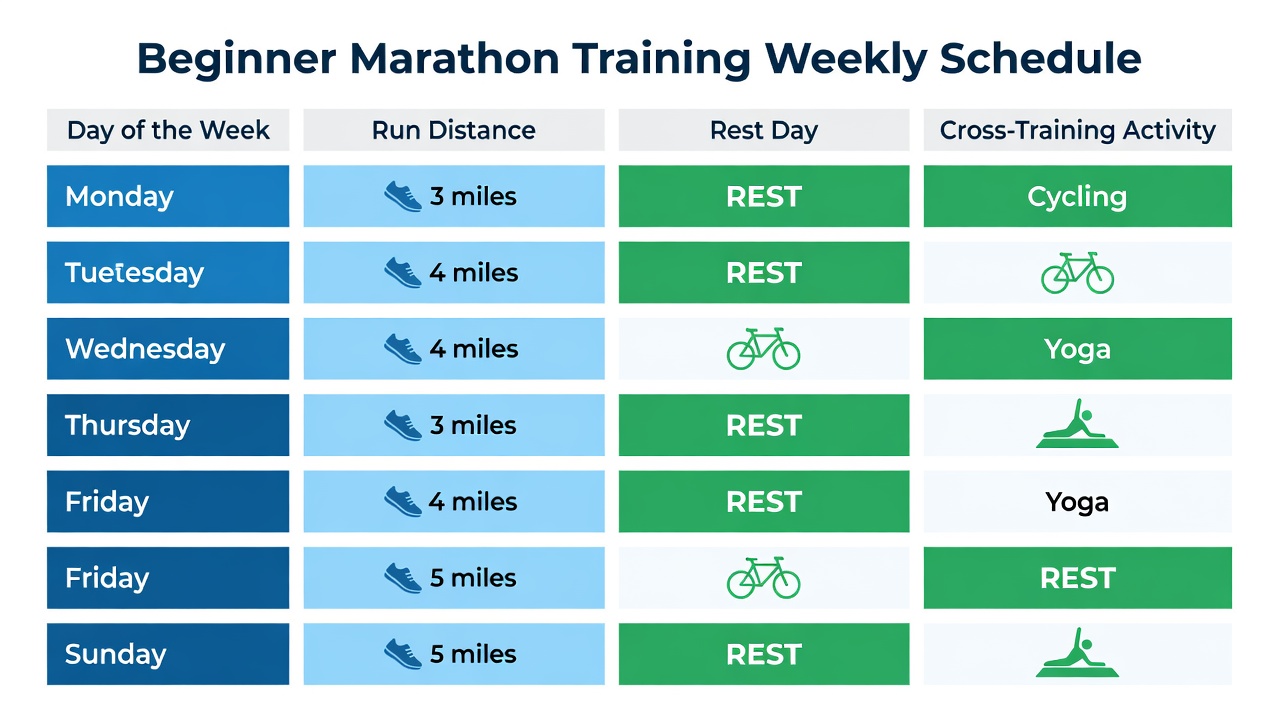
Here is a typical early-cycle week: Monday rest, Tuesday 3-mile easy run, Wednesday 30-minute cross-train, Thursday 4-mile run with strides, Friday rest, Saturday 5-mile long run, Sunday 2-mile recovery jog. Adjust based on your starting fitness and repeat similar patterns while slowly extending the long run each cycle. In weeks 5-8, increase the long run to 7-9 miles while keeping midweek runs between 3 and 5 miles. By weeks 9-12, introduce a medium-long run midweek of 6 miles and push the weekend long run toward 10-12 miles. Always include a full rest day after the longest effort. Cross-training options such as swimming or cycling add variety without high impact. These schedules emphasize balance so beginners can sustain motivation throughout the program.
Progress Tracking Methods
Use a simple training log or app to record mileage, perceived effort, and how you feel post-run. Weekly reviews reveal patterns and help you celebrate small wins such as completing your first 8-mile long run. Heart rate data or pace improvements over time provide objective markers of growing endurance. Note weather conditions, sleep quality, and nutrition alongside each session for deeper insights. Monthly check-ins allow you to adjust goals if progress feels too slow or too aggressive. Many runners find that reviewing past logs boosts confidence when doubt creeps in during tougher weeks.
Avoiding Overtraining
Watch for persistent fatigue, elevated resting heart rate, or recurring aches. If these appear, reduce volume by 20-30 percent for one or two weeks. Incorporate strength training twice weekly to support joints and muscles. Sustainable training always beats aggressive pushing that leads to burnout. Signs of overtraining include irritability, poor sleep, and loss of motivation. Prevent these by building in deload weeks every fourth week where mileage drops 30-40 percent. Strength exercises like squats, lunges, and planks improve running economy and reduce injury likelihood. Listen to early warning signals rather than pushing through them.
Nutrition and Hydration Strategies
Fuel your endurance with balanced meals rich in carbohydrates, lean proteins, and healthy fats. Practice race-day nutrition during long training runs to avoid gastrointestinal issues on marathon day. Carry water or electrolyte drinks on runs exceeding 60 minutes. Post-run recovery meals should combine protein and carbs within 30-60 minutes of finishing. Experiment with different energy gels or chews on training runs to identify what works best for your system. Consistent daily nutrition supports the cumulative demands of increasing mileage.
Mental Strategies for Endurance
Building mental toughness is as important as physical conditioning. Break long runs into smaller segments and use positive self-talk during challenging moments. Visualization techniques help runners imagine crossing the finish line successfully. Join a local running group for accountability and shared motivation. Many beginners report that mental preparation turns potential quitting points into breakthroughs. Keep a gratitude journal noting one positive aspect of each run to maintain enthusiasm over the full training cycle.
Real Runner Examples
One beginner started with 12 weekly miles and reached the starting line after 18 weeks by following the 10-percent rule and prioritizing sleep. Another runner used a training partner for accountability and finished their first marathon feeling strong throughout the final 10K. A third runner incorporated weekly strength sessions and avoided injury entirely, finishing with a smile. These stories show that consistent, patient effort produces results across different starting points and lifestyles.
Common Mistakes to Avoid
- Skipping rest days in pursuit of faster progress.
- Increasing mileage too quickly without monitoring recovery.
- Wearing old or ill-fitting shoes that cause blisters or joint pain.
- Neglecting strength work and flexibility exercises.
- Ignoring early signs of fatigue or discomfort.
Frequently Asked Questions
- How long should a beginner marathon training plan last? Most new runners benefit from 16-20 weeks of structured training.
- Can I train for a marathon if I have never run before? Yes, but begin with a walk-run program and gradually build to continuous running over several months.
- What should I eat on long-run days? Focus on easily digestible carbohydrates the night before and during the run if it exceeds 90 minutes.
- How do I know if my shoes need replacing? Replace them every 300-500 miles or when cushioning feels compressed.
- Is it okay to miss a workout? Yes, life happens; simply resume the plan without trying to make up missed miles all at once.
- Should beginners run every day? No, include at least two full rest days weekly to allow adaptation and prevent injury.
Conclusion
Endurance building for a first marathon succeeds through patience, progressive overload, and dedicated recovery. Follow the outlined steps, track your progress, and adjust as needed. With consistent effort over the coming months, you will cross the finish line stronger and more confident than when you began. Resources like Mayo Clinic and CDC physical activity guidelines offer additional evidence-based support for safe training practices.


No comments yet. Be the first!