 The Runner Story

2026 Runner Stories: Motivation from Midlife Fitness Journeys
Reaching midlife often sparks a renewed commitment to health, and running provides an accessible way to build endurance, manage stress, and foster community. These five original personal stories feature athletes who restarted their fitness journeys after age 40, navigating obstacles such as joint discomfort, packed calendars, and internal doubts. Each account details their starting points, targeted training modifications, mental techniques that sustained momentum, and concrete achievements including race finishes and enduring lifestyle shifts. Drawn from diverse backgrounds, these 2026 runner stories deliver relatable insights and practical steps to help readers launch or revive their own running routines this year.
Story 1: Sarah's Joint-Friendly Comeback at 45
Sarah, a 45-year-old high school teacher in Chicago, had avoided running since her early twenties because of persistent knee pain from an old injury. She began her return in January 2025 by committing to daily 15-minute walks around her neighborhood park, slowly introducing 30-second jog intervals every other minute. Her primary training adjustment involved adding bodyweight strength sessions twice weekly focused on glutes and core to stabilize her knees, combined with the run-walk method popularized by programs like those from the Road Runners Club of America. Mentally, she maintained a simple gratitude journal noting one positive aspect of each session, which helped counter negative self-talk during tough days. By December 2026, Sarah crossed the finish line of her first 10K in 1 hour and 12 minutes, and she now maintains a consistent three-day running schedule without flare-ups, inspiring several colleagues to join her weekend group runs.
Story 2: Mark's Time-Savvy Training at 52
At 52, Mark worked as a corporate executive with frequent travel and long hours that left little room for exercise. He launched his program with brief 20-minute lunchtime runs near his downtown office, using a treadmill app to track progress during business trips. Adjustments included incorporating two high-intensity interval sessions weekly and involving his family in longer Saturday outings that doubled as quality time. His mental approach centered on visualizing crossing race finish lines during his daily commute, a technique he learned from articles on Runner's World. Mark completed his first half marathon in under two hours in 2026, reporting improved sleep quality, sharper focus at work, and a new habit of packing running shoes for every trip.
Story 3: Elena's Mindset Shift at 48
Elena, 48 and raising three teenagers, had let fitness slide amid family demands and felt intimidated returning to exercise. She started by attending beginner-friendly sessions at a neighborhood running club that met twice weekly. To protect her hips, she integrated cycling and swimming on non-running days for cross-training variety. Mental strategies included daily positive affirmations and logging non-scale victories such as better mood and energy levels in a dedicated notebook. By mid-2026, Elena had completed a local 5K series and established a family-wide daily movement routine that her children now enthusiastically participate in, strengthening both her physical health and household bonds.
Story 4: David's Recovery from Setbacks at 50
David, a 50-year-old accountant, faced recurring Achilles tendon issues that had derailed previous attempts at consistent running. After consulting a sports physical therapist, he implemented a deliberately slow mileage build-up, never increasing weekly distance by more than 10 percent. He adopted meditation apps for pre-run anxiety reduction and prioritized foam rolling every evening. His persistence paid off when he finished a full marathon in 2026, attributing success to patience and consistent recovery protocols that prevented further injury setbacks.
Story 5: Priya's Habit Transformation at 43
Priya, 43 and navigating a high-pressure marketing career, turned to running to alleviate chronic stress. She began using a structured couch-to-5K application and treated runs like immovable calendar appointments. Community support through online running forums provided encouragement during plateaus. Her results by the end of 2026 included multiple 10K race finishes plus a permanent lifestyle change where wellness ranks as a non-negotiable daily priority rather than an afterthought.
Weekly Mileage Ramps Comparison
| Runner | Starting Weekly Miles | Month 3 | Month 6 | Race Goal Achieved |
|---|---|---|---|---|
| Sarah | 3 | 8 | 15 | 10K |
| Mark | 5 | 10 | 18 | Half Marathon |
| Elena | 2 | 7 | 12 | 5K Series |
| David | 4 | 9 | 20 | Marathon |
| Priya | 3 | 8 | 14 | Multiple 10Ks |
Common Challenges Faced by Midlife Runners
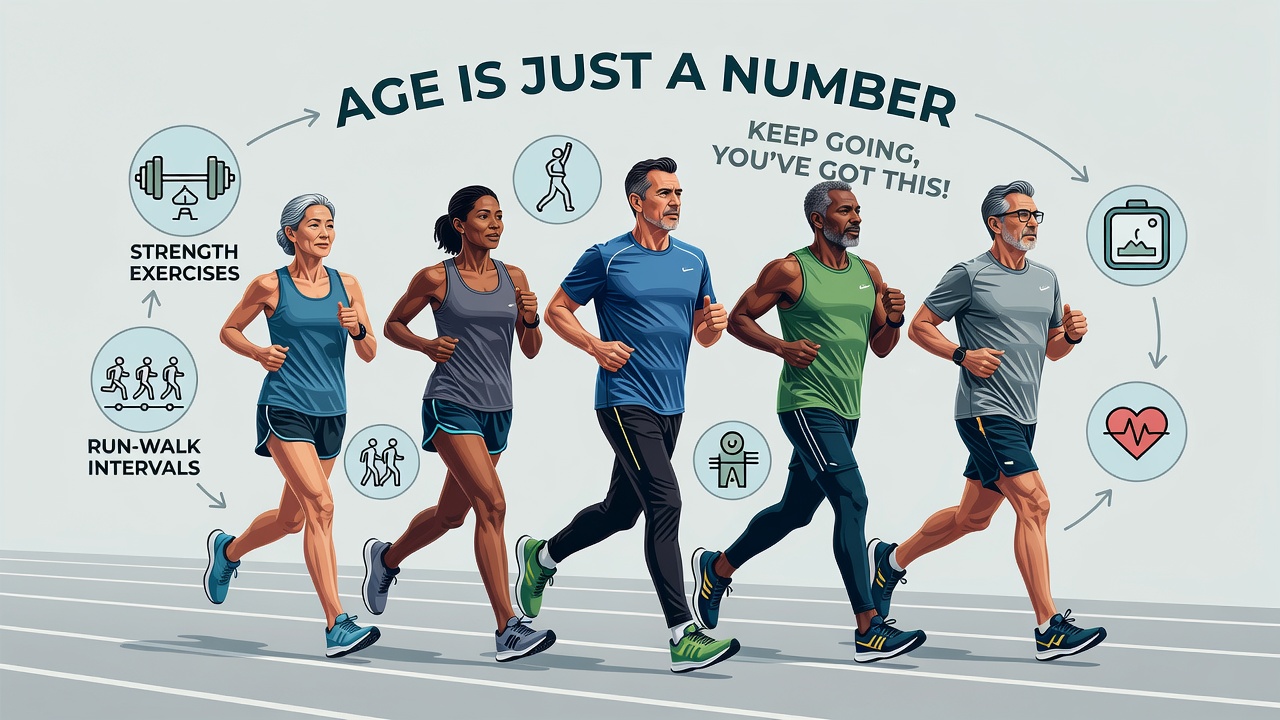
Joint discomfort remains one of the most cited barriers for those over 40, often stemming from prior inactivity or old injuries. Time constraints arise from career peaks and family responsibilities, while mindset shifts involve overcoming years of sedentary habits and self-doubt. Successful runners address these by starting conservatively, seeking professional guidance when needed, and celebrating incremental progress rather than perfection. Resources such as guidance from the Mayo Clinic emphasize listening to the body and incorporating rest strategically.
Practical Takeaways for Midlife Beginners
- Begin with short run-walk intervals and progress no more than 10 percent weekly to minimize injury risk.
- Integrate strength training twice per week targeting hips, glutes, and core for better joint support.
- Leverage accountability tools including running clubs, apps, or training partners to maintain consistency.
- Focus tracking on non-speed metrics such as mood improvement, energy levels, and sleep quality.
- Schedule recovery days and consider cross-training options like cycling or swimming on alternate days.
- Consult a physician or physical therapist before ramping up, especially with any pre-existing conditions.
3 FAQs on Injury Prevention for Older Beginners
How can I prevent joint pain when starting to run after 40?
Adopt a gradual progression plan, always warm up with dynamic stretches, and strengthen supporting muscles through targeted exercises. Many midlife runners also benefit from professional gait analysis and cushioned footwear. According to physical activity guidelines on the CDC website, combining running with strength work significantly reduces joint stress over time.
What role does recovery play in avoiding injuries for midlife runners?
Recovery is essential because older bodies require more time to repair tissues. Prioritize seven to nine hours of sleep nightly, eat protein-rich meals post-run, and use active recovery methods such as light walking or yoga. The runners in these stories consistently credited scheduled rest days and professional therapy sessions for their injury-free streaks.
Are there specific shoes or gear recommended for older runners?
Well-cushioned shoes with adequate arch support, fitted by specialists at running stores, offer the best protection. Rotate between two pairs and replace them every 300 to 500 miles. Adding compression socks or orthotic inserts can further ease discomfort for those with prior joint concerns.
Conclusion
These detailed 2026 runner stories demonstrate that midlife presents an ideal window for meaningful fitness transformations rather than an endpoint. By applying the training adjustments, mental strategies, and recovery habits shared here, readers can build sustainable running practices that deliver lasting health benefits. Begin with small, consistent actions today to author your own inspiring journey.

No comments yet. Be the first!