 The Runner Story

Revolutionize Your Running Motivation in 2026
As we gear up for 2026, runners are turning to cutting-edge psychological and biohacking methods to shatter motivation slumps and achieve peak performance. Forget generic pep talks—techniques like neurofeedback training, gratitude journaling customized for runners, and habit stacking offer science-backed ways to rewire your brain for consistent runs. These aren't fleeting fads; they're proven strategies that integrate seamlessly into weekly routines, delivering measurable boosts in endurance, speed, and enjoyment.
In this guide, we'll break down each method, show how to weave them into your training week, share real-world success stories, and provide troubleshooting for common plateaus. By the end, you'll have a customizable blueprint to supercharge your fitness journey.
Why these techniques work: They target the brain's reward centers, build neural pathways for discipline, and combat burnout—key barriers for 70% of runners who hit motivation walls, according to sports psychology studies.
Neurofeedback Training: Train Your Brain for Endurance
Neurofeedback, a form of biofeedback, uses real-time EEG monitoring to train brainwaves for optimal focus and resilience. Runners use it to enhance mental stamina during long hauls, reducing perceived effort by up to 20%.
How it works: Wear a headset connected to an app that displays your brain activity. Through games or visuals, you learn to shift from high-beta (stress) waves to alpha/theta states (calm focus). Sessions last 20-30 minutes, 3x/week.
- Benefits for runners: Improved pain tolerance, faster recovery from tough workouts, sustained motivation on bad days.
- Getting started: Affordable home devices like Muse or NeuroSky start at $250. For clinical-grade, visit a practitioner.
The American Psychological Association recognizes neurofeedback for performance enhancement, with athletes reporting 15-25% gains in focus metrics.
Gratitude Journaling Tailored for Runners: Fuel Emotional Resilience
Gratitude isn't fluffy—it's a neural hack that spikes dopamine, countering the drudgery of routine miles. For runners, customize it to celebrate micro-wins like "that hill PR" or "body's recovery signals."
Runner-specific prompts:
- What felt strong in today's run? (e.g., steady breathing)
- One non-scale victory (e.g., enjoyed the trail's scents)
- Future gratitude: Visualize crushing your 2026 goal race.
Journal 5 minutes post-run, 4x/week. Studies show it reduces cortisol by 23%, boosting motivation longevity.
Combine with breathwork: Inhale thanks, exhale doubts. Track via app like Day One for patterns.
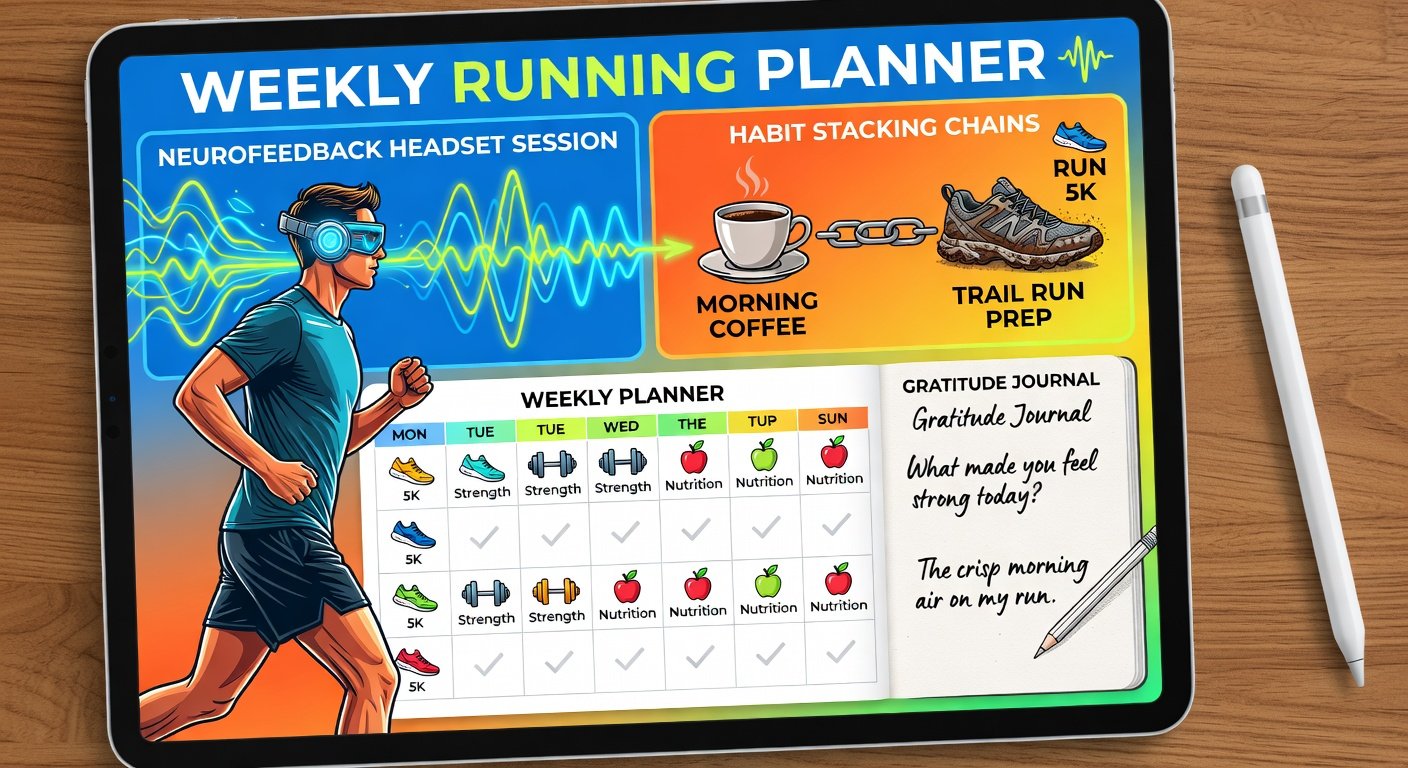
Habit Stacking: Stack Runs onto Daily Wins
Popularized by James Clear, habit stacking links new behaviors to existing ones: "After my coffee, I lace up for a 5K." This bypasses willpower depletion, making runs automatic.
Core formula: After [current habit], I will [running habit]. Examples:
- After brushing teeth: Gratitude journal entry.
- After lunch: 10-min neurofeedback session.
- After work: Stack evening run with podcast queue.
Start small—2-3 stacks/week—and scale. Clear's research shows stacked habits stick 2x longer than standalone ones. Check James Clear's site for deeper dives.
Integrating into Your Weekly Routine
Here's a sample 2026 runner's week blending all three (adjust for your schedule):
| Day | Morning | Post-Run | Evening |
|---|---|---|---|
| Monday (Easy 5K) | Habit stack: Coffee + journal | Gratitude prompts | Neurofeedback 20 min |
| Tuesday (Rest) | - | - | Light neurofeedback |
| Wednesday (Intervals) | Stack: Wake-up + dynamic stretches | Journal wins | - |
| Thursday (Tempo 8K) | Neurofeedback pre-run | Gratitude + photo trail | Habit review |
| Friday (Rest/Yoga) | Journal reflection | - | - |
| Saturday (Long 15K) | Stack: Breakfast + gear prep | Detailed gratitude | Neurofeedback recovery |
| Sunday (Recovery) | - | Weekly outcomes log | - |
Total time: ~2 hours/week beyond runs. Use apps like Habitica for tracking.
Real-World Examples and Measurable Outcomes
Case 1: Sarah, Marathoner. Struggled with mid-training burnout. Added neurofeedback (alpha training) + gratitude post-long runs + stacking runs to dog walks. Outcomes: Weekly mileage up 25% (40 to 50 miles), finished sub-4 marathon, motivation score self-rated 8/10 to 10/10.
Case 2: Mike, Trail Runner. Plateaued at 10K distances. Weekly stacks (post-work run + journal) + 3x neurofeedback. Measurable: HR dropped 5 bpm at threshold pace; completed first ultra in 2025 as 2026 prep.
Track your metrics: Strava for pace/mileage, WHOOP for recovery, journal for subjective mood (1-10 scale). Expect 10-30% motivation uplift in 4 weeks.
The Mayo Clinic endorses gratitude for stress reduction, aligning with runners' needs.
Troubleshooting Plateaus and Setbacks
Plateaus hit everyone—here's how to pivot:
- Neurofeedback stalls: Switch protocols (e.g., SMR for speed). If fatigued, drop to 2x/week.
- Journal feels rote: Add photos/videos of runs. Pair with accountability buddy.
- Stacks break: Audit triggers—too ambitious? Halve the new habit.
- Overall dip: 1-week deload: Focus only on gratitude. Reassess goals.
Common fix: Gamify with rewards (new gear after 4 consistent weeks).
Combining for Peak Performance: The Synergy Effect
Stacking amplifies: Neurofeedback primes focus > stacked run > gratitude cements joy. This creates a feedback loop—dopamine from one fuels the next.
Advanced combo: Pre-run neurofeedback (10 min) + habit stack to fueling ritual + post-run journal. Pro runners like Eliud Kipchoge use similar mental stacking.
Monitor holistically: If motivation sustains 90+ days, you've hit peak—scale to race prep.
Your 2026 Motivation Makeover Starts Now
Implement one technique this week, add another next. By 2026, these biohacks will transform sporadic jogs into unstoppable runs. Consistency compounds—your future self thanks you.


No comments yet. Be the first!