 The Runner Story

Introduction: Why Visualization Matters for Runners
Starting a running journey is exciting, but maintaining motivation over months or years can feel challenging. Many beginners hit plateaus where physical progress slows and mental barriers rise. Visualization offers a powerful, non-physical tool to mentally rehearse success, build resilience, and stay consistent. This beginner-friendly guide explores how mental imagery strengthens running motivation by helping you picture victories before they happen. Whether you are lacing up for your very first jog or returning after a break, learning to harness your mind can transform how you approach every mile. Runners who practice visualization often report feeling more prepared, less anxious about difficult workouts, and more connected to their long-term goals. In this comprehensive resource we will break down the underlying science, provide a ready-to-use daily routine, compare it with classic goal-setting approaches, share inspiring real-world stories, and show exactly how to blend visualization with habit tracking tools. You will also find printable-style scripts, worksheets, and answers to the most common questions beginners ask.
The Science Behind Visualization for Running
Visualization works because the brain often cannot distinguish between a vividly imagined experience and a real one. When runners mentally practice routes, pacing, or crossing finish lines, neural pathways similar to actual running are activated. This primes the body for better execution and reduces anxiety during tough sessions. Neuroimaging research reveals that imagining movement lights up the same motor cortex areas used during physical activity, essentially giving your muscles a mental warm-up. Studies from the American Psychological Association highlight how mental imagery enhances focus and self-efficacy in athletes. For runners specifically, this means fewer mental dropouts during long efforts and stronger commitment when motivation dips naturally. Beyond performance, visualization lowers cortisol levels associated with pre-run stress and improves sleep quality the night before important training days. The technique is not magic; it is a trainable skill that compounds over weeks of practice, much like building mileage in your legs.
5-Step Daily Visualization Routine
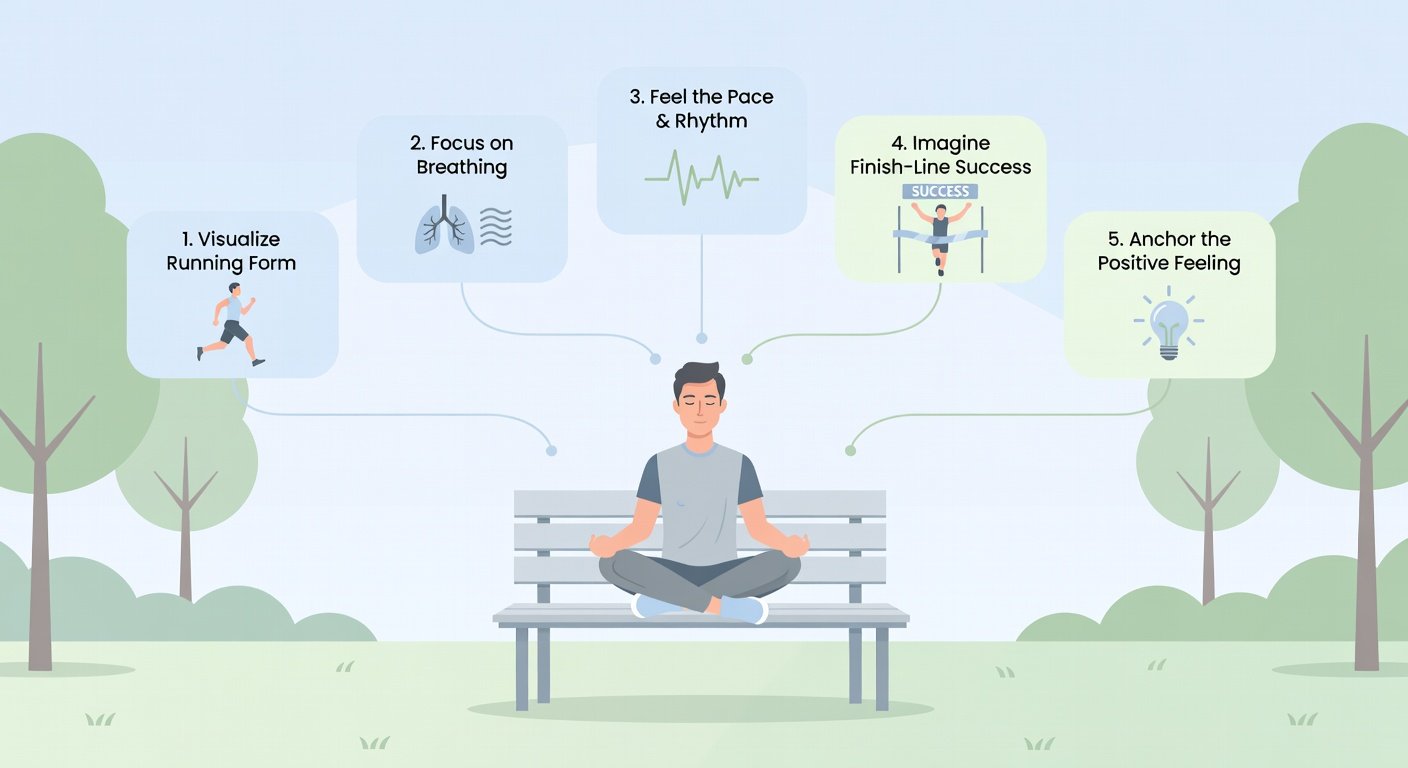
Consistency is key. Follow this simple routine each morning or before runs to embed positive mental habits. Begin by setting aside five to ten uninterrupted minutes in a quiet spot. Step one: sit comfortably with your spine tall and shoulders relaxed. Step two: close your eyes and perform four slow, deep breaths, inhaling for four counts and exhaling for six. Step three: create a vivid mental movie of yourself at the starting line feeling strong, warm, and ready. Include sensory details such as the scent of morning air and the sound of your shoes on the pavement. Step four: run through the entire session in real time, noticing smooth strides, relaxed shoulders, and steady breathing even when hills appear. Step five: finish the imagery by crossing an imaginary finish line, raising your arms, and feeling deep satisfaction and pride. Repeat this script daily. Over time the mental rehearsal becomes automatic and supports real-world performance. Many runners like to record a short audio version of the steps on their phone so they can listen with eyes closed during the first week.
Comparing Visualization to Traditional Goal-Setting
Traditional goal-setting focuses on measurable targets like weekly mileage or race times. While effective, it can feel rigid when progress stalls. Visualization complements these methods by adding emotional engagement and flexibility. Runners who pair SMART goals with imagery report higher persistence because they experience success mentally first. Unlike static goals written in a journal, visualization engages multiple senses—sight, sound, and even the feeling of wind on your face—making motivation more vivid and sustainable. A simple comparison shows that goal-setting answers the “what” while visualization answers the “how it will feel.” Together they create a complete system: the numbers keep you accountable and the imagery keeps you inspired when numbers alone fall short.
Real Runner Examples and Mindset Shifts
Consider Sarah, a beginner who struggled with consistency after three weeks. After adding visualization, she reported imagining herself completing 5K loops effortlessly. Within six weeks her mindset shifted from dread to anticipation, leading to her first race finish. Similarly, marathoner James used imagery to overcome a mid-training plateau by picturing strong pacing on race day. He spent five minutes each evening visualizing negative splits and calm breathing at mile twenty. Resources like Runner's World frequently share similar transformation stories from everyday athletes. Another runner, Priya, combined visualization with injury recovery. While sidelined she mentally rehearsed perfect form and return-to-run workouts; when cleared by her doctor she hit the ground running with surprising confidence. These before-and-after shifts show that visualization turns abstract motivation into a repeatable mental skill anyone can develop.
Integrating Visualization with Habit Tracking
Pair mental practice with simple tracking tools such as a running app or journal. After each visualization session, note how you felt and any physical runs completed that day. This creates a feedback loop where seeing consistent entries reinforces the habit. Over time, you can review patterns to adjust your imagery focus, such as emphasizing recovery or speed work. Popular apps allow custom tags like “visualized today” so you can correlate mental training days with better run splits or higher enjoyment scores. Print a monthly calendar and place a small star next to days you complete both visualization and a run; the visual streak quickly becomes motivating on its own.
Practical Worksheets and Visualization Scripts
Use this ready-to-print script for immediate application. Script for Beginners: “I am starting my run strong. My legs feel light. I breathe easily and enjoy the rhythm of my steps. I finish feeling energized and proud.” Plateau Script: “I see myself pushing through fatigue with steady form. Every stride brings me closer to my goal.” Advanced Confidence Script: “I move with grace and power. My mind is focused and calm. I handle every challenge with ease and finish stronger than I started.” Create a simple worksheet with columns for date, visualization focus, mood before and after, and physical run notes. Fill it out for thirty days and you will have concrete data showing how mental training supports physical progress.
Common Mistakes to Avoid
Many beginners make the error of rushing through visualization or treating it as passive daydreaming. Always use present-tense language and include rich sensory details. Another pitfall is skipping sessions on busy days; even two focused minutes are better than nothing. Finally, avoid negative imagery such as picturing failure or injury; keep every scene positive and empowering.
Frequently Asked Questions
How long until I see results from visualization?
Most runners notice improved focus within two to three weeks of daily practice. Consistency matters more than session length.
Is visualization realistic or just wishful thinking?
It is a proven mental skill used by elite athletes. Combine it with actual training for the best outcomes rather than relying on imagery alone.
What if I struggle to stay consistent?
Start with just three minutes daily and tie the practice to an existing habit like morning coffee to build automaticity.
Can I visualize during a run instead of before?
Yes, brief mid-run imagery can help when fatigue sets in, but the strongest results come from dedicated sessions when your mind is fresh.
Should I visualize only perfect runs?
Include realistic challenges such as headwinds or tired legs so you mentally rehearse solutions, making you more resilient on actual training days.
Conclusion
Visualization techniques provide lasting running motivation by training your mind alongside your body. Through a structured daily routine, comparisons with goal-setting, real-world examples, habit integration, and practical worksheets, beginners can overcome plateaus and enjoy the journey. Start today with the scripts provided, track your progress, and watch your mental strength grow with every run. The finish line you see in your mind is closer than you think.


No comments yet. Be the first!