 The Runner Story

Why Recovery Matters After an Ultra
Trail running ultras push your body to its limits—hours of rugged terrain, elevation gains, and relentless endurance. The aftermath? Muscle micro-tears, inflammation, depleted glycogen stores, and a nervous system craving reset. Skipping proper recovery risks overtraining syndrome, chronic fatigue, or injuries like stress fractures. This guide delivers a science-backed 7-day protocol tailored for trail runners, blending active rest, targeted nutrition, mobility work, sleep optimization, and emerging 2026 recovery tech. Follow it to return stronger, injury-free.
The 7-Day Recovery Roadmap
Structure your week with progressive loading: Days 1-3 focus on repair, 4-5 introduce light activity, and 6-7 build toward maintenance. Track heart rate variability (HRV) daily—aim for green zones via apps. Adjust based on symptoms like persistent soreness or elevated resting heart rate.
- Day 1: Total Rest & Assess – No running. Ice baths (10-15 mins at 50-59°F), compression gear. Log symptoms: swelling, pain scale (1-10).
- Day 2: Active Recovery – 20-30 min walk on flat trails. Foam roll quads, calves, IT bands. Hydrate with electrolytes (500mg sodium/hour).
- Day 3: Mobility Focus – Yoga flow (30 mins). Dynamic stretches: leg swings, hip circles. Nutrition audit—ensure 1.6g protein/kg bodyweight.
- Day 4: Light Trail Shakeout – 45 min easy jog (<60% max HR). Contrast therapy: alternate hot/cold showers.
- Day 5: Strength Reset – Bodyweight circuits: 3x10 squats, planks. Monitor for fatigue.
- Day 6: Tempo Test – 60 min run with 10 min tempo bursts. If HRV dips, revert to Day 2.
- Day 7: Deload & Plan – Review data, schedule next block. Cross-train: swim or bike 40 mins.
Pro Tip: Use a journal or app like TrainingPeaks to timeline progress. Prevent overtraining by capping volume at 50% of race week.
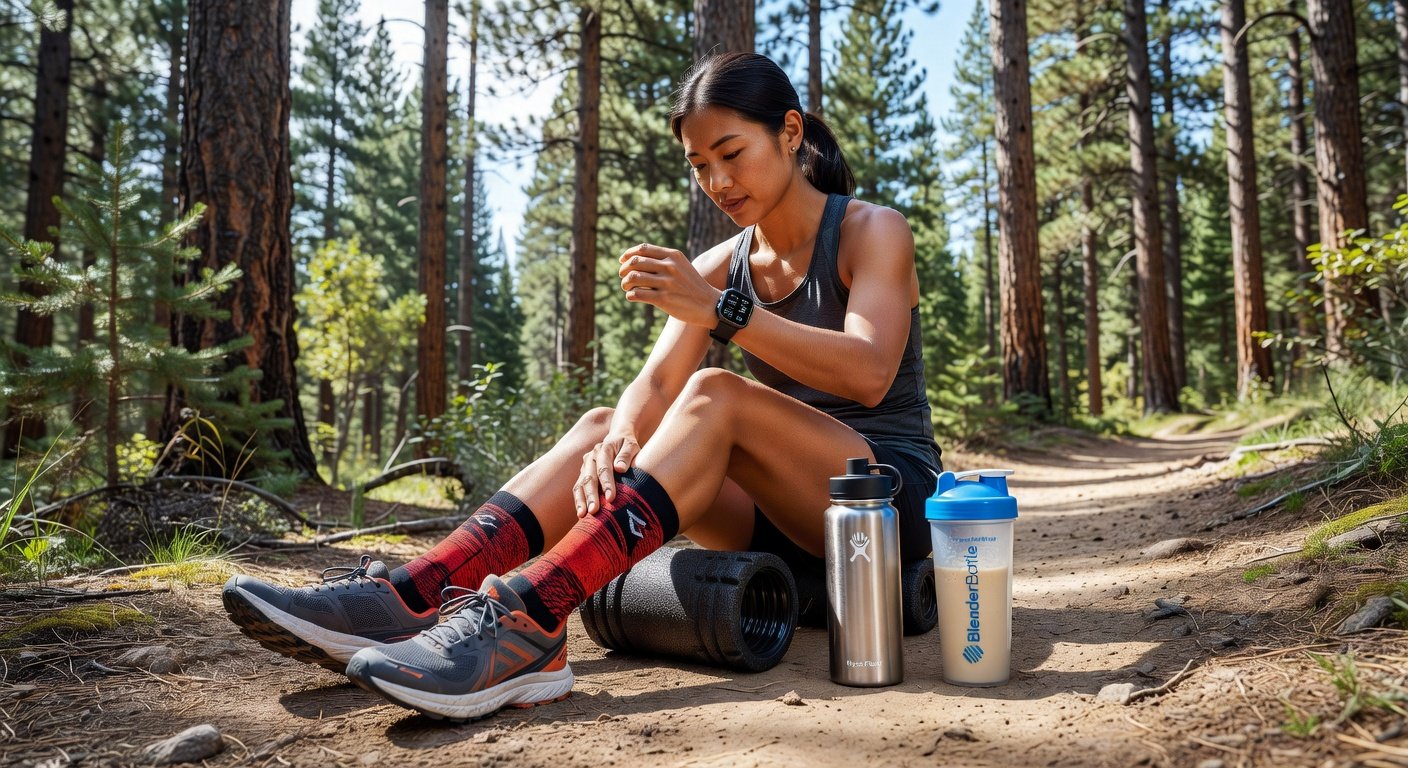
Targeted Nutrition for Muscle Repair
Post-ultra, your body needs 20-30g protein every 3-4 hours to kickstart muscle protein synthesis. Prioritize anti-inflammatory foods: tart cherry juice (reduces soreness by 20%, per studies), omega-3s from salmon, and turmeric-curcumin blends.
Daily Meal Blueprint
- Breakfast: Greek yogurt parfait with berries, nuts (30g protein).
- Snack: Bone broth + apple (collagen for joints).
- Lunch: Quinoa salad with chicken, spinach, avocado.
- Post-Workout: Whey shake + banana (carb reload).
- Dinner: Grilled salmon, sweet potatoes, broccoli.
- Evening: Cottage cheese + cherries (tryptophan for sleep).
Aim for 4-6g carbs/kg on Days 1-3, tapering to 3g/kg. For deeper nutrition insights, check the Mayo Clinic guidelines on post-exercise recovery. Hydrate: 0.5-1L per hour of sweat loss, tracked via urine color.
Mobility Exercises to Restore Range
Tight hips and ankles from trails lead to imbalances. Dedicate 15-20 mins daily to these:
- Couch Stretch: 2 mins/side – opens hip flexors.
- World's Greatest Stretch: 10 reps/side – dynamic full-body.
- Ankle Circles + Calf Drops: 2 mins – rebuild dorsiflexion.
- Thoracic Twists: 10/side – counter trail hunch.
- Pigeon Pose: 90 secs/side – glute release.
Incorporate a massage gun on Days 2,4,6. Consistency prevents ITBS or shin splints.
Sleep Hacks for Systemic Recovery
Ultras disrupt circadian rhythms—aim for 9-10 hours/night. Hacks:
Evening Wind-Down
- Dim lights 2 hours pre-bed (blue-blockers).
- Magnesium glycinate (400mg) + herbal tea.
- 4-7-8 breathing: 4s in, 7s hold, 8s out (4 rounds).
Cool bedroom (60-67°F), blackout curtains. Naps: 20-30 mins pre-3pm. For evidence-based sleep strategies, visit the Sleep Foundation.
2026 Recovery Tech: Wearables & Beyond
By 2026, expect AI-driven wearables revolutionizing bounce-back. Garmin's rumored HRV+ (with cryotherapy integration) and WHOOP 5.0's Strain Coach predict overtraining 48 hours early via biomarkers. Oura Ring Gen4 adds blood oxygen recovery scores. NormaTec boots with app-synced pulsing hit $1,000 but slash DOMS by 30%.
Budget pick: Coros Pace 3 ($229) for free recovery metrics. Pair with Hyperice Normatec for compression. Future: Neural wearables scanning vagus nerve tone. Start now with Garmin's ecosystem—export data to AI coaches.
Preventing Overtraining & Injury Red Flags
Watch for: stalled progress, irritability, poor sleep, HR >5bpm above baseline. Deload every 4th week. Cross-train 20% volume. Strength train 2x/week year-round: deadlifts, single-leg work. Mental recovery: 10-min meditation daily.
Trail runners thrive on adaptation—nail this protocol, and your next ultra PB awaits. Share your recovery wins below!


No comments yet. Be the first!