 The Runner Story

Introduction to Ultra Trail Fueling
Ultra trail running pushes the human body to its limits, especially on rugged terrain where every calorie counts toward finishing strong. In 2026, with events like the UTMB Mont-Blanc and Hardrock 100 drawing record entries, fueling choices are more critical than ever. Energy gels have long been the go-to for quick carbs, but whole foods are gaining traction for their nutritional completeness. This article dives deep into gels vs real food, comparing pros, cons, digestibility, and calorie efficiency. We'll explore race-day strategies, hybrid plans, and personalized tips to optimize endurance without gastrointestinal (GI) distress.
Fueling an ultra isn't just about calories—it's about sustained energy, hydration compatibility, and terrain demands. Trails with steep climbs and technical descents require portable, digestible options that don't slow you down. Whether you're prepping for a 50K or 100-miler, understanding these options can shave hours off your time and keep you racing.
Energy Gels: The Quick-Hit Powerhouse
Energy gels are concentrated carbohydrate sources, typically 20-40g carbs per packet, designed for rapid absorption. Brands like GU, Maurten, and Huma dominate the market, often with added electrolytes, caffeine, or amino acids.
Pros of Gels
- Portability and Convenience: Lightweight and pocket-friendly, ideal for vests on singletrack.
- Fast Absorption: Maltodextrin and fructose blends hit the bloodstream in 15-30 minutes, perfect for bonking prevention.
- High Calorie Density: Up to 100-200 calories per 32g packet, maximizing intake without bulk.
- Variety: Flavors, caffeine options (25-100mg), and hydrogel tech reduce GI issues.
Cons of Gels
- GI Distress Risk: High osmolality can cause nausea, especially if overconsumed (e.g., one per 20-30 minutes).
- Nutrient Gaps: Lacking fiber, fats, proteins—leading to 'flat' energy crashes after 4-6 hours.
- Taste Fatigue: Sweet overload in 100+ mile races like the 2026 Barkley Marathons.
- Cost: $2-3 per gel adds up for 20+ packets.
For calorie efficiency on rugged terrain, gels shine: 300-400 calories/hour is feasible without chewing time, crucial during climbs.
Real Food: Nature's Balanced Fuel
Whole foods like bananas, dates, peanut butter sandwiches, potatoes, and jerky provide carbs, fats, proteins, and micronutrients. Runners in the 2026 Western States 100 have reported success with aid-station staples.
Pros of Real Food
- Nutritional Completeness: Fiber aids steady digestion; fats/proteins prevent blood sugar spikes.
- Palatability: Variety combats flavor burnout—think salty potatoes after hours of sweets.
- Cost-Effective: Homemade options like rice balls or PBJs are cheap and customizable.
- Sustained Energy: Slower release for ultras over 12 hours.
Cons of Real Food
- Lower Calorie Density: A banana (100 cal) takes more space/weight than a gel.
- Digestion Time: 30-60 minutes, risky mid-climb on technical trails.
Portability Issues: Crushed sandwiches in a pack; needs aid stations.- GI Risks: High-fiber foods can cause bloating if not trained.
On calorie efficiency, real food lags: Aim for 250-350 cal/hour, but terrain slows eating—descents are prime windows.
Gels vs Real Food: Head-to-Head Comparison
Here's a breakdown for ultra trail contexts:
| Factor | Gels | Real Food |
|---|---|---|
| Digestibility | High (low fiber) | Medium (fiber slows but stabilizes) |
| Cal/Hour on Terrain | 350-450 | 250-350 |
| Weight (per 400 cal) | ~80g | ~200g |
| Cost (per 400 cal) | $4-6 | $1-2 |
| GI Distress Likelihood | Medium-High (osmotic) | Medium (fiber) |
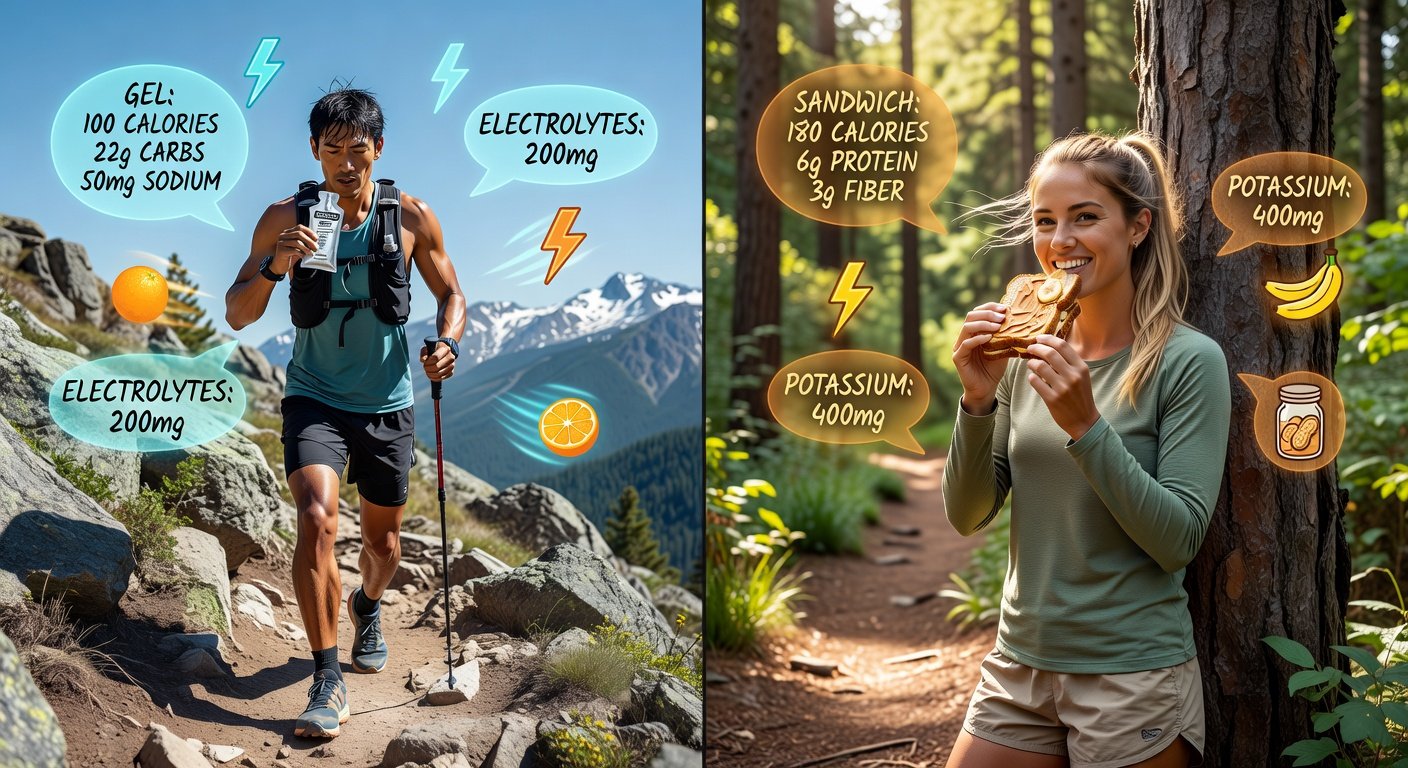
Digestibility is key on rugged terrain: Gels suit high-intensity efforts (e.g., 50K with 10,000ft gain), while real food excels in steady 100-milers. For science-backed insights, check Runner's World nutrition guides.
Race-Day Strategies for 2026 Events
2026 ultras like UTMB (171km, 10,000m+) demand hybrid tactics. Example from UTMB: Top finishers mixed gels for surges, real food at Courmayeur aid (pasta, cheese).
50-100K Races (High Intensity)
- Pre-load: Carb-rich breakfast 3 hours prior.
- Gel every 45min on climbs; banana on flats.
- Hybrid: 60% gels, 40% food for 300cal/hr.
100-Mile Epics (Low-Moderate Intensity)
- Aid-station focus: Potatoes + salt tabs.
- Night strategy: Real food for nausea prevention.
- Hybrid: 40% gels, 60% food.
For Hardrock 2026 (loop course), pack date-PB balls: 250cal, digestible on Ouray climb. Train gut with 2-3x weekly long runs mimicking intake.
Hybrid Fueling Plans: The Gold Standard
Avoid all-or-nothing: Hybrids minimize risks. Sample 100K Plan (400cal/hr):
- 0-2hrs: 2 gels/hr + electrolyte drink.
- 2-6hrs: 1 gel + banana/PBJ every 45min.
- 6+hrs: Potatoes, jerky, gels as needed.
Personalize by distance/intensity:
- Short/Intense (50K): 70% gels—quick ups.
- Long/Low (100mi): 70% real—sustained.
- Hot/Humid: Low-fiber hybrids to cut distress.
Mistakes to Avoid:
- Untested foods—practice in training.
- Neglecting sodium (500-1000mg/hr).
- Over-gelling without water (1:1 ratio).
Link to ultra fueling research via UltraRunning Magazine.
Personalized Tips and Testing
Assess your needs: Use a 3-week test block. Track HR, perceived effort, GI via app. Adjust ratios: E.g., if gels cause cramps, swap 20% for rice cakes.
For 2026 goals:
- Vertical Kings: Gel-heavy for power.
- Endurance Grinders: Food-forward.
- Vegans: Dates, nut butter, Tailwind.
Pro tip: Zone 2 training enhances fat adaptation, reducing carb reliance by 20%.
FAQs on Ultra Trail Fueling
Q: How many calories for ultras?
A: 250-90kg bodyweight (e.g., 400 for 70kg runner).
Q: Best gel for terrain?
A: Hydrogels like Maurten for less gut slam.
Q: Real food on the go?
A: Pre-wrap tortillas with Nutella.
Consult UTMB official site for aid station intel.
Conclusion
Gels offer speed and density; real food brings balance and joy. For 2026 ultras, hybrid plans rule—train them, test ruthlessly, and conquer the trails. Fuel smart, run strong.


No comments yet. Be the first!