 The Runner Story

Introduction to Ultra Trail Running Shoes in 2026
Ultra trail running demands footwear that excels over extreme distances on rugged terrains. In 2026, the top trail running shoes prioritize maximum cushioning for fatigue reduction, superior grip for technical trails, rock-solid durability, and breathability to manage sweat during multi-day efforts. Innovations like graphene-infused outsoles for unbeatable traction and recycled bio-based foams for eco-friendliness are game-changers.
This guide reviews the top 10 models, comparing key players from Hoka, Salomon, Altra, and more. We'll cover pros/cons, price points (around $150-$220), suitability for foot types (wide, narrow, high-volume), and race conditions from muddy ultras to rocky 100-milers.
Key Features for Ultra Distances
- Cushioning: High-stack foams (30-40mm) with responsive energy return.
- Grip: Vibram Megagrip or 2026's nano-structured lugs for wet rocks.
- Durability: Reinforced uppers and abrasion-resistant rubbers.
- Breathability: Engineered meshes with hydrophobic treatments.
Foot strike matters: zero-drop for Altra fans, rocker geometry for Hoka speedsters.
Top 10 Trail Running Shoes for Ultras 2026
1. Hoka Speedgoat 7 Ultra
Stack: 36mm heel. Price: $180. The gold standard for ultras, with Vibram Megagrip 5mm lugs updated with graphene for 2026 wet-grip supremacy. Plush Meta-Rocker cushions endless miles.
- Pros: Supreme cushioning, lightweight (9.5oz), wide toebox for natural splay.
- Cons: Less agile on super-technical descents.
Best for: Neutral feet, 50-100K races. Eco-foam from 70% recycled materials.
2. Salomon S/Lab Ultra 5
Stack: 32mm. Price: $200. Salomon's precision engineering shines with Contagrip MA outsole featuring self-cleaning lugs and energy-return Strobel upper. Breathable Air Mesh vents heat.
- Pros: Exceptional durability (500+ miles), precise fit for narrow feet.
- Cons: Higher price, snug toebox.
Ideal for: Technical ultras like UTMB, narrow-medium feet. Check Salomon's site for custom fits.
3. Altra Olympus 6
Stack: 33mm zero-drop. Price: $170. Foot-shaped toebox promotes natural gait. 2026 EGO Max foam is 20% lighter, with StoneGuard rock plate for protection.
- Pros: Unmatched wide-fit comfort, breathable ripstop upper.
- Cons: Zero-drop transition challenging for heel-strikers.
Suits: Wide feet, long self-supported ultras.
4. Nike Terra Kiger 10
Stack: 28mm. Price: $160. ZoomX foam midsole with All Terrain Compound outsole grips mud like glue. Flyknit upper breathes in humidity.
- Cons: Durability lags on sharp rocks (300 miles).
For speed-focused ultras, neutral feet.
5. La Sportiva Mutant 3 Gore-Tex
Stack: 21mm. Price: $190. FriXion XT rubber with sticky 5mm lugs. Waterproof yet breathable GTX membrane for variable weather.
- Pros: Bombproof build, sticky grip on slabs.
- Cons: Firmer ride, heavier (10.8oz).
Rocky mountain ultras, high-volume feet.
6. Brooks Cascadia 18
Stack: 30mm. Price: $150. DNA Loft v3 cushioning and TrailTack rubber. Ballistic Rock Shield adds protection.
- Pros: Balanced versatility, sustainable TPEE film.
- Cons: Average breathability in tropics.
Multi-terrain ultras, all foot types.
7. Saucony Peregrine 14
Stack: 28mm. Price: $140. PWRTRAC outsole with deep lugs. FormFit upper molds to foot.
- Pros: Affordable, quick-drying mesh.
- Cons: Less stack for 100-milers.
Budget ultras, narrow feet. See Runner's World for lab tests.
8. Topo Athletic Ultraventure 4
Stack: 32mm. Price: $155. ZipFoam midsole, Vibram XS Trek outsole. Wide platform stability.
- Pros: Eco-recycled upper, durable for 400 miles.
- Cons: Slightly clunky feel.
Wide feet, groomed trails to rough.
9. On Cloudultra 2
Stack: 33mm. Price: $180. Helion superfoam with Missiongrip rubber. CloudTec pods absorb impacts.
- Pros: Propulsive ride, excellent breathability.
- Cons: Pods wear faster on lava rock.
Fast ultras, medium feet.
10. Merrell Long Sky 3
Stack: 30mm. Price: $165. FloatPro foam, Vibram Megagrip. Recycled mesh for planet-friendly runs.
- Pros: Plush yet agile, vegan materials.
- Cons: Narrower fit.
Vegan ultras, neutral-wide feet.
Comparisons: Hoka vs. Salomon vs. Altra
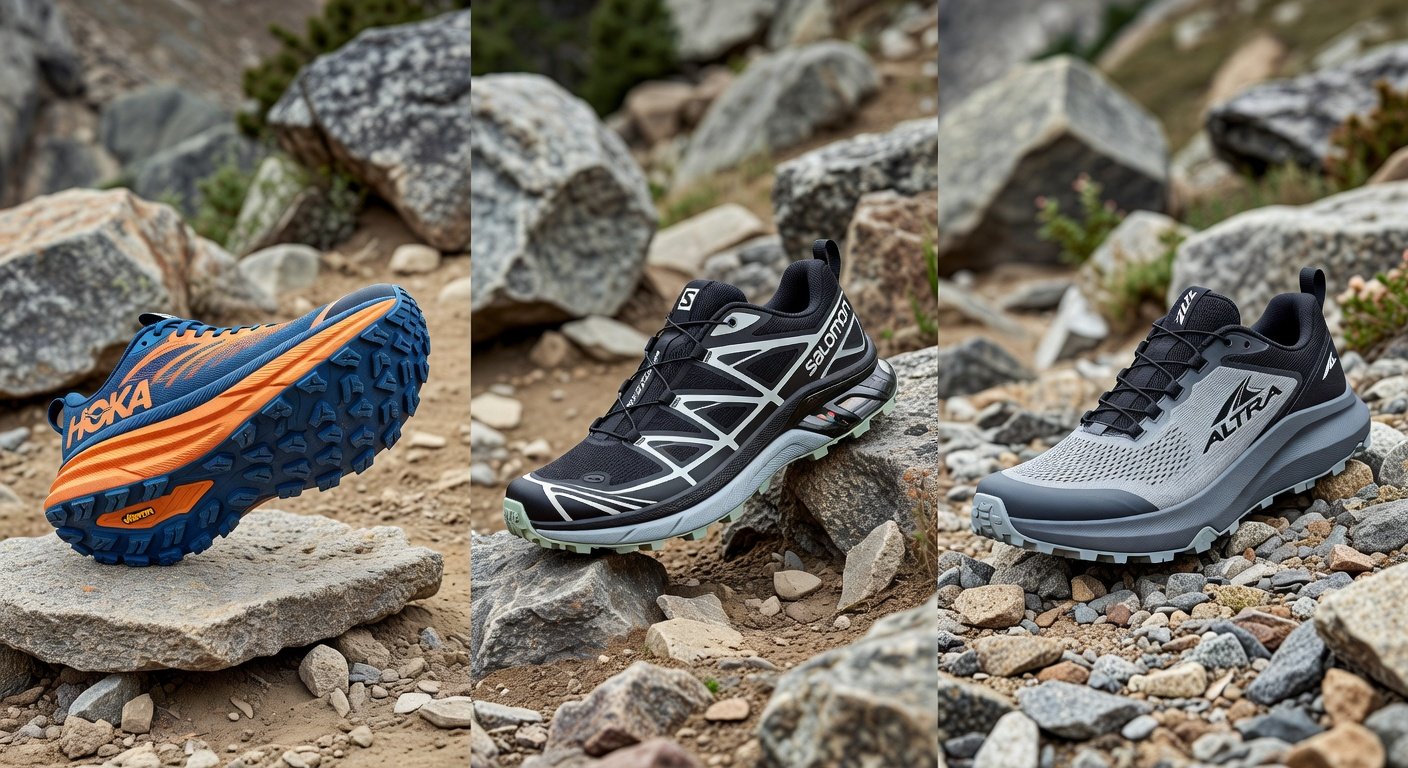
Hoka Speedgoat wins cushioning battles (36mm vs. Salomon's 32mm), ideal for fatigued legs. Salomon edges durability and grip on techy terrain. Altra's zero-drop fosters efficiency for trained feet but may cramp beginners.
| Model | Cushion | Grip | Weight | Price |
|---|---|---|---|---|
| Hoka | 9.5/10 | 9/10 | 9.5oz | $180 |
| Salomon | 8.5/10 | 9.5/10 | 9.2oz | $200 |
| Altra | 9/10 | 8.5/10 | 9.8oz | $170 |
2026 Innovations Shaping the Future
Advanced outsoles like Salomon's Contagrip with nano-grooves shed mud instantly. Eco-materials: Hoka's bio-foams from sugarcane, Altra's plant-based glues reduce carbon footprints by 30%. Smart features? Embedded sensors in premium models track wear via apps.
How to Choose for Your Ultra
- Assess foot type: Try wide-toebox for swelling.
- Match terrain: Sticky lugs for wet, plates for rocks.
- Test fit: Half-size up for ultras.
- Budget: $150+ for longevity.
For narrow feet, Salomon; wide, Altra/Topo. Hot races? Prioritize breathability like Nike.
Conclusion
The Hoka Speedgoat 7 Ultra tops our 2026 list for balanced ultra prowess, but your perfect shoe depends on terrain and feet. Invest in pairs with proven tech—your legs will thank you after 100K. Lace up and conquer those trails!


No comments yet. Be the first!