 The Runner Story
Introduction to Heat Acclimation for Marathon Runners
Preparing for a 2026 marathon in potentially hot conditions requires more than standard mileage. Heat acclimation strategies offer a proven edge by triggering key physiological changes that improve performance and safety. Runners who adapt to heat often experience better endurance, reduced perceived effort, and lower risk of heat-related issues during races. This approach has gained attention among elite and recreational athletes alike as race organizers increasingly host events in warmer climates due to shifting weather patterns.
This comprehensive guide covers the science behind these adaptations, a practical 10-14 day protocol, method comparisons, integration strategies, real-world examples, monitoring techniques, common pitfalls, and answers to frequently asked questions. By the end, you will have actionable steps to incorporate heat training safely and effectively into your existing marathon plan.
Physiological Adaptations from Heat Exposure
Controlled heat exposure leads to several beneficial changes in the body. Plasma volume expands by up to 15-20 percent within the first week, allowing better blood flow to working muscles and skin for improved cooling efficiency. Sweat rate increases while sodium concentration in sweat decreases, helping maintain electrolyte balance during long efforts. Core temperature rises more slowly during exercise because the body learns to dissipate heat earlier, and heart rate stays lower at the same intensity due to improved cardiovascular efficiency.
Additional adaptations include enhanced skin blood flow, better fluid retention through hormonal adjustments, and reduced glycogen utilization in hot conditions. These changes typically begin within 3-5 days and reach near-peak levels around 10-14 days of consistent exposure. Research from institutions like the National Institutes of Health highlights how these shifts enhance cardiovascular stability and thermoregulation, critical for long-distance events. The Centers for Disease Control and Prevention also emphasizes the importance of gradual heat exposure to prevent heat illness during athletic activities.
Step-by-Step 10-14 Day Acclimation Schedule
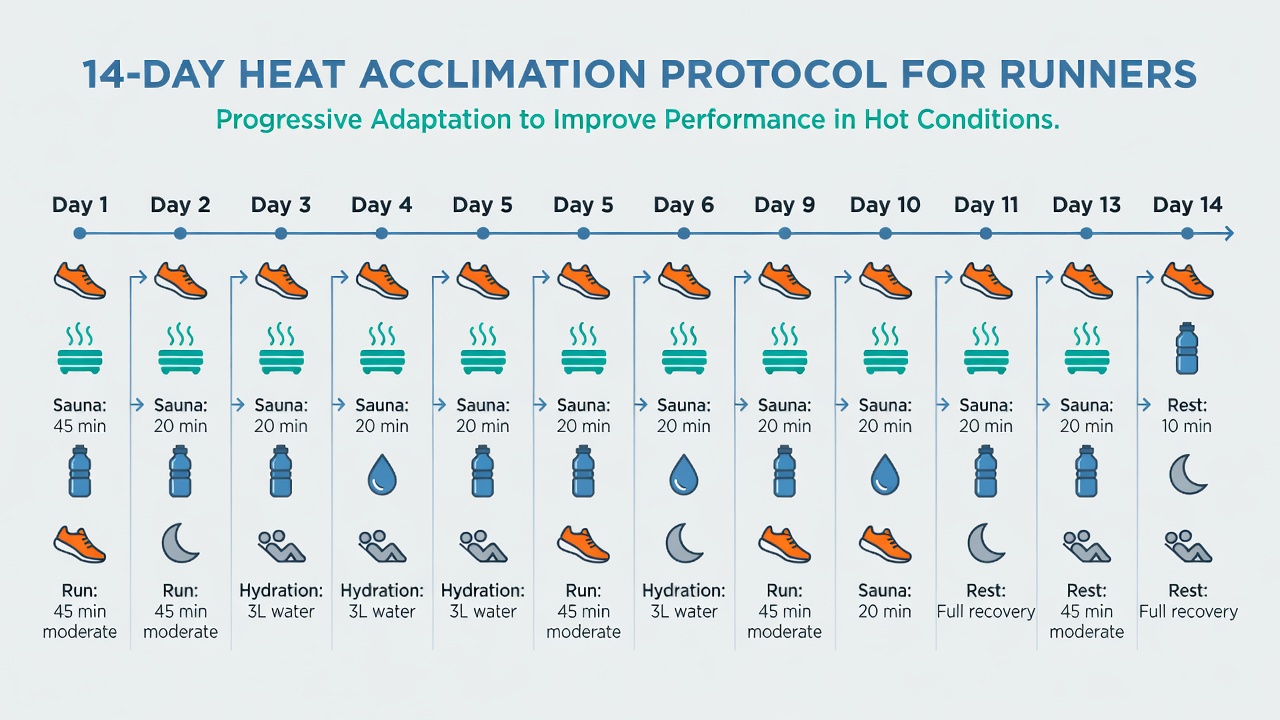
Follow this structured timeline to build tolerance safely. Start with moderate sessions and progress intensity while always prioritizing recovery and hydration.
- Days 1-3: Begin with 30-40 minutes of easy running or cycling in 30-35°C heat, or use an indoor heated environment. Keep effort conversational and focus on consistent fluid intake before, during, and after sessions. Include one rest day if needed.
- Days 4-7: Increase duration to 45-60 minutes. Introduce one active run at marathon pace effort in warm conditions while monitoring heart rate. Add a short passive sauna or hot bath session on two of these days.
- Days 8-10: Extend key sessions to 60-90 minutes. Incorporate two quality workouts with heat exposure, such as tempo runs or long easy miles. Track sweat rate by weighing yourself before and after sessions.
- Days 11-14: Maintain 90+ minute efforts that simulate race-day heat while beginning to taper overall volume if your marathon is approaching. Include at least one full dress rehearsal run in conditions matching expected race temperatures.
Always include rest or easy days between harder heat sessions to allow adaptation without cumulative fatigue.
Passive vs Active Heat Acclimation Methods
Active methods involve exercise in hot environments, such as outdoor runs or heated treadmill sessions. They combine cardiovascular training with heat stress for faster adaptations but place greater demands on the body. Passive approaches include sauna or hot bath exposure after regular runs, which are less taxing on joints and easier to schedule around busy training weeks.
Many runners combine both: active sessions for core fitness gains and passive options for supplemental stimulus without extra mileage. Studies suggest active methods yield slightly quicker plasma volume gains within seven days, but passive protocols suit those managing high training loads or recovering from minor injuries. A balanced approach often produces the best results for marathon-specific endurance.
Integrating Acclimation with Existing Endurance Training
Blend heat protocols into your marathon plan without disrupting key workouts. Schedule acclimation runs on easy or long-run days rather than speed sessions. Use heat chambers or post-run saunas after shorter recovery runs to avoid interfering with high-intensity efforts. Track overall fatigue using a simple wellness questionnaire covering sleep quality, muscle soreness, and motivation levels.
Sample integration for a 16-week plan: Weeks 10-12 focus on building acclimation volume, while weeks 13-14 maintain exposure with reduced total mileage. This ensures you build heat tolerance while preserving aerobic base, strength, and race-specific fitness. Adjust based on individual response and consult a coach if training volume exceeds 80 kilometers per week.
Real Runner Case Examples and Monitoring Tips
One experienced marathoner used a 12-day protocol combining evening 20-minute saunas with morning easy runs in 32°C conditions, achieving a 15 percent improvement in hot-weather pace during a test half-marathon. Another runner recovering from a minor calf strain relied primarily on passive hot baths after easy miles and reported stable core temperatures plus reduced perceived exertion on race day. A third athlete incorporated heated indoor cycling sessions twice weekly and noted better late-race hydration management during a warm 2025 marathon.
Monitor progress with core temperature devices, ingestible pills, or simple metrics like resting heart rate and daily sweat rate calculations. Aim to keep core temperature under 38.5°C during sessions. Wearable technology such as chest straps paired with apps provides real-time feedback for safe progression. Record environmental conditions including temperature, humidity, and dew point for each session to refine future plans.
Common Mistakes to Avoid
Many runners rush the timeline by jumping straight into long hot runs, leading to excessive fatigue or injury. Others neglect hydration tracking and become dehydrated before adaptations fully develop. Ignoring individual factors such as age, fitness level, or medical history can increase overexertion risk. Always progress gradually and listen to early warning signs like persistent dizziness or elevated morning heart rate.
Frequently Asked Questions
What are the risks of overexertion during acclimation?
Start conservatively and watch for dizziness, nausea, or excessive fatigue. Reduce duration immediately if symptoms appear and consult a physician if you have pre-existing cardiovascular conditions.
How long do adaptations last?
Benefits can persist 1-2 weeks with occasional maintenance exposure every three to four days after the initial block.
Can beginners use these strategies?
Yes, but scale duration and intensity appropriately under professional guidance to minimize risk.
Should acclimation be done before every race?
Only for events expected to exceed 25°C; otherwise, standard training suffices.
Conclusion
Heat acclimation is an essential tool for 2026 marathon success in warm weather. By following evidence-based protocols, tracking your responses carefully, and avoiding common mistakes, you can enhance endurance, improve safety, and achieve better race-day resilience. Begin planning your acclimation phase six to eight weeks before your target event for optimal results and consult resources from authoritative bodies such as the American College of Sports Medicine for additional guidance.

No comments yet. Be the first!