 The Runner Story

Introduction: Why Yoga Complements Marathon Training
Intermediate runners frequently encounter plateaus in endurance, flexibility, and recovery while preparing for a marathon. Standard mileage builds cardiovascular capacity but often neglects mobility and mental resilience. Incorporating yoga fills these gaps by targeting chronically tight muscle groups such as the hip flexors, hamstrings, and calves while fostering the mind-body awareness required to maintain form and focus during the final miles of a race. Unlike generic stretching routines performed at the end of a run, yoga delivers a structured practice that combines mobility, strength, and breath control, leading to measurable improvements in stride efficiency and injury resilience over a typical 16-week training cycle.
Key Benefits of Yoga for Marathon Endurance
Regular yoga practice increases range of motion in the posterior chain and hip complex, directly reducing the incidence of common overuse injuries like IT band syndrome and plantar fasciitis. It also improves neuromuscular coordination, allowing runners to recruit muscle fibers more efficiently during long efforts. On the mental side, yoga lowers perceived exertion on high-mileage days by teaching controlled breathing and present-moment focus. Research from the National Institutes of Health shows consistent practitioners experience reduced inflammation markers and faster recovery between hard sessions. Many runners also report better sleep quality, which supports glycogen replenishment and overall training consistency.
Selecting Beginner-Friendly Yoga Styles for Runners
Hatha yoga emphasizes slow, deliberate movements and longer holds, making it ideal for runners new to the practice. Yin yoga targets deep connective tissues around the hips and lower back through passive poses held for three to five minutes, perfect for recovery days. Restorative classes using props such as bolsters and blankets further support the nervous system after long runs. Avoid high-intensity vinyasa or power yoga during peak mileage weeks unless you are already comfortable with the pace. Search for instructors experienced with athletes or programs specifically labeled “yoga for runners” at local studios or through reputable online platforms.
Sample Weekly Integration Schedule
A practical schedule adds two to three yoga sessions without displacing key workouts. Monday pairs an easy recovery run with a 20-minute hip-focused cool-down sequence. Wednesday follows a tempo effort with 30 minutes of restorative poses to promote circulation. Friday serves as a full 45-minute active yoga session on a rest or cross-training day. Sunday concludes the long run with 15 minutes of targeted stretches while muscles remain warm. Runners can adjust timing based on personal recovery needs, always prioritizing sleep over additional movement when fatigue accumulates.
Essential Poses for Running Muscle Groups
The following five poses address the primary areas stressed during marathon training. Perform them in a quiet space after warming up with light movement. Breathe steadily through the nose, extending each exhale to encourage relaxation.
1. Downward-Facing Dog
Begin on hands and knees with wrists under shoulders. Spread fingers wide and press into the mat while lifting hips upward and back. Keep a slight bend in the knees if hamstrings feel tight. Pedal the feet gently to release calves. Hold for 45-60 seconds. This foundational pose lengthens the entire back body and strengthens the shoulders for better posture on long runs.
2. Pigeon Pose
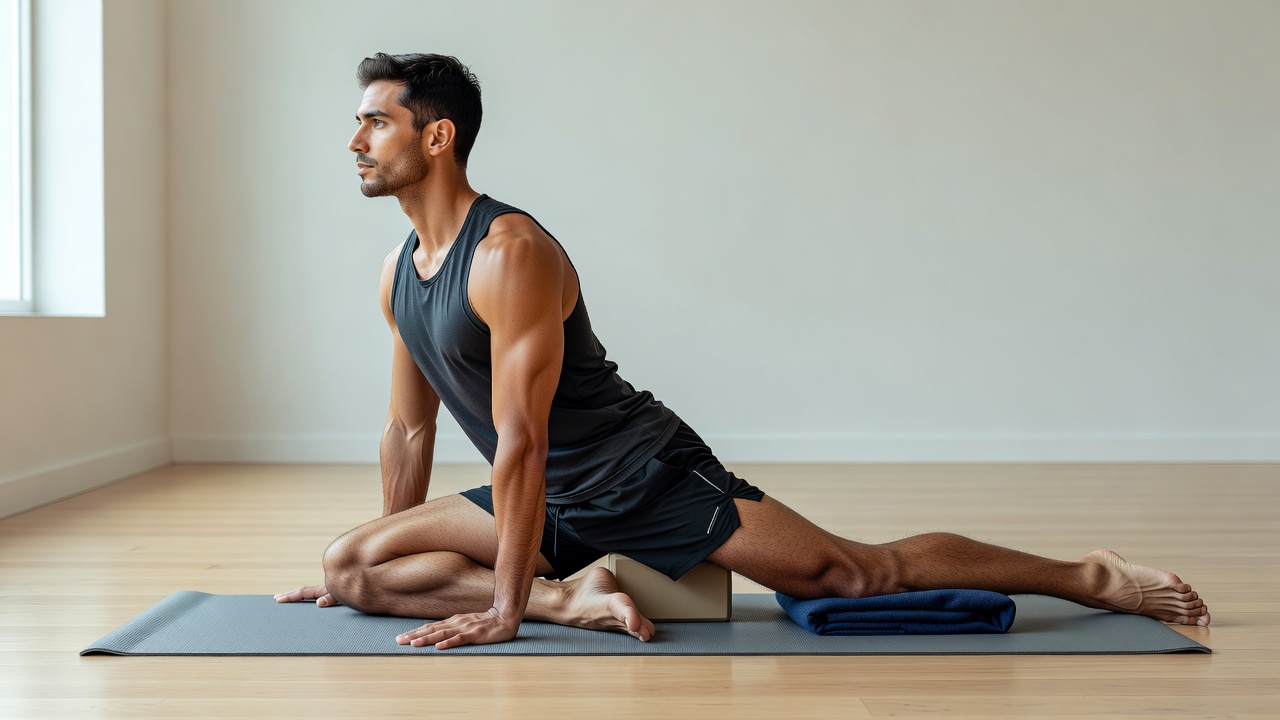
From downward dog, draw the right knee forward and place it behind the right wrist. Extend the left leg straight back and lower the hips toward the floor. Support the front hip with a block or folded blanket if the stretch feels intense. Hold 60-90 seconds per side. The pose deeply opens the hip rotators and piriformis, areas frequently tight from repetitive forward motion.
3. Warrior II
Step the feet wide apart, turn the front foot forward, and bend the front knee to 90 degrees while keeping the back leg straight. Extend arms parallel to the floor and gaze over the front hand. Maintain an upright torso. Hold 30-45 seconds per side. The pose builds endurance in the quadriceps and opens the chest for improved breathing mechanics during races.
4. Seated Forward Fold
Sit with legs extended, hinge at the hips, and reach toward the feet. Keep the spine long rather than rounding the back. Use a strap looped around the soles if reaching is limited. Hold 45 seconds. This movement lengthens the hamstrings and lower back while calming the nervous system after high-volume days.
5. Supine Twist
Lie on your back, draw both knees toward the chest, then drop them to one side while keeping shoulders flat on the mat. Extend the opposite arm and turn the head gently. Hold 60 seconds per side. The twist releases tension in the lower back and promotes spinal mobility essential for balanced running gait.
Yoga Versus Traditional Stretching Routines
Static stretching performed after runs improves short-term flexibility but rarely builds the stabilizing strength or balance that yoga develops. Yoga sequences integrate isometric holds and controlled transitions, enhancing proprioception and reducing compensatory movement patterns that lead to injury. Runners who substitute 20 minutes of yoga for foam rolling three times weekly commonly report fewer complaints of knee and Achilles discomfort over a training block. The mindful breathing component also provides a psychological edge absent from mechanical stretching alone.
Real-Runner Case Examples
Sarah, a 38-year-old intermediate runner aiming for a sub-3:45 marathon, added two 30-minute yoga sessions weekly and improved her hip mobility enough to increase weekly mileage by 10 percent without setbacks. She credits pigeon pose variations for eliminating recurring glute tightness. Mark, preparing for his first marathon at age 42, experienced chronic patellar tendon pain until he incorporated warrior II and downward dog three times per week; his discomfort decreased within four weeks and he completed the race comfortably. Another runner, Priya, used yin yoga on rest days during a 20-week buildup and noted improved sleep and reduced anxiety before long runs, ultimately achieving a personal best by six minutes.
Progress Tracking Tips
Record yoga session duration and perceived recovery in the same training log used for runs. Perform a monthly sit-and-reach test and compare results. Note average pace on easy runs and rate of perceived exertion on long efforts every four weeks. Many athletes also track heart-rate variability or resting heart rate to gauge overall recovery improvements. Adjust pose selection or session length based on these objective markers rather than subjective feelings alone.
Common Mistakes to Avoid
Many runners push too hard into poses early on, risking strain instead of release. Always prioritize alignment and breath over depth. Skipping warm-up before yoga can reduce effectiveness and increase discomfort. Another frequent error is treating yoga as a substitute for dedicated strength work; the two practices complement each other best when scheduled separately. Finally, inconsistent practice yields minimal results—aim for at least two sessions weekly rather than sporadic longer classes.
FAQ: Common Concerns About Yoga in Marathon Training
How much time does yoga require each week? Beginners see benefits from 20-30 minutes two to three times weekly; more experienced practitioners may extend sessions to 45-60 minutes on recovery days without interfering with running volume.
Is yoga too intense during peak mileage weeks? Choose gentle yin or restorative styles on the hardest training days and save active flows for easier periods. Listen to your body and reduce duration if soreness persists.
Can beginners practice these poses safely? Yes, provided modifications are used and a qualified instructor reviews form initially. Online video resources from reputable sources offer clear cues for safe alignment.
Will yoga replace strength training? No. Yoga enhances mobility and core stability but should complement rather than replace resistance exercises targeting the posterior chain and upper body.
How soon will I notice improvements in running? Most runners report better hip mobility and reduced post-run stiffness within three to four weeks of consistent practice.
Do I need special equipment? A standard yoga mat and optional blocks or straps suffice for most poses. These items are inexpensive and widely available.
For additional evidence-based guidance on endurance training and injury prevention, consult resources at Runner's World, Mayo Clinic, and National Institutes of Health. With consistent integration, yoga becomes a powerful tool that elevates both physical capacity and mental resilience throughout marathon preparation.
No comments yet. Be the first!