 The Runner Story

Trail Running Tips to Supercharge Marathon Endurance Training
Intermediate marathon runners frequently encounter performance plateaus when relying exclusively on road training. Incorporating trail running provides distinct physiological and psychological benefits that enhance endurance, reduce injury risk, and improve race-day performance. This comprehensive guide explores the science behind these gains, offers detailed scheduling strategies, recommends essential gear, presents multiple sample workouts, compares trail versus road outcomes, and delivers a month-by-month progression plan tailored for 2026 marathon goals.
Physiological and Mental Benefits of Trail Running for Marathoners
Trails demand continuous adjustments in foot placement, stride length, and balance, which significantly improve proprioception and neuromuscular coordination. The uneven terrain increases eccentric loading on the quadriceps, hamstrings, and calves, strengthening muscles that absorb impact during the later miles of a marathon. Research from sources such as the Mayo Clinic highlights how varied surfaces enhance overall running economy and aerobic capacity. Mentally, trails build resilience by requiring sustained focus amid changing conditions, helping runners maintain pace when fatigue sets in during long races. These adaptations complement road work by developing a more durable musculoskeletal system without increasing repetitive stress on pavement.
Additional benefits include improved core stability and ankle strength from navigating roots and rocks. Runners often notice better hill-climbing ability and faster recovery between hard efforts because trail sessions distribute load across more muscle groups. Over time, these changes translate to stronger finishes and fewer late-race breakdowns.
Choosing Suitable Trails for Effective Training
Select trails based on your current fitness level and training phase. Beginners to off-road running should prioritize wide fire roads or groomed paths with gentle elevation changes before advancing to technical singletrack. Ideal marathon-training trails feature moderate hills, good drainage, and clear signage. Local state parks, rail-trails, and conservation areas provide excellent options. Always verify current trail conditions through official resources such as the National Park Service website. Avoid routes with extreme technical difficulty or poor visibility during early training cycles. Consider seasonal factors like mud, snow, or leaf cover that can alter footing and increase fall risk.
Fitting Trail Sessions Into a Weekly Marathon Schedule
Integrate trails without disrupting key road workouts. For a 45- to 55-mile training week, replace one midweek easy run with a 60- to 90-minute trail effort at conversational pace. Schedule longer trail runs every third weekend, starting at 90 minutes and building to 2.5–3 hours. Maintain similar total weekly mileage to your road plan. Example schedule for a 50-mile week: Monday rest or cross-training, Tuesday 8-mile trail easy run, Wednesday 6-mile road tempo, Thursday 7-mile road easy, Friday rest, Saturday 18-mile road long run, Sunday 5-mile recovery jog. Adjust based on recovery and race-specific needs.
Must-Have Gear and Safety Equipment
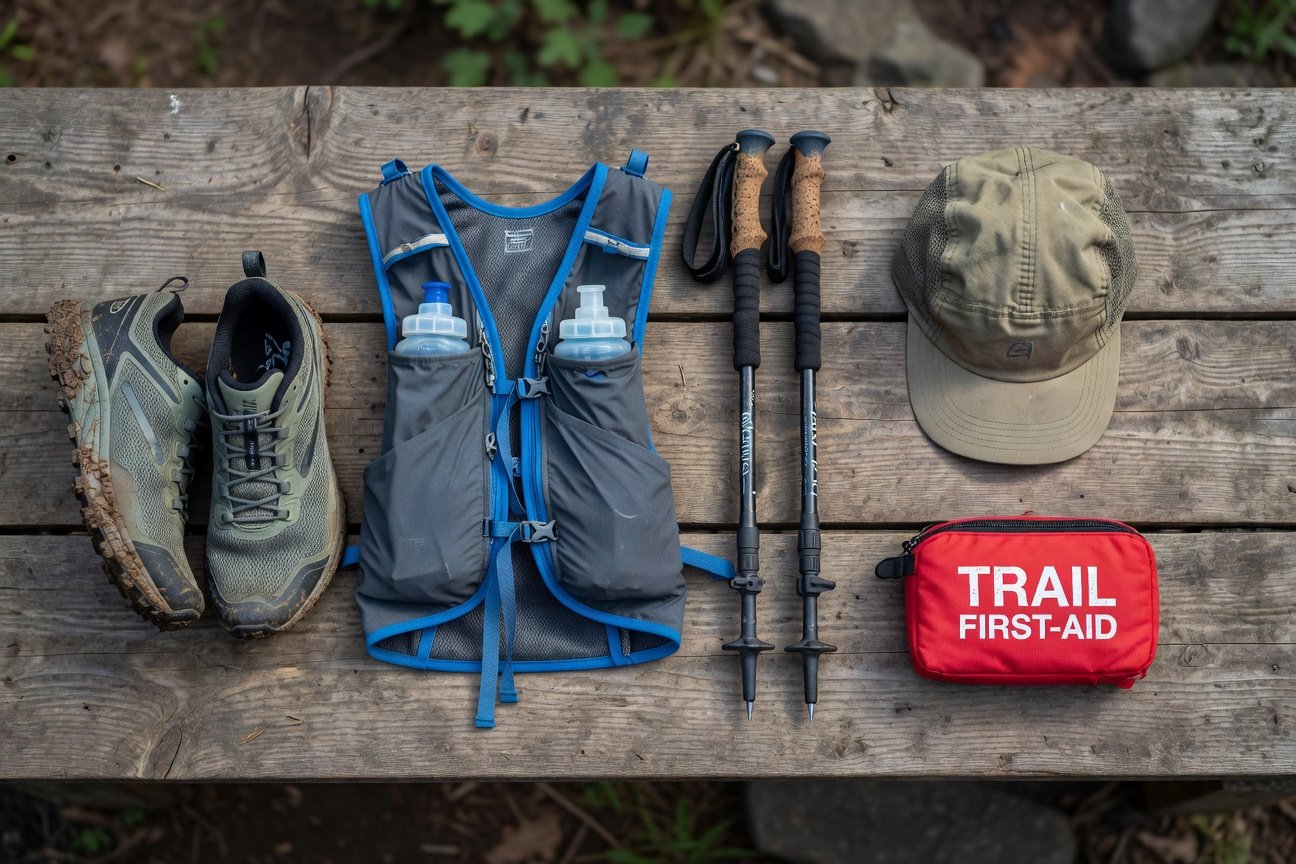
Trail-specific shoes with aggressive outsoles and protective rock plates are essential for traction and foot safety. A hydration vest or pack allows hands-free carrying of water and nutrition on longer efforts. Trekking poles assist with balance on steep ascents and descents. Carry a lightweight first-aid kit, fully charged phone with offline maps, and a headlamp for early morning or evening runs. Moisture-wicking layers, a visor or cap, and sunglasses complete the setup. Test all gear on short runs before relying on it for long sessions.
Sample Trail Workouts With Detailed Descriptions
Easy trail run: 60–75 minutes on rolling terrain, keeping effort at 70 percent of max heart rate to build aerobic base. Trail tempo workout: Warm up 15 minutes, then run 25 minutes at marathon goal pace on the smoothest sections, followed by 10 minutes cool-down. Hill repeats: Find a steady 6–8 percent grade and complete 8 x 3-minute hard climbs with jog-down recovery, focusing on strong posture. Long trail effort: 2–3 hours mixing runnable sections with power hiking on climbs; practice fueling every 45 minutes. Fartlek session: 45 minutes alternating 3-minute surges with 2-minute recoveries while adapting to terrain changes. Each workout should conclude with mobility work targeting hips and ankles.
Direct Comparison of Endurance Outcomes: Trails Versus Roads
Trail running often yields equal or greater improvements in VO2 max and running economy due to variable resistance and constant stabilization demands. The eccentric emphasis prepares legs for downhill pounding common in many marathons. Athletes who mix surfaces typically experience stronger late-race surges and lower rates of overuse injuries compared with road-only peers. Data from physical activity guidelines at the Centers for Disease Control and Prevention support varied training environments for comprehensive fitness development. Trail sessions also enhance mental toughness, a critical factor when pushing through the final 10K of a marathon.
Month-by-Month Progression Plan
Months 1–2: Introduce one 45-minute trail run weekly on easy terrain while keeping total mileage stable. Months 3–4: Extend the trail session to 75 minutes and add one hill-focused workout. Months 5–6: Incorporate a 2-hour trail long run every three weeks and practice race-pace efforts on moderate trails. Throughout, monitor for signs of excessive fatigue and reduce volume if needed. This gradual approach minimizes injury while maximizing adaptation.
Common Mistakes and How to Avoid Them
Many runners choose overly technical trails too early, leading to frustration and injury. Others neglect strength training for stabilizing muscles or fail to adjust pace expectations for variable terrain. Ignoring weather hazards such as ice or flash floods can create dangerous situations. Always scout new routes in daylight, inform a friend of your plans, and prioritize effort over pace on trails.
Nutrition and Hydration Strategies on Trails
Carry easily digestible gels or chews and practice consuming them while moving. Aim for 30–60 grams of carbohydrates per hour on efforts longer than 90 minutes. Use a hydration pack with a 1.5–2 liter capacity for runs exceeding two hours. Test all nutrition strategies during training to avoid gastrointestinal issues on race day.
Frequently Asked Questions
Is trail running safe during marathon training?
Yes, provided you select appropriate difficulty levels, use proper footwear, and progress volume gradually while carrying basic safety items.
How should I adapt trails for specific 2026 marathon goals?
Align trail sessions with aerobic and strength development while reserving road workouts for goal-pace practice and race simulation.
What if I live in a flat area with limited trail access?
Use treadmills with incline, local parks with small hills, or travel to nearby trail systems on weekends to maintain benefits.
Conclusion
Strategic integration of trail running into marathon preparation creates stronger, more resilient athletes capable of superior endurance performance. By following the detailed scheduling, gear recommendations, workout examples, and progression guidelines above, runners can safely add trails to their regimen and achieve new personal bests in 2026.


No comments yet. Be the first!