 The Runner Story

From Spreadsheets to Starting Lines: An Accountant's 2026 Running Journey
In 2026, many professionals face the same challenge: long hours at a desk leading to fatigue and declining health. This case study follows Jordan Hale, a 42-year-old accountant, who transformed a sedentary lifestyle into a marathon finish using the same discipline applied to budgets and financial tracking. Jordan's story highlights measurable milestones, parallels between fiscal planning and training plans, and authentic motivation drawn from data and community support. The journey began with a simple realization during an annual health checkup that revealed elevated cholesterol levels and persistent low energy, prompting a decision to apply professional analytical skills to personal wellness.
The Sedentary Starting Point and First Steps
Before January 2026, Jordan averaged 10-hour workdays with minimal movement beyond commuting. Health screenings revealed rising blood pressure and low energy. Inspired by a colleague's 5K, Jordan applied accountant-level analysis: track baseline activity using a simple pedometer app. The first goal was completing a 5K without walking breaks. By focusing on small, consistent deposits of effort—like weekly budget reviews—Jordan completed that initial 5K in eight weeks. This early win proved that discipline in numbers could fuel physical progress. Family support played a key role, with Jordan's spouse helping log initial walks around the neighborhood park each evening after dinner.
Overcoming Desk-Job Fatigue Through Structured Integration
Desk fatigue often stems from prolonged sitting, poor posture, and mental exhaustion. Jordan countered this by inserting short runs into busy workweeks, starting with 20-minute lunch breaks twice weekly. These micro-sessions improved circulation and afternoon focus. Key strategies included blocking calendar time like client meetings and choosing routes near the office. Within three months, Jordan reported fewer afternoon slumps and better sleep quality, directly linking physical consistency to professional performance. Additional tactics involved standing desk conversions during work hours and incorporating mobility stretches between client calls to prevent stiffness from carrying over into evening runs.
Data-Driven Motivation: Tracking Progress Like Financial Ledgers
Accountants thrive on metrics, so Jordan treated running data the same way. Weekly mileage, pace averages, and heart-rate zones were logged in spreadsheets alongside training notes. Apps synced with wearable devices provided visual charts showing upward trends. This quantifiable feedback created motivation loops similar to watching investment growth. When progress stalled, Jordan reviewed the data to adjust variables, such as increasing recovery days or tweaking nutrition. Community running groups offered additional accountability through shared leaderboards and group challenges. For instance, Jordan created custom formulas to calculate average pace improvements week-over-week, celebrating each 10-second gain as a tangible return on training investment.
Parallels Between Budgeting Discipline and Training Plans
The core connection in Jordan's story lies in treating both finances and fitness as long-term compound systems. Just as monthly budget reviews prevent overspending, weekly training audits ensured mileage increases stayed sustainable. Expense categorization mirrored workout type logging, with rest days functioning like emergency funds to avoid burnout. This mindset helped Jordan allocate time efficiently during tax season peaks, prioritizing shorter quality sessions over skipped workouts entirely. The result was a balanced approach that prevented the common pitfall of all-or-nothing thinking seen in many new runners.
Sample Weekly Schedule for Busy Professionals
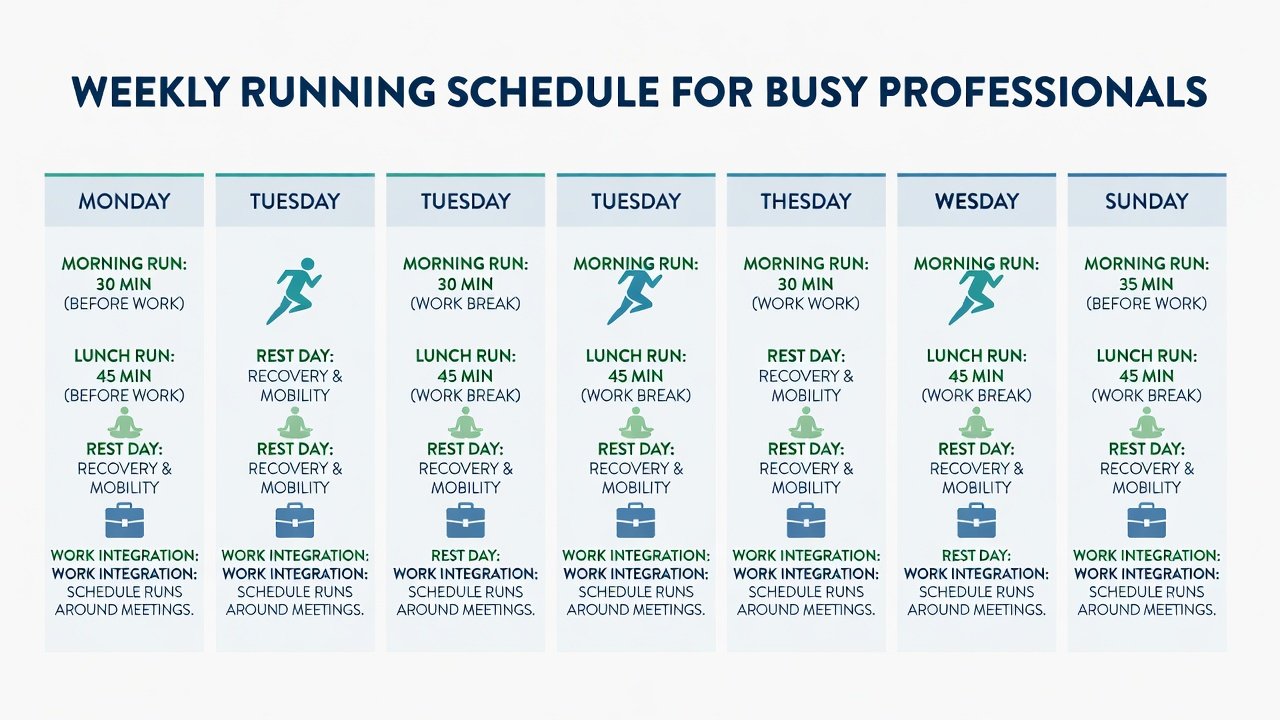
Integrating running into a full-time accounting role requires realistic planning. Here is Jordan's mid-training weekly template from spring 2026:
- Monday: Rest or light 30-minute walk (recovery focus, often combined with meal prep for the week)
- Tuesday: 5K easy run after work (45 minutes total, including warm-up and cool-down)
- Wednesday: Strength training at gym (core and legs, 40 minutes, focusing on squats and planks for running posture)
- Thursday: Interval session (4x800m) during lunch break at a nearby track
- Friday: 8K steady run to build aerobic base before the weekend
- Saturday: Long run building from 10K to 21K, starting early to avoid family conflicts
- Sunday: Active recovery yoga or cross-training such as cycling
This schedule averaged 35-45 kilometers weekly while respecting work deadlines during tax season. Jordan adjusted the plan dynamically, swapping days when client meetings ran late and always including a backup indoor treadmill option for bad weather.
Pre- and Post-Running Energy Levels: A Clear Comparison
Before consistent running, Jordan rated afternoon energy at 3/10, often relying on caffeine. Post-adoption of the routine, that same metric rose to 8/10 within four months. Sleep improved from six fragmented hours to seven to eight restorative hours. Productivity metrics at work also increased, with faster report turnaround times. These changes stemmed from better cardiovascular health and endorphin regulation, validated through personal tracking and annual physical results. Colleagues even noticed improved focus during long audit sessions, attributing it to the consistent endorphin boost from morning or lunchtime movement.
Marathon Training Arc and Community Support
Building from the 5K base, Jordan followed a 16-week marathon plan emphasizing gradual mileage increases of no more than 10 percent weekly. Key milestones included a half-marathon in May and a tune-up 10K in July. When motivation dipped during peak weeks, online forums and local running clubs provided perspective. Shared stories from other late starters reinforced that measurable milestones—such as shaving minutes off race times—outweighed perfection. Jordan crossed the 2026 marathon finish line in 4 hours 42 minutes, celebrating with spreadsheets of split times and fundraising totals for a local charity. Community events like group tempo runs offered real-time feedback and camaraderie that spreadsheets alone could not provide.
Common Mistakes to Avoid When Starting Later in Life
Many new runners in their 40s repeat avoidable errors. Jordan learned these lessons firsthand and shared them for others: rushing mileage increases without listening to the body, neglecting strength training which leads to imbalances, ignoring nutrition timing around workouts, and comparing personal progress to younger athletes on social media. Addressing each through data review and gradual adjustments kept Jordan injury-free throughout the build-up.
FAQ: Starting a Fitness Journey Later in Life
- Is it safe to begin running in your 40s? Yes, with medical clearance and gradual progression. Consult a physician first and start with walk-run intervals.
- How do I stay consistent with a demanding job? Treat runs like non-negotiable meetings and use data tracking to maintain momentum through busy periods.
- What if I have no prior athletic background? Focus on consistency over speed; many marathoners began as complete beginners in their 40s or later, building base fitness over months.
- How important is community? Extremely—group runs and online accountability increase adherence rates significantly according to studies from major health organizations.
- Should I invest in coaching or apps? Start with free tracking tools and community resources; add paid coaching only after establishing a three-month habit if data shows plateaus.
Conclusion: Numbers That Add Up to Lasting Change
Jordan's 2026 marathon story demonstrates that accounting precision translates powerfully to fitness. By treating training plans like budgets and milestones like quarterly reports, sedentary professionals can achieve remarkable transformations. Start small, track relentlessly, and lean on community for support—the finish line awaits those who apply the same discipline to both ledgers and life. For more guidance on adult fitness, explore resources from American Heart Association and World Health Organization.


No comments yet. Be the first!