 The Runner Story

Introduction: Turning Data into Running Motivation
In early 2026, data scientist Elena found herself stuck in a running rut despite consistent efforts. Her motivation waned as progress stalled after months of repetitive 5K outings. By applying her analytical skills to fitness, she transformed vague goals into quantifiable metrics using interval training and wearables. This case study details her journey, showing how structured runs improved both her physical endurance and cognitive sharpness at work. Elena's approach emphasized measurable progress over subjective feelings. She tracked pace, heart rate, and recovery through apps and devices, creating a feedback loop that reignited her passion for running. Readers can replicate this by focusing on data-driven habits rather than perfection, building a system that turns every run into actionable insights for long-term success.
Over the course of the year, Elena documented dozens of sessions, revealing patterns that linked physical output directly to mental clarity. For instance, runs exceeding 30 minutes with targeted intensity often preceded her most productive coding days. This connection motivated her to treat running as essential professional maintenance rather than optional exercise. The following sections break down her exact methods, including the experiments that yielded the biggest gains and the tools she used daily.
Personal Running Stories: From Plateau to Peak Performance
Elena began her 2026 fitness journey with 5K runs three times weekly but hit a plateau after two months. Her average pace hovered at 6:15 per kilometer with little improvement. Frustrated, she integrated interval sessions—alternating high-intensity bursts with recovery jogs—guided by her Garmin watch. Within six weeks, her 5K time dropped to 28 minutes. More strikingly, she noticed sharper focus during work meetings and faster problem-solving in data analysis tasks. Research supports this link: physical activity enhances brain function through increased blood flow and neurogenesis.
One memorable run involved a 40-minute interval workout where she alternated 3-minute sprints at 85% effort with 2-minute walks. Post-run, her productivity surged, completing a complex model in half the usual time. Another story from March 2026 involved a rainy evening where she nearly skipped her session but checked her previous week's data showing a correlation between runs and reduced anxiety. She completed the workout and logged a 12% drop in reported stress the next day. These stories highlight how running metrics directly fueled her professional edge, turning potential setbacks into evidence-based wins that sustained her through challenging periods at work.
By mid-year, Elena had progressed to incorporating hill repeats and tempo runs, each logged with precise splits. One particularly impactful session in July saw her maintain zone 3 effort for 25 straight minutes, resulting in breakthrough insights on a stalled machine learning project the following morning. These personal narratives demonstrate the power of viewing runs not as isolated events but as data points in a larger performance ecosystem.
Weekly Data Reviews: Analyzing Runs for Continuous Improvement
Every Sunday evening, Elena conducted a 20-minute data review using her fitness app dashboard. She exported metrics like average heart rate, pace variability, and sleep correlation into a spreadsheet. Key insights emerged: runs after poor sleep showed 15% slower paces. She adjusted by prioritizing 7-8 hours of rest. This habit prevented overtraining and sustained motivation through visible trends, such as a 10% weekly improvement in recovery scores.
Readers should start with simple exports from apps like Strava or Garmin Connect. Plot trends in pace and distance to spot patterns early. Elena also added custom columns for mood and work output, revealing that runs with high heart-rate variability often preceded her most creative problem-solving sessions. Over time, these reviews became predictive tools, allowing her to schedule easier runs before high-stakes presentations. She recommends color-coding spreadsheets for quick visual analysis—green for improving trends, yellow for plateaus, and red for regressions requiring immediate adjustment.
Heart-Rate Zone Experiments: Optimizing Training Intensity
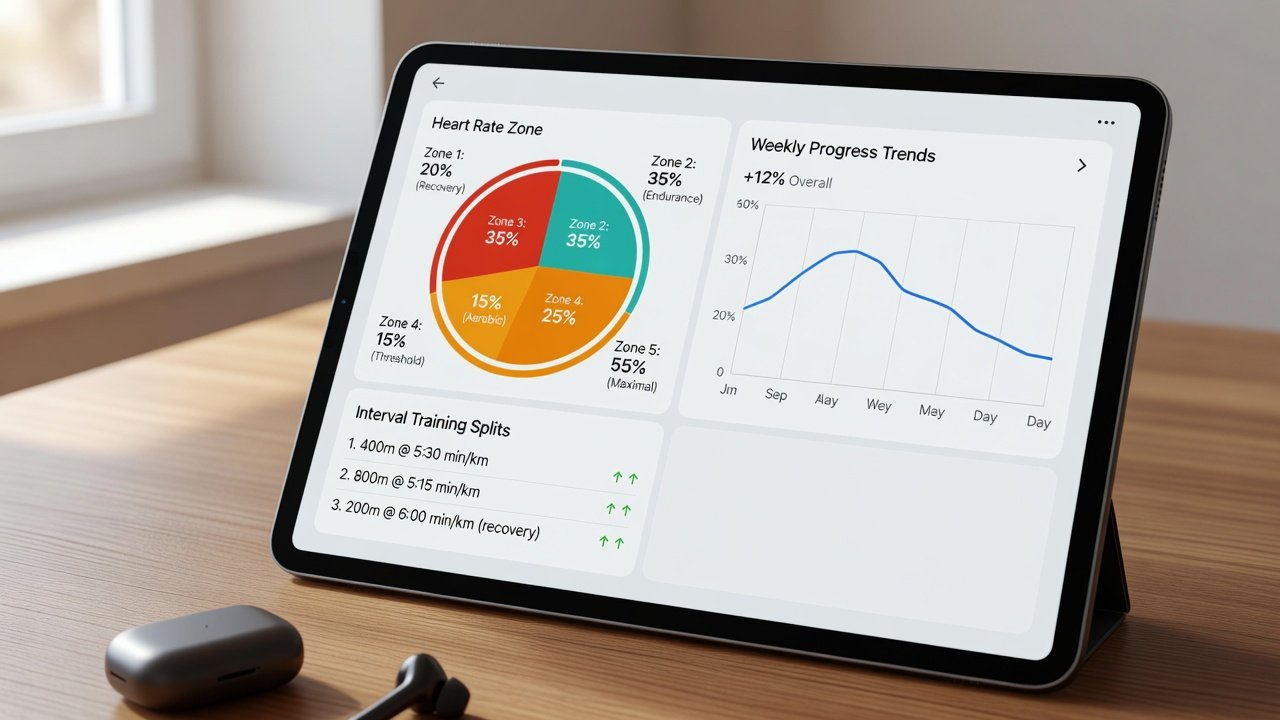
Elena experimented with heart-rate zones based on her maximum heart rate of 185 bpm. She spent 60% of runs in zone 2 (60-70% effort) for aerobic base building and 20% in zone 4 intervals for speed. Initially, she overtrained in higher zones, leading to burnout. Adjusting to balanced zones improved endurance and reduced injury risk. After eight weeks, her resting heart rate dropped from 62 to 55 bpm, signaling better fitness.
American Heart Association guidelines recommend zone training for safe progression. Experiment by calculating zones via a field test and logging sessions to refine. Elena further tested zone 3 threshold work twice weekly, which boosted her lactate threshold and translated to sustained energy during long workdays. She advises beginners to wear the device consistently for two weeks before making changes, ensuring baseline accuracy. Additional experiments included comparing indoor treadmill zones versus outdoor runs, where elevation changes altered perceived effort significantly.
Habit Tracking Apps with Real Examples
Elena combined Garmin for heart-rate data with Habitica for gamified tracking. She logged daily runs, streaks, and notes on energy levels. Real examples include a 30-day streak that boosted her consistency score from 65% to 92%. Another app, MyFitnessPal, helped correlate nutrition with run quality. On days with balanced carbs, her intervals felt effortless. This integration turned abstract motivation into daily wins.
She also used a custom Notion dashboard to overlay running data with calendar events, spotting that post-run mornings aligned with higher meeting engagement. Practical examples from her log show how missing two consecutive tracked days dropped overall motivation by 25%, prompting automated reminders. These apps created accountability without rigidity, allowing flexible adjustments while maintaining the data trail essential for motivation through visible progress.
Practical Steps to Replicate the Approach
- Assess baseline metrics: Run a timed 5K and note resting heart rate using a wearable. Repeat monthly to measure gains.
- Design interval sessions: Start with 4x3-minute efforts at moderate-high intensity, building to 6x4 minutes over weeks.
- Schedule weekly reviews: Dedicate 15 minutes to analyze trends in pace and recovery, adding notes on sleep and nutrition.
- Track habits: Use an app to log runs, sleep, and mood scores, setting small streak goals initially.
- Link to work: Note cognitive benefits like focus after runs to reinforce motivation, perhaps in a shared work journal.
- Adjust based on data: Reduce intensity if recovery lags for three consecutive days, incorporating active recovery walks instead.
- Experiment safely: Introduce one new variable, such as zone emphasis, every four weeks and evaluate results.
- Build community support: Share anonymized metrics with a running group for external accountability and fresh perspectives.
These steps create a sustainable system emphasizing quantifiable progress and can be scaled for any fitness level.
Short FAQ on Common Motivation Dips
How do I handle a week of poor metrics?
Review sleep and stress factors first. A single bad week is data, not failure—adjust volume downward and focus on consistency over perfection.
What if heart-rate zones feel too restrictive?
Start with perceived effort and gradually incorporate zones. Many runners blend both for enjoyment while building data awareness over time.
Can this method work without expensive wearables?
Yes. Use phone GPS apps and manual heart-rate checks via pulse for basic tracking before upgrading to advanced devices.
How long until cognitive benefits appear?
Most users notice improved focus within two to three weeks of consistent tracking, though individual results vary based on overall lifestyle factors.
Conclusion: Data as Your Running Compass
Elena's 2026 journey proves that metrics transform running from chore to catalyst for motivation and mental clarity. By embracing interval training, zone experiments, and habit apps, anyone can break plateaus and reap cognitive rewards. Start small, track diligently, and let the numbers guide your path forward with confidence and precision.


No comments yet. Be the first!