 The Runner Story

Introduction: Balancing the Lab and the Road
In 2026, many busy professionals struggle to maintain fitness amid demanding careers. This case study follows Dr. Elena Vargas, a molecular biologist at a leading research institute, on her transformative 2026 fitness journey. By integrating running into her lab schedule, she enhanced cognitive sharpness, reduced stress, and achieved better work-life balance. Her story offers running motivation for scientists and professionals seeking sustainable habits. Dr. Vargas initially faced 60-hour workweeks filled with experiments, grant writing, and team meetings. She noticed declining energy and focus by mid-afternoon. After consulting colleagues and reviewing studies on physical activity and brain function, she committed to a structured running program. Within months, her productivity metrics improved dramatically, and she completed multiple races while maintaining lab output. This journey highlights how running can serve as a powerful tool for cognitive enhancement and personal fulfillment.
Integrating Interval Training with Lab Schedules
Dr. Vargas began with short interval sessions that fit between experiments. She scheduled 30-minute HIIT runs on lunch breaks, alternating high-intensity bursts with recovery jogs. This approach aligned with her unpredictable lab hours, allowing quick returns to cell cultures or data analysis. She mapped three nearby routes: a 2-mile loop around the institute campus, a treadmill in the employee gym, and a park path 5 minutes away. Practical tip: Block 45-minute windows in your calendar and choose nearby routes or treadmills for efficiency. She also incorporated tempo runs on weekends when lab demands eased. For example, on Tuesdays she performed 8x400m intervals at 85% effort, returning to the lab refreshed for afternoon assays. This integration prevented burnout and turned potential downtime into performance gains.
Using Data Tracking for Progress
Tracking mileage and heart rate became central to her routine. Dr. Vargas used a wearable device to log weekly distances, aiming for gradual increases from 15 to 30 miles. Heart rate zones helped optimize recovery and prevent overtraining. 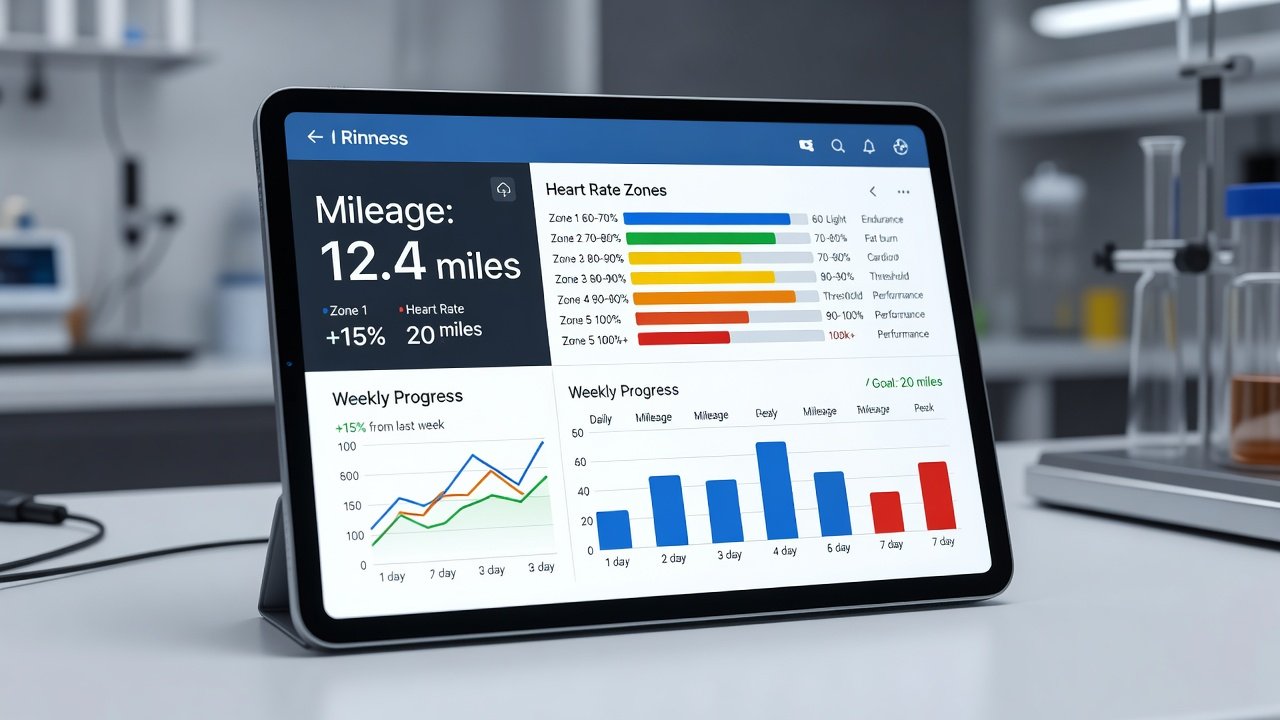
Overcoming Mental Blocks with Scientific Mindset Techniques
Mental barriers often arise during long runs. Dr. Vargas applied hypothesis-testing: treat each run as an experiment, noting variables like sleep or nutrition. This reframed doubt into curiosity. She also used visualization, picturing successful races as she reviewed lab protocols. When facing a 14-mile training run, she broke it into segments matching her typical lab task lists, maintaining motivation through micro-goals. Her productivity soared—pre-running days showed scattered focus, while post-run afternoons delivered clearer problem-solving in research meetings. Additional techniques included mindfulness breathing borrowed from meditation research and post-run journaling to process ideas that surfaced during runs.
Real Race Examples: From 5K to Marathon
Starting with local 5Ks in spring 2026, Dr. Vargas progressed to a half-marathon by summer and her first full marathon in fall. Each event built resilience; the marathon taught pacing strategies that translated to managing multi-week lab projects. Her first 5K finished in 28 minutes, followed by a 10K in 58 minutes. The half-marathon came in at 2:05, and the full marathon at 4:32. Training logs showed consistent weekly mileage increases of 10% or less to avoid injury. Comparisons showed marked gains: after consistent running, she reported 25% faster grant writing and fewer afternoon energy crashes. Race weekends often coincided with lab downtime, providing mental resets that boosted Monday morning innovation.
Practical Steps for Beginners
Beginners can follow Dr. Vargas's model by starting small. First, assess current fitness with a simple 20-minute jog. Second, schedule three weekly runs of 20-30 minutes. Third, incorporate one interval session after building a base. Fourth, invest in basic tracking tools like a heart rate monitor. Fifth, join an online community or local club for accountability. Her beginner plan emphasized recovery days and flexible scheduling around experiments. Within eight weeks, new runners typically see measurable improvements in energy and mood, setting the stage for longer distances.
Productivity Comparisons: Pre- and Post-Running
Before her routine, Dr. Vargas averaged 4-5 focused hours daily. After six months, this rose to 7+ hours with improved mood and creativity. Running provided a natural reset, clearing mental fog from hours at the microscope. She tracked specific outcomes: manuscript revisions completed 30% quicker, and error rates in data analysis dropped noticeably. Colleagues noted her increased engagement in collaborative discussions. These changes stemmed from better sleep quality and reduced cortisol levels measured through personal wellness checks.
Additional Strategies: Nutrition, Recovery, and Common Mistakes
Dr. Vargas paired running with balanced nutrition, emphasizing protein-rich meals post-run to support recovery. She avoided common mistakes like skipping warm-ups or increasing mileage too quickly. Recovery included foam rolling and one full rest day weekly. For busy professionals, batch-prepping meals on Sundays proved essential. The Centers for Disease Control and Prevention recommends at least 150 minutes of moderate aerobic activity weekly, a target she exceeded comfortably.
FAQ on Building Sustainable Motivation
How do I stay consistent with a busy schedule?
Treat runs as non-negotiable appointments and start small—10-minute sessions count. Use calendar blocking similar to lab meetings.
What if I hit a plateau?
Reassess data like heart rate and mileage; adjust volume gradually, similar to scientific iteration. Add variety with trail runs or group workouts.
Is running safe for lab workers with irregular hours?
Yes, when using recovery-focused tracking. Consult resources from the National Institutes of Health for personalized advice and listen to your body.
Can beginners aim for a marathon?
Build progressively over 6-12 months with structured plans and rest days. Focus first on consistency before distance goals.
How does running specifically improve cognitive performance?
Studies link aerobic exercise to increased BDNF levels, supporting memory and focus—benefits Dr. Vargas experienced in complex problem-solving tasks.
Dr. Vargas's journey proves that running motivation rooted in data and discipline transforms both fitness and professional output. Start today to experience similar benefits and build lasting habits that support a thriving career in science.


No comments yet. Be the first!