 The Runner Story

Introduction: Finding Your Perfect Ultra Distance
Trail running progression often leads ambitious athletes toward ultramarathons. Choosing between a 50K, 100K, or 100-mile event requires understanding physical demands, mental resilience, and logistical realities. This guide breaks down the key differences with real race examples to help intermediate runners decide confidently for 2026. Whether you are coming off a strong marathon or have already tackled shorter ultras, selecting the right distance sets the foundation for sustainable growth in the sport.
Understanding the Distances
A 50K covers roughly 31 miles and serves as an accessible entry point into ultras for many trail runners. Popular examples include the North Face Endurance Challenge 50K series and local mountain races that feature moderate elevation gains. The 100K stretches to about 62 miles, effectively doubling the challenge and requiring runners to manage fatigue across an entire day and into the evening. Events like the Javelina Jundred or Cocodona 100K segments highlight this middle ground. The full 100-mile distance tests limits over 24 or more hours for most finishers, with iconic races such as the Western States 100 and UTMB serving as benchmarks. Each distance builds on the previous but introduces exponential increases in cumulative fatigue, sleep deprivation risks, and strategic complexity.
Training Volume Requirements
Training for a 50K typically involves peaking at 40-50 miles per week, with long runs reaching 20-25 miles on trails that mimic race terrain. Include hill repeats, tempo efforts, and at least one back-to-back weekend to simulate race fatigue. A 100K demands 50-70 weekly miles during peak phases, incorporating multiple long runs of 18-30 miles and dedicated night sessions. Preparing for 100 miles often requires consistent 70-90 mile weeks, including specific night running, extensive power hiking practice, and recovery-focused deload weeks every fourth week. Strength training twice weekly focusing on single-leg stability, core endurance, and hip strength proves essential across all distances. Runners should track training load using perceived effort or heart rate to prevent overreaching, and always allow 12-16 weeks of specific preparation depending on the target event.
Injury Risks and Prevention
Shorter ultras carry lower overuse injury rates, yet 100-mile events see higher incidences of stress fractures, iliotibial band syndrome, and Achilles tendon issues due to prolonged time on feet. Prevention starts with gradual mileage increases of no more than 10 percent per week. Incorporate regular mobility work, foam rolling, and scheduled physical therapy assessments during high-volume blocks. Proper shoe rotation, adequate sleep, and addressing biomechanical weaknesses early reduce risk significantly. Many experienced athletes also include cross-training such as cycling or swimming on recovery days to maintain fitness while sparing impact.
Nutrition and Hydration Strategies
Nutrition becomes progressively more critical with distance. In 50K events, runners often rely on gels, chews, and real food at aid stations with minimal gut distress risk. 100K athletes must practice multi-hour fueling strategies including 60-90 grams of carbohydrates per hour alongside electrolyte management. 100-mile competitors face additional challenges of maintaining calorie intake through the night and adapting to flavor fatigue. Test all race-day nutrition multiple times in training, and consider carrying backup options in a vest or pack. Hydration planning should account for heat, humidity, and individual sweat rates measured during long training runs.
Pacing Strategies Across Distances
Successful 50K runners maintain even effort with proactive walk breaks on climbs and technical sections. In 100K races, negative splitting the second half becomes achievable after managing early terrain and conserving energy. 100-mile pacing emphasizes extreme patience from the start: use heart rate or perceived effort rather than pace, plan multiple adjustments through the night, and treat the race as a series of smaller segments between aid stations. Study detailed course profiles and practice race-day nutrition timing on similar trails. Many athletes find that starting 10-15 percent slower than perceived capability dramatically improves finish rates.
Mental Challenges and Resilience
Mental demands scale dramatically with distance. 50K events test focus for five to eight hours, while 100-mile races require sustained motivation through sleep deprivation and repeated low points. Techniques such as breaking the race into manageable segments, positive self-talk, and visualization help maintain composure. Building mental toughness in training through deliberately uncomfortable long efforts prepares runners for inevitable race-day difficulties.
Crew Support and Logistics
50K events frequently allow self-supported racing with minimal crew intervention. Both 100K and 100-mile races benefit greatly from dedicated crews for gear changes, pacing segments, and emotional support. 100-mile runners typically need multiple crew members stationed at remote aid points along with detailed plans for sleep management if the runner chooses short naps. Clear communication protocols and contingency plans for missing crew members are essential. Official UTMB resources offer comprehensive crew guidelines applicable to many major ultras worldwide.
Finish Rate Statistics and Race Examples
Typical finish rates hover around 85-90 percent for well-trained 50K participants, 70-80 percent for 100K fields, and 50-65 percent for 100-mile starters according to historical data from major events. Western States 100 and UTMB showcase these realities annually, highlighting the importance of conservative pacing and thorough preparation. Reviewing past results on race websites provides valuable context for expected outcomes based on training background.
Decision Flowchart
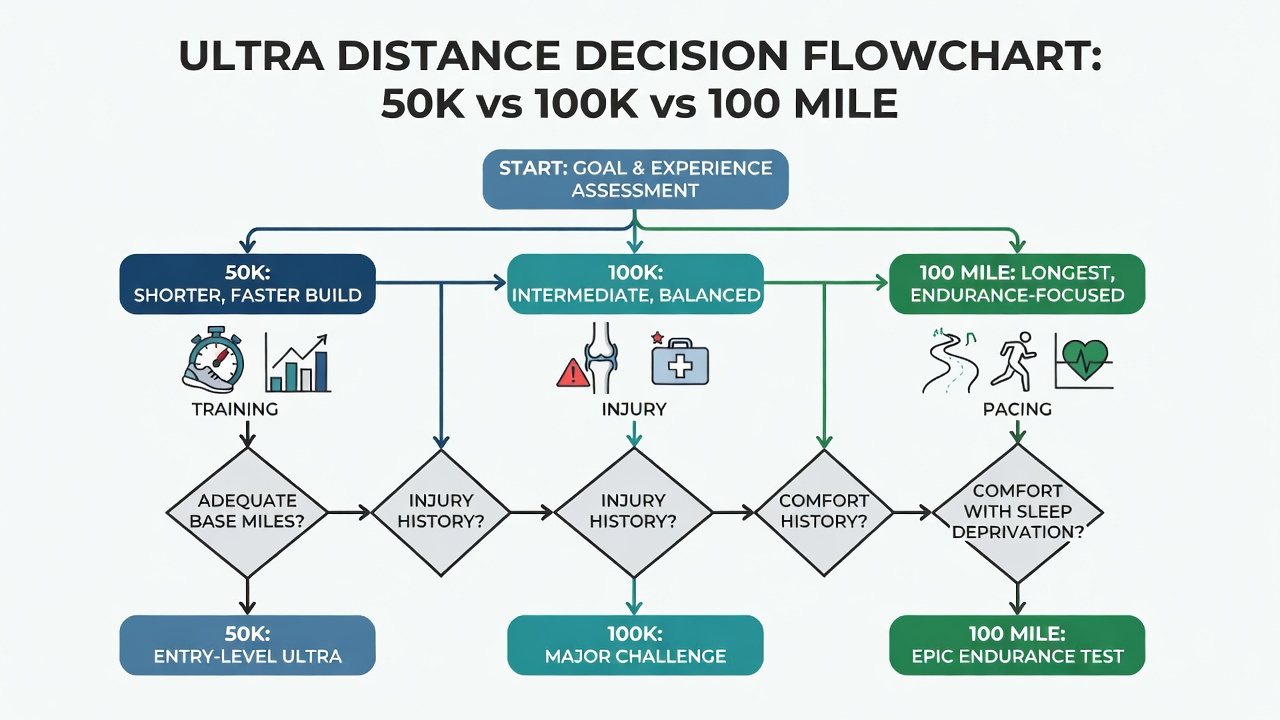
- Have you completed a marathon or 50K with strong recovery within the past year? If no, target a 50K first.
- Can you commit to 12 or more weeks of consistent 50-plus mile training weeks with strength work? Proceed to 100K consideration.
- Do you have prior experience with night running, multi-hour efforts, and managing nutrition on the move? Then evaluate 100 miles.
- Assess life logistics including work schedule, family commitments, and available recovery time before committing.
Athlete Case Studies
Runner A progressed from a comfortable 50K finish in six hours to a strong 100K performance within 18 months by methodically adding weekly volume and incorporating two strength sessions weekly. Runner B attempted a 100-miler after only one prior 50K and DNF'd due to inadequate night training and poor pacing. After adjusting preparation with targeted night runs and a 100K stepping-stone race, Runner B succeeded the following year. These examples illustrate that thoughtful progression often outperforms aggressive jumps between distances.
Recovery Timelines
Expect one to two weeks of easy running and focused recovery after a 50K. 100K recovery often takes three to four weeks before resuming higher intensity. Full 100-mile events may require six to eight weeks before returning to structured training, with emphasis on sleep, nutrition, and gradual return to impact activities. Monitoring resting heart rate and overall energy levels helps guide safe return timelines.
Common Mistakes to Avoid
Many runners underestimate the jump in training volume required or neglect night-specific practice. Overpacking gear, ignoring early injury signals, and failing to rehearse crew logistics also lead to poor outcomes. Starting too fast remains the most frequent error across all distances, particularly in 100-mile events where conservation is paramount.
FAQ
What are typical time cutoffs?
50Ks often allow eight to ten hours. 100Ks range from 18 to 24 hours. 100-mile cutoffs commonly sit at 30 to 36 hours depending on the specific event and terrain.
How do I choose my first ultra?
Start with a local 50K that matches your current longest training run plus roughly ten miles of buffer distance, ensuring the elevation profile aligns with your experience.
Can I skip the 100K and go straight to 100 miles?
Many athletes succeed this route with strong marathon or trail backgrounds, but most benefit from the 100K stepping stone for practicing logistics, crew coordination, and extended fueling.
How important is sleep management in 100-mile races?
Sleep strategies vary by individual and race duration. Some runners plan short naps at aid stations while others push through with caffeine management; testing approaches during training builds confidence.
Conclusion
Selecting the right ultra distance sets you up for success and longevity in trail running. Assess your training consistency, support network, injury history, and personal goals honestly. Whichever distance you choose for 2026, respect the process, prioritize recovery, and enjoy the profound journey that ultrarunning offers on the trails.


No comments yet. Be the first!