 The Runner Story

Introduction: Preparing for Extreme Heat in 2026 Ultras
Summer ultra trail running in 2026 demands more than endurance; it requires strategic heat acclimation to handle rising temperatures and humidity. Runners targeting events like UTMB must build tolerance progressively to avoid heat-related setbacks and maintain performance. This guide details a complete 4-week protocol, key physiological changes, daily adjustments, and practical tools for success. As global temperatures continue to climb, athletes who invest time in heat preparation gain a measurable advantage over those who train only in temperate conditions.
Physiological Adaptations to Heat
Heat acclimation triggers several key changes in the body. Plasma volume expands by up to 20 percent, allowing better sweat efficiency and cardiovascular stability during prolonged efforts. Core temperature rises more slowly during exercise, while sweat glands produce more dilute sweat to conserve electrolytes. Heart rate decreases at any given pace, and perceived exertion drops noticeably. These adaptations typically begin within 7-10 days and peak around 14-21 days of consistent exposure. Research shows that fully acclimated athletes maintain higher sustainable intensities in hot conditions compared to unacclimated peers, with reduced risk of heat exhaustion or collapse. Additional benefits include improved blood flow to the skin for cooling and better sodium retention to prevent cramping over 50-kilometer or 100-kilometer distances.
4-Week Progressive Heat Acclimation Protocol
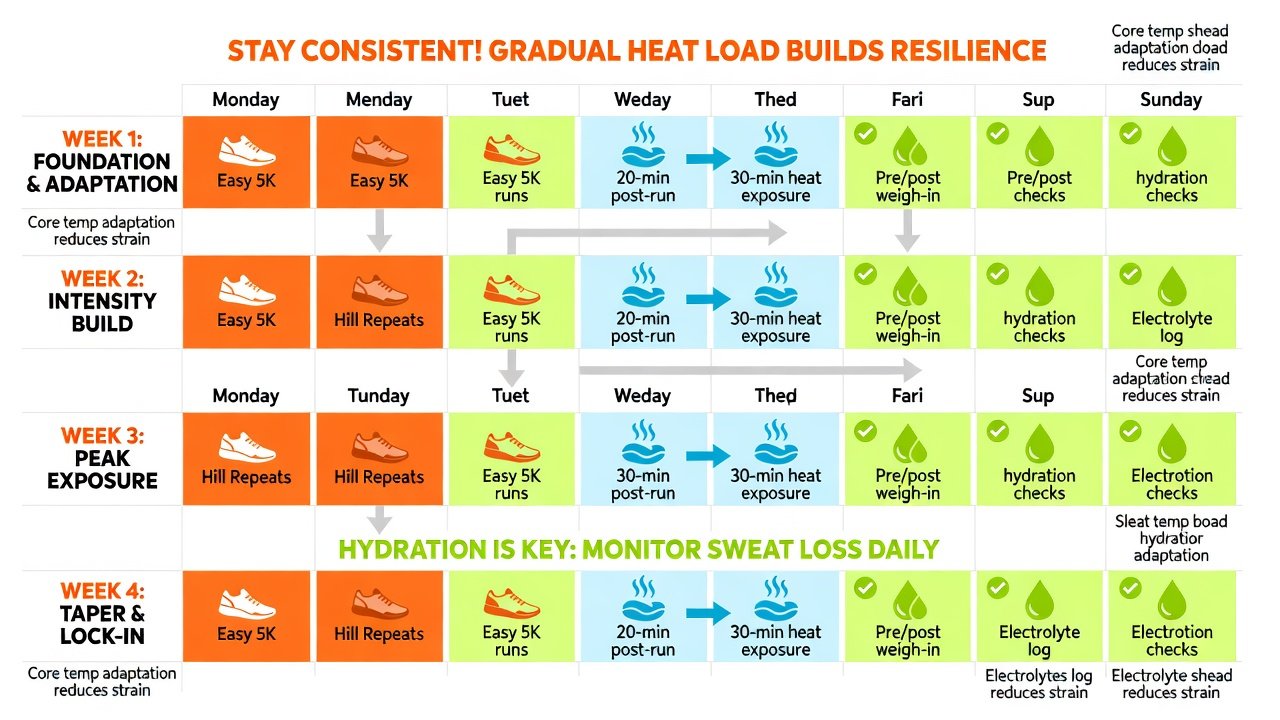
Follow this structured plan leading into your key summer ultra. Week 1 focuses on moderate exposure: run 45-60 minutes at easy effort in temperatures 5-10°C above your usual training climate, ideally three times per week. Include one session on a treadmill with the room heater running to simulate humidity. Week 2 increases duration to 75-90 minutes with added hills to elevate heart rate and one 30-minute sauna or hot bath session post-run. Week 3 incorporates two dedicated heat sessions, one with a weighted vest simulating race load, plus a long run of two to three hours in peak afternoon heat. Week 4 tapers volume but maintains intensity in peak heat, including a full dress rehearsal run matching race conditions and start time. Always monitor hydration with pre- and post-run weigh-ins and stop immediately if dizziness, nausea, or confusion appears. Runners who complete this protocol report feeling significantly fresher in the final third of races.
Daily Training Adjustments for Heat and Humidity
Shift long runs to early morning or evening slots when possible to reduce peak exposure while still gaining adaptation. Reduce pace by 20-30 seconds per kilometer in high humidity above 70 percent, focusing instead on heart rate zones or effort. Incorporate indoor treadmill sessions with added heat sources like space heaters for controlled exposure on rainy days. Track perceived effort and heart rate rather than pace alone, noting that a 150 beats-per-minute effort in cool weather may feel like 170 in heat. Include recovery days with light movement in air-conditioned environments to allow full adaptation. Nutrition timing matters too: consume electrolytes earlier in runs and avoid heavy meals before heat sessions. Example adjustment: a runner planning a 30-kilometer training day in 32°C heat might split it into two 15-kilometer loops with a 20-minute cool-down break in between to prevent overheating.
Gear Recommendations and Cooling Strategies
Invest in lightweight, breathable clothing with UPF protection and mesh panels for ventilation. Cooling vests provide targeted torso cooling during pre-race warm-ups and at aid stations, while neck gaiters soaked in cold water and ice bandanas offer immediate relief. Portable misting fans and electrolyte solutions help maintain fluid balance. Test all gear during training to prevent chafing or discomfort on race day. Additional options include UV-reflective arm sleeves, wide-brim hats, and hydration packs with built-in ice compartments. Many athletes also carry small spray bottles filled with chilled water for quick face and neck cooling during climbs.
Pacing Calculators and Heat vs Temperate Performance Data
Heat significantly slows ultra performance. Data from past races shows average pace reductions of 10-15 percent in temperatures above 30°C versus temperate conditions, with even larger drops in humidity over 80 percent. Use online heat pacing calculators that factor wet-bulb globe temperature to adjust goal splits throughout the course. Compare your training logs from cool versus hot sessions to refine expectations for 2026 events. For instance, a runner who covers 10 kilometers in 50 minutes at 15°C may need 58-60 minutes at 32°C with similar effort. Build buffer time into early race segments to avoid early glycogen depletion caused by elevated heart rates.
Real Runner Case Studies from UTMB and Similar Events
Experienced athletes at UTMB have shared how 4-week acclimation reduced perceived exertion by 15-20 percent during the final climb sections. One runner completed a 170 km course in 2025 after following a similar protocol, crediting daily sauna sessions for improved recovery and the ability to eat solid food later in the race. Another athlete avoided medical stops by using pre-planned cooling strategies at aid stations and finished in the top 30 percent of their age group despite record heat. A third case involved a 100-mile racer who incorporated twice-weekly heat walks on a treadmill; they reported finishing with lower core temperature readings at the finish line compared to previous years without acclimation. These examples highlight how consistent preparation translates directly to better outcomes.
Race Day Heat Management Checklist
- Check forecast 48 hours prior and adjust pacing targets accordingly.
- Pack multiple cooling options including a vest, gaiters, and extra ice and test them in training.
- Start conservative in the first 20 km to build a heat buffer and avoid early spikes in heart rate.
- Monitor urine color and weight changes at every aid station to catch dehydration early.
- Have a crew familiar with heat illness signs for immediate support if needed.
- Pre-cool with ice towels or vests 30 minutes before the start.
- Carry extra salt tablets and know your personal sweat rate from training data.
Frequently Asked Questions
What are common heat acclimation mistakes?
Skipping rest days, ignoring hydration, and ramping exposure too quickly lead to overtraining or heat illness. Always progress gradually and listen to your body signals rather than pushing through discomfort.
How long do adaptations last?
Most physiological benefits persist 1-2 weeks after the protocol ends if some heat exposure continues. Full loss occurs after 3-4 weeks without maintenance, so schedule a refresher session if your race is delayed.
Can beginners use this protocol?
Yes, but start with shorter sessions and lower temperatures. Consult a coach or physician before beginning if you have any pre-existing health conditions.
Conclusion
Implementing a dedicated heat acclimation plan gives 2026 ultra runners a decisive edge in summer conditions. By following the 4-week protocol, refining daily habits, and using proven gear, athletes can optimize performance while prioritizing safety. Start early, track progress, and adapt based on individual response for the best results on race day. For broader health guidance on heat, consult resources from World Health Organization and CDC. Official event details are available at UTMB World.

No comments yet. Be the first!