 The Runner Story

Introduction to Periodization in Ultra Running
Ultra running demands exceptional endurance, and structured periodization provides the roadmap to peak performance. By dividing training into distinct phases, athletes can systematically build aerobic capacity, strength, and race-specific fitness while minimizing injury risk. This approach is especially critical for 2026 races, where optimized cycles help runners sustain efforts over distances from 50K to 100 miles. Periodization organizes training into macrocycles (annual plan), mesocycles (monthly blocks), and microcycles (weekly schedules). It ensures progressive overload followed by recovery, leading to supercompensation and peak endurance. Runners who ignore structured planning often hit plateaus or suffer overuse injuries, whereas those who follow periodized plans report consistent gains in stamina and faster recovery between sessions.
Effective periodization also integrates nutrition timing, sleep optimization, and mental resilience work. For 2026 events, start planning your macrocycle now by identifying your goal race date and working backward through the phases. This creates a clear timeline that balances hard training blocks with necessary rest.
Key Training Phases for Ultra Endurance
Base Building Phase
The foundation phase lasts 8–12 weeks and focuses on high-volume, low-intensity running to develop aerobic efficiency. Aim for 70–80% of weekly mileage at easy paces. Include long runs progressing to 3–4 hours, with strides for neuromuscular activation. Practical steps include tracking weekly mileage increases of no more than 10 percent, incorporating one easy trail day per week, and adding mobility drills at the end of each session. Athletes should prioritize consistent sleep of eight hours nightly during this phase to support mitochondrial development.
Strength Focus Phase
Transition into 6–8 weeks emphasizing hill repeats, strength training, and core work. Incorporate 2–3 gym sessions weekly targeting posterior chain muscles, alongside trail runs with elevation to build resilience. Sample exercises include deadlifts, single-leg squats, and planks with variations. This phase reduces injury risk by strengthening connective tissues and improves running economy on technical terrain common in ultras.
Peak Intensity Phase
Over 4–6 weeks, introduce race-specific workouts like tempo runs, intervals, and back-to-back long efforts. Volume peaks here before tapering. Include workouts such as 4x15-minute tempo efforts with short recoveries or night runs to simulate race conditions. Monitor heart rate zones closely to avoid overreaching.
Taper Period
The final 2–3 weeks reduce volume by 40–60% while maintaining some intensity to stay sharp. This allows full recovery and glycogen supercompensation for race day. Focus on short, sharp sessions like 20-minute easy runs with 4x30-second pickups. Many athletes use this time for visualization and gear testing.
Linear vs Undulating Periodization Models
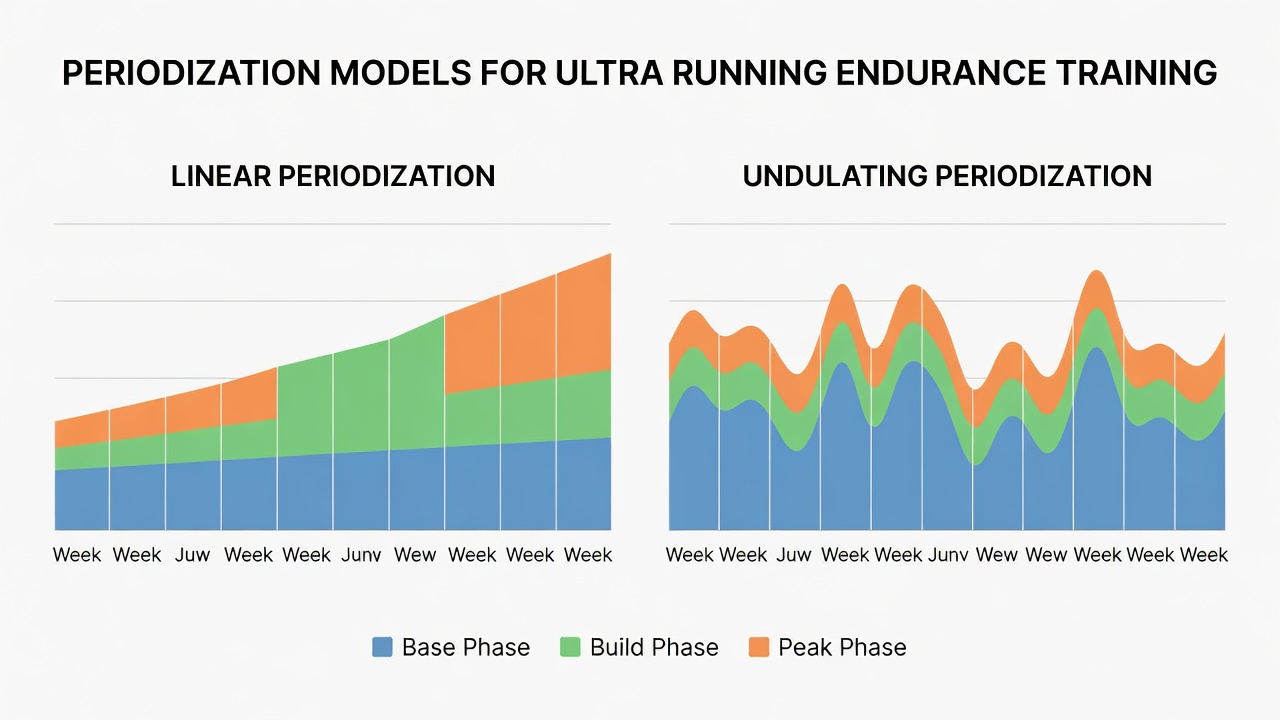
Linear periodization gradually increases intensity while decreasing volume across phases. It suits beginners building a base but can lead to plateaus in advanced athletes. Undulating periodization varies intensity daily or weekly within a mesocycle, providing more frequent stimuli and better recovery management. Research published by NIH supports undulating models for endurance sports due to improved adaptation. For ultra runners, undulating often outperforms linear by allowing high-intensity days interspersed with recovery, reducing burnout over long training cycles. A comparison table in training logs shows undulating athletes maintain higher average weekly mileage without elevated fatigue markers.
Choose linear if you are newer to ultras or recovering from injury. Opt for undulating if you have at least two years of consistent training and can handle frequent intensity swings.
Real Athlete Case Examples
Elite ultra runner Courtney Dauwalter employs undulating periodization, alternating hard effort weeks with deloads. Her 2025 training logs showed 20% volume swings monthly, contributing to multiple 100-mile wins. She includes deliberate easy weeks every third week to allow adaptation. Amateur runner Alex Rivera used linear progression for a 50K PR in 2024, increasing weekly mileage steadily from 40 to 70 miles before tapering. Another example is trail runner Maria Lopez, who combined both models for a 100-mile finish by using linear base building followed by undulating peak phases, resulting in a sub-24-hour finish despite variable mountain weather.
Sample Weekly Breakdowns
50K Distance Plan (Peak Week)
- Monday: Rest or easy 5 miles with mobility
- Tuesday: 8 miles with 6x800m intervals at threshold pace
- Wednesday: Strength session plus 6 easy miles on trails
- Thursday: 10 miles trail run with 2000 feet elevation
- Friday: Recovery 4 miles plus yoga
- Saturday: Long run 18 miles at easy effort
- Sunday: 8 miles easy with strides and core circuit
100M Distance Plan (Peak Week)
- Monday: Easy 8 miles
- Tuesday: Hill repeats totaling 10 miles
- Wednesday: Strength plus 7 miles recovery pace
- Thursday: Tempo run of 12 miles
- Friday: Recovery 5 miles
- Saturday: Back-to-back longs (22 plus 12 miles)
- Sunday: Easy 10 miles with strides
Adjust these templates based on your current fitness level and available time. Always include a deload week every fourth week during peak phases.
Monitoring and Adjusting for Individual Recovery Needs
Track key metrics such as resting heart rate, sleep quality, and subjective fatigue scores daily. If HRV drops significantly, insert an extra rest day or reduce intensity. Women should consider menstrual cycle phases when scheduling hard efforts. Older athletes may benefit from longer recovery blocks between mesocycles. Use tools like training logs or apps to log data and spot patterns early.
Common Pitfalls and How to Avoid Them
Avoid sudden volume jumps exceeding 10% weekly to prevent injury. Other frequent mistakes include skipping strength work, neglecting nutrition during long runs, and failing to practice race-day nutrition in training. Always rehearse your fueling strategy during long efforts. If life stress increases, scale back intensity rather than pushing through fatigue.
Conclusion
Implementing periodization strategies transforms ultra running endurance from reactive training into a predictable, progressive process. By mastering the phases, selecting the right model, and listening to recovery signals, you can arrive at your 2026 goal race stronger and more prepared than ever. Start building your plan today and revisit it monthly to stay on track.
FAQ on Integrating Ultra Running and Endurance Training
How long should a full periodization cycle last?
Most ultra athletes plan 9–12 month macrocycles leading into key 2026 races.
Can beginners use periodization?
Yes, start with a simplified linear model focusing on consistent base mileage before adding intensity.
How do I track progress across phases?
Use metrics like pace at lactate threshold, long run duration, and race simulation results.
Should nutrition change with periodization?
Increase carbs during peak intensity weeks and prioritize protein in strength phases for muscle repair.
What if I miss a workout due to illness?
Resume with a reduced volume week and extend the current phase by one week rather than forcing catch-up mileage.


No comments yet. Be the first!