 The Runner Story

The Science of Endurance in Ultra Running: Key Physiological Factors
Ultra running pushes the human body to extraordinary limits, often involving distances of 50 kilometers or more over varied terrain and extended time periods. Runners seeking to excel in these events benefit greatly from understanding the science behind endurance. This article delves into the key physiological factors that enable sustained performance, drawing on evidence-based research to explain how training creates lasting adaptations. Whether you are preparing for your first ultra or refining an established routine, grasping these mechanisms helps optimize workouts and avoid common pitfalls.
Cardiovascular Improvements
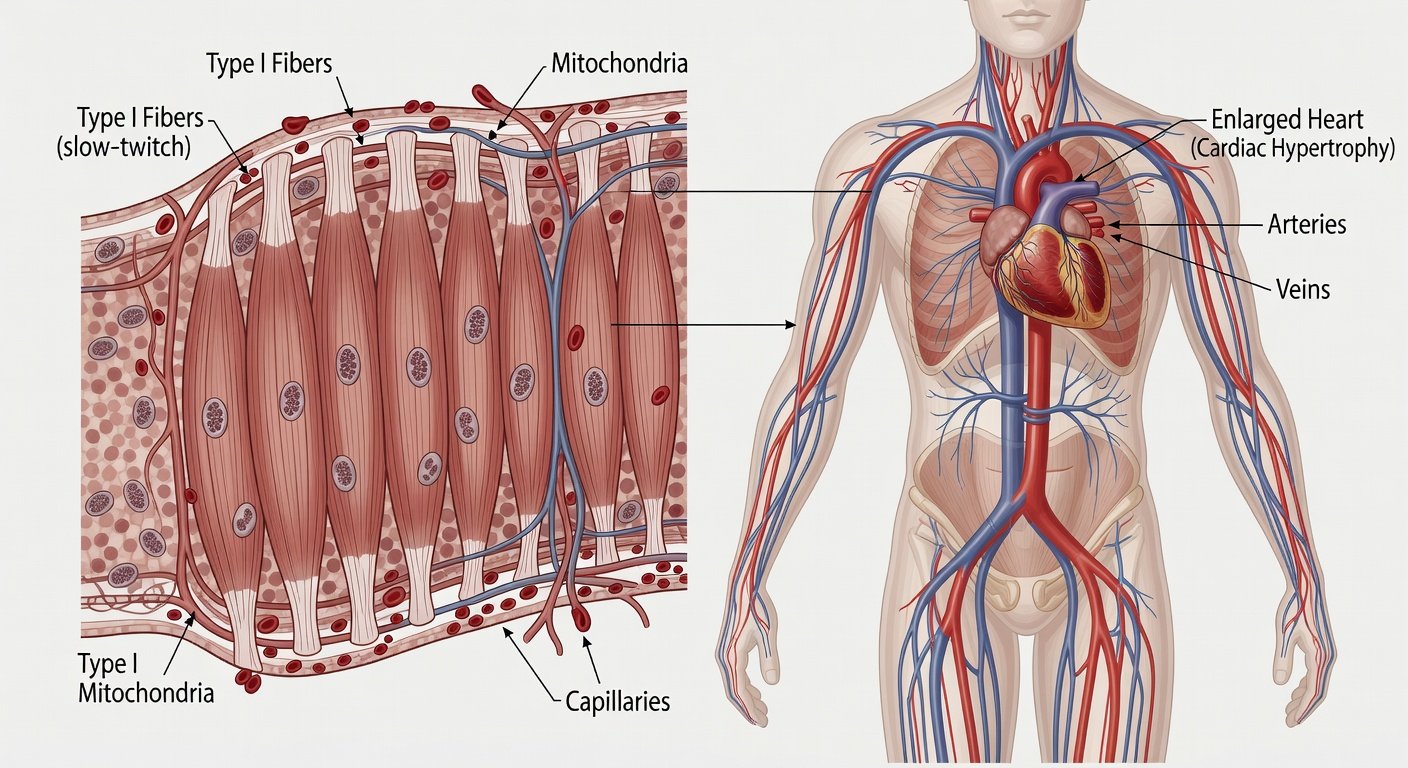
One of the most critical adaptations in ultra running training occurs within the cardiovascular system. Regular endurance exercise increases stroke volume, allowing the heart to eject more blood with each contraction. This efficiency reduces the overall workload during long efforts. Plasma volume expands as well, improving blood flow and oxygen transport to active muscles. Over months of consistent training, capillary networks proliferate around muscle fibers, facilitating better nutrient delivery and waste removal. VO2 max, a measure of maximal oxygen uptake, typically rises with structured programs, though genetics set an upper ceiling. Heart rate variability often improves, signaling better recovery capacity. These changes collectively support runners in maintaining pace across mountainous courses or multi-hour events without succumbing to early exhaustion. For deeper reading on cardiovascular responses to exercise, explore resources from the National Center for Biotechnology Information.
Muscle Fiber Changes
Muscle composition transforms notably through ultra-specific training. Human skeletal muscle contains Type I slow-twitch fibers optimized for endurance and Type II fast-twitch fibers suited for power. Prolonged aerobic work promotes a greater reliance on Type I fibers while encouraging hybrid fibers to express more endurance characteristics. Mitochondrial density increases substantially, boosting the muscle cells' ability to produce energy aerobically. Myoglobin levels rise to enhance oxygen storage within fibers, and capillary-to-fiber ratios improve. These modifications reduce lactate accumulation during submaximal efforts and delay the onset of fatigue. Strength training integrated into an ultra program can further protect against muscle damage on technical descents. Real adaptations require progressive overload; sudden increases in volume risk overuse injuries rather than beneficial remodeling.
Energy System Efficiency
Ultra runners develop superior metabolic flexibility, shifting fuel utilization toward fat oxidation while conserving limited glycogen stores. Training enhances enzymes involved in beta-oxidation, allowing sustained energy release from adipose tissue. The aerobic system dominates during events lasting beyond two hours, but occasional high-intensity segments recruit anaerobic pathways briefly. Improved buffering capacity helps manage acidosis when intensity spikes. Glycogen sparing becomes second nature after months of long runs, enabling athletes to cover 100 kilometers with strategic nutrition rather than hitting the wall prematurely. Hydration and electrolyte balance also tie into energy efficiency, as dehydration impairs metabolic processes. These efficiencies explain why some runners maintain steady output long after others fade.
Comparing Different Training Impacts
Various training modalities produce distinct physiological outcomes. Long slow distance builds aerobic base and mitochondrial volume but yields limited gains in speed. Interval sessions elevate lactate threshold and VO2 max more rapidly yet risk overtraining without adequate recovery. Hill training strengthens connective tissues and running economy while simulating race demands. A balanced weekly schedule might allocate 70 percent of volume to easy efforts and 30 percent to quality work. Comparing impacts reveals that runners who neglect strength work often suffer more from downhill pounding, whereas those ignoring long runs lack the mental and metabolic resilience needed for race day. Hybrid approaches consistently outperform single-focus plans in studies of endurance athletes.
- Long runs maximize fat oxidation and mental toughness over hours
- Speed intervals sharpen anaerobic threshold and pacing awareness
- Hill repeats develop power and injury resilience on uneven terrain
- Recovery runs promote active circulation without added stress
Real-World Examples from Athletes
Elite performers illustrate these adaptations vividly. Courtney Dauwalter has demonstrated remarkable fat-burning efficiency and mental fortitude across 200-mile races, crediting high-volume training that enhanced her mitochondrial function. Kilian Jornet showcases superior running economy developed through mountain-specific sessions that improved both cardiovascular output and muscle fiber durability. Recreational athletes following similar principles, such as gradually increasing weekly mileage while incorporating strength circuits, often report finishing their first 100K with energy to spare. These cases underscore that physiological changes accumulate through years of deliberate practice rather than isolated intense periods. Monitoring personal responses helps replicate successful patterns.
Step-by-Step Guide to Monitoring Personal Progress
Tracking adaptations ensures training remains effective and sustainable. Start by establishing baselines during an easy week. Reassess every four to six weeks to detect trends.
- Record resting heart rate each morning; a decreasing trend indicates improved cardiovascular fitness
- Conduct periodic time trials, such as a controlled 5K or 10K effort, to measure pace gains at similar heart rates
- Use a heart rate monitor or GPS watch to log average pace during long runs and note improvements in perceived effort
- Track sleep quality and heart rate variability through wearable technology for recovery insights
- Log body weight, hydration, and nutrition alongside workouts to correlate fueling strategies with performance
- Include occasional lab or field testing for VO2 max or lactate threshold when accessible
- Review training logs monthly to adjust volume, intensity, or recovery days based on data
Consistent documentation reveals whether current methods drive desired adaptations or require modification. For general health considerations tied to intense exercise, refer to guidance available at the Mayo Clinic.
Conclusion
Physiological adaptations form the foundation of ultra running success. Cardiovascular efficiency, muscle remodeling, and metabolic flexibility develop through targeted training that balances volume, intensity, and recovery. By applying evidence-based principles and monitoring progress methodically, runners can achieve sustainable gains and enjoy longer, stronger performances on the trails.
FAQs
Does ultra running cause permanent heart damage?
Moderate, progressive training strengthens cardiac function in healthy individuals. Excessive volume without recovery periods may elevate risks for some athletes, making regular medical checkups advisable for those logging high mileage.
How quickly can fat oxidation improve with training?
Beginners often notice enhanced fat utilization within four to eight weeks of consistent aerobic work, though full metabolic shifts require several months of progressive loading.
Are muscle fiber changes reversible if training stops?
Many adaptations regress within weeks to months of detraining, highlighting the importance of maintenance routines during off-seasons or injury recoveries.
What role does nutrition play in energy system efficiency?
Strategic carbohydrate and fat intake during training supports mitochondrial development and glycogen management, directly influencing race-day fuel utilization.


No comments yet. Be the first!