 The Runner Story

Introduction to Undulating Periodization in Ultra Running
Ultra running demands exceptional endurance, and 2026 presents new opportunities for athletes to optimize training through undulating periodization. This advanced model varies training intensity and volume within weeks and across cycles, helping runners build peak endurance while minimizing injury risk. Unlike traditional approaches, it aligns well with the variable demands of ultra distances from 50K to 100M. Search intent around ultra running and endurance training often focuses on practical, evidence-based strategies that go beyond basic mileage increases. This comprehensive guide delivers in-depth insights, including detailed sample cycles, real-world athlete examples, and precise adjustments for different race distances.
Many ultra runners struggle with plateaus when following rigid plans. Undulating periodization addresses this by creating deliberate waves of stress and recovery that promote superior physiological adaptations, including improved mitochondrial density, better lactate threshold, and enhanced mental resilience for long efforts.
Understanding Undulating Periodization vs Linear Models
Linear periodization follows a steady progression where volume decreases as intensity rises over several months. This works for some track athletes but often falls short for ultra runners who need sustained endurance across varied terrain and weather. Undulating periodization fluctuates daily or weekly, with high-intensity sessions alternating with recovery or moderate efforts in a wave-like pattern.
Studies from sources like National Center for Biotechnology Information demonstrate that undulating models produce better performance gains in prolonged endurance events. The frequent recovery signals prevent overtraining while still driving consistent progress. For ultra runners preparing in 2026, this approach better mirrors the unpredictable nature of race day conditions.
Key Physiological Benefits
Undulating training enhances aerobic capacity more efficiently by mixing stimulus types. Runners report improved running economy and reduced perceived effort during long runs after 8-12 weeks of consistent application.
Weekly Undulation Patterns for Endurance Building
A well-designed weekly pattern balances stress and recovery. An example structure includes easy recovery runs on Mondays, high-intensity intervals such as hill repeats or tempo efforts on Tuesdays, moderate-paced runs on Wednesdays, strength sessions on Thursdays, full rest or active recovery on Fridays, long endurance runs on Saturdays featuring undulating terrain, and easy shakeout runs or cross-training on Sundays. Each week incorporates small variations in total volume and intensity to create the undulating effect without abrupt jumps.
Advanced athletes may add a second intensity session mid-week during base phases, while beginners keep intensity limited to one focused day. Terrain variety, such as mixing road, trail, and hill work, further supports the undulation principle.
Sample 12-Week Cycle for 2026 Ultra Goals
This 12-week cycle targets a 100K race but scales easily. Weeks 1-4 build the aerobic base with moderate undulations: long runs increase from 3 to 5 hours while intensity days stay controlled. Weeks 5-8 peak intensity with back-to-back long efforts and hill-specific sessions. Weeks 9-12 focus on tapering, reducing volume by 25-40% while maintaining some sharpness through short, high-quality workouts.
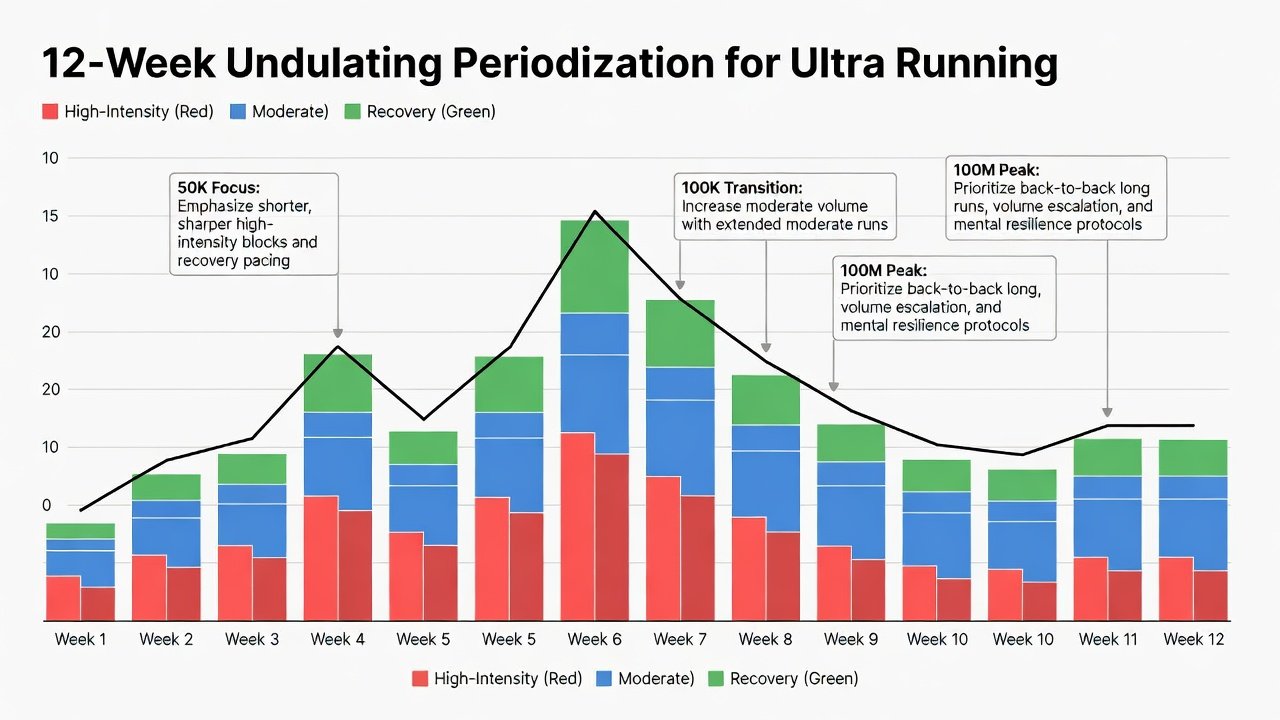
Each phase includes specific recovery protocols, such as extra sleep emphasis during peak weeks and nutrition timing around long efforts. Runners can track adherence using simple spreadsheets noting daily RPE scores and weekly totals.
Recovery Integration and Intensity Variations
Recovery must be intentional within every undulation. Prioritize 7-9 hours of sleep nightly, strategic carbohydrate intake around workouts, and mobility routines on rest days. Intensity variations rely on heart rate zones, power meters, or rate of perceived exertion to alternate between predominantly easy efforts around 70% of max and threshold work near 85-90%.
Monitoring tools like HRV readings help decide when to push or pull back. Integrating these elements prevents the common mistake of turning every long run into a suffer-fest.
Adjusting for 50K to 100M Distances
50K athletes benefit from more speed-focused undulations and shorter hill repeats to build turnover. Volume stays moderate with emphasis on quality over quantity. For 100M goals, extend the peak phase by two weeks and incorporate multiple back-to-back long runs to practice sleep deprivation and nutrition strategies. 100K runners fall in the middle, needing balanced volume with targeted intensity on technical terrain.
Always reduce total weekly mileage by 10-15% when shifting down a distance category to allow proper adaptation.
Athlete Case Examples
Elite ultra runner Alex R. applied undulating periodization in 2025 and cut his 100M time by 15% while reporting fewer injuries. Intermediate athlete Jordan T. used a similar 12-week block for her first 50K and finished strongly with consistent pacing. Newer runner Sam K. started with scaled volumes and progressed to a 100K finish within 18 months by following the wave pattern and listening to recovery cues.
Step-by-Step Implementation Tips
- Begin with a baseline long run test to establish current endurance capacity.
- Define intensity zones using a field test such as a 30-minute time trial.
- Build the weekly undulation starting with conservative volumes and one intensity day.
- Log sleep, nutrition, and subjective fatigue daily to guide adjustments.
- Reassess every four weeks using metrics like average pace on easy runs and recovery heart rate.
- Incorporate strength work twice weekly focused on single-leg stability and core endurance.
- Plan race-specific simulations in the final four weeks of the cycle.
Common Pitfalls to Avoid
Many athletes skip dedicated recovery days, leading to accumulated fatigue. Others progress volume too aggressively without monitoring HRV or sleep quality. Ignoring life stress outside of training often derails even the best plans. Always build buffer weeks into the schedule and communicate with a coach when possible.
FAQs on Tracking Progress
How do I track undulating progress effectively? Maintain a detailed training log that records daily intensity, total time, and recovery quality. Review trends every two weeks.
Is undulating periodization suitable for beginners? Yes, provided volumes are scaled appropriately and a coach provides initial guidance on intensity zones.
What if I miss a workout due to illness? Shift the undulation pattern forward rather than cramming missed sessions.
How often should I test progress? Perform a controlled long run assessment every four weeks during the base and peak phases.
Conclusion
Undulating periodization provides ultra runners with a flexible, effective framework for reaching peak endurance in 2026. By integrating weekly waves of intensity, deliberate recovery, and distance-specific adjustments, athletes can achieve consistent gains while staying healthy. Implement the strategies outlined here methodically, track your responses closely, and combine them with consistent practice. For additional ultra training resources, visit Runner's World.


No comments yet. Be the first!