 The Runner Story

Starting a running routine as a beginner can feel exciting yet overwhelming. Many turn to apps or fitness challenges for motivation, but a low-tech running journal offers a reflective, sustainable alternative that builds self-awareness and consistency. This guide explores how tracking your runs in a journal can keep you motivated for the long haul without digital distractions or gamified pressure. By focusing on personal insights rather than external metrics, beginners can develop a deeper understanding of their bodies, minds, and progress over time.
Why a Running Journal Beats Apps for Beginners
Digital tools often emphasize metrics like streaks or leaderboards, which can create pressure and lead to burnout. A journal encourages mindfulness by focusing on personal experiences rather than competition. Research from World Health Organization highlights that consistent physical activity improves mental health, and journaling amplifies this by helping you recognize patterns in mood and energy. Unlike apps that might require subscriptions or constant notifications, a journal is always available, private, and free from algorithmic suggestions. It fosters intrinsic motivation, which studies show leads to longer-term adherence to exercise habits. For beginners especially, this method reduces anxiety around performance and shifts attention to enjoyment and reflection.
Choosing the Right Journal Format
Select a format that fits your lifestyle and preferences. Options include a dedicated notebook for handwritten entries, a printable template in a binder, or a simple digital document if you prefer typing. Handwritten journals provide a tactile experience that many beginners find more engaging and less distracting than screens. Consider a lined notebook with at least 100 pages for longevity, or opt for a bullet journal style if you enjoy creative layouts. Printable options work well if you like structure and can photocopy templates. Avoid overly complex systems at first; simplicity encourages consistency. Weigh the pros and cons: notebooks offer portability and no battery concerns, while digital versions allow easy searching but may tempt multitasking.
What Details to Log in Your Running Journal
Effective entries go beyond distance. Track these key elements to uncover meaningful patterns:
- Distance or time run, including splits if applicable
- Weather conditions such as temperature, wind, and precipitation
- Pre- and post-run mood on a simple 1-10 scale
- Energy levels and any discomfort or pain noted
- Route details or terrain type like pavement, trail, or treadmill
- Notes on what felt good or challenging, including thoughts during the run
- Optional additions like sleep quality the night before or nutrition intake
This data reveals valuable insights over time, such as how rainy days affect your pace or how morning runs boost your mood. Logging weather helps correlate external factors with performance, while mood tracking builds emotional awareness. Beginners often discover surprising connections, like improved endurance after certain meals or better consistency on weekdays versus weekends.
Step-by-Step Guide to Setting Up Your Journal
- Pick your journal and a comfortable pen that glides smoothly across pages.
- Create a simple template with date, distance, mood, weather, and notes sections at the top of each page.
- Commit to logging immediately after each run while details remain fresh in your mind.
- Include a dedicated weekly review page for reflections and pattern spotting.
- Decide on a storage spot, such as a bedside table, to make it a seamless part of your routine.
- Start small with just three runs per week to avoid overwhelm.
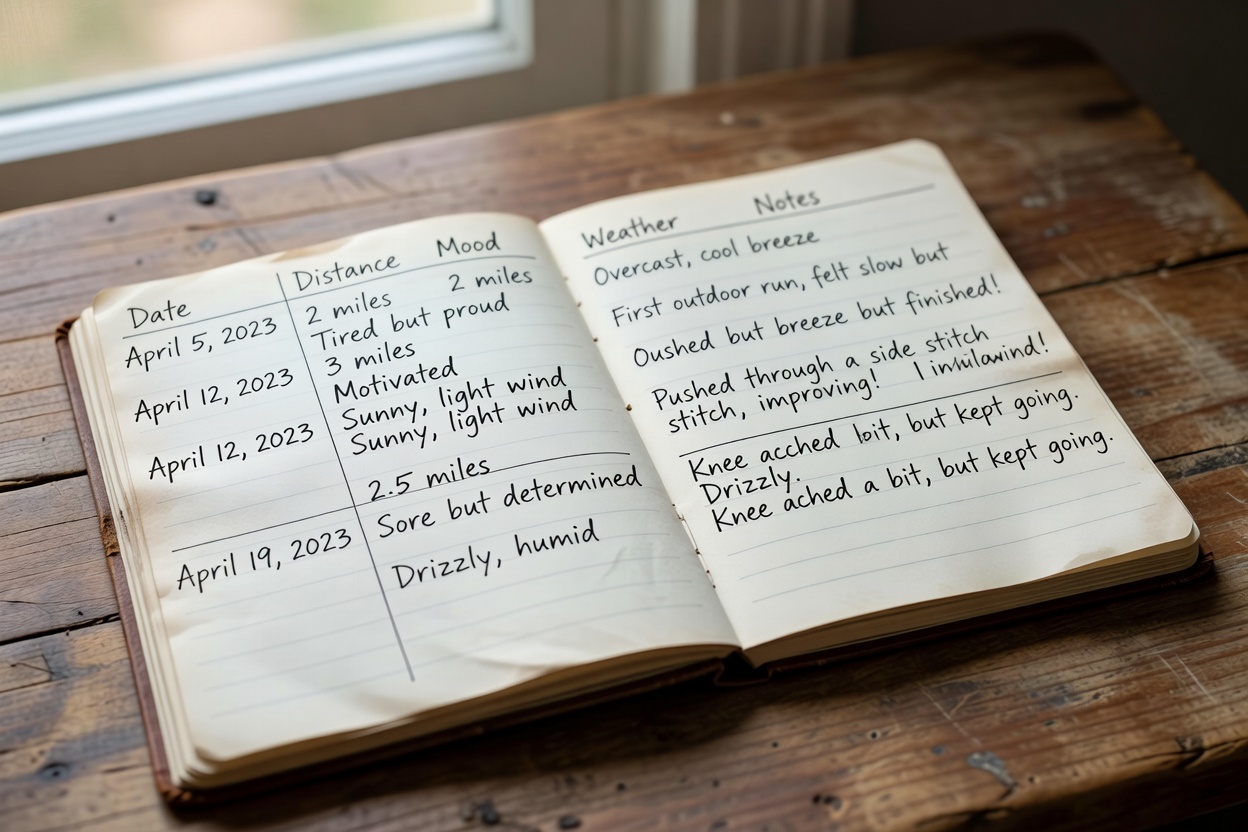
Practical Templates and Real Beginner Journal Examples
Here are sample entries from fictional beginners that show how patterns emerge with consistent use. These demonstrate reflective logging rather than just numbers.
Entry 1 (Week 1, Monday): Date: July 3, 2026. Distance: 2 miles. Mood before: Anxious (4/10). Mood after: Energized (8/10). Weather: Sunny, 72°F, light breeze. Notes: Felt slow at the start but proud to finish without walking. Legs felt a bit tight afterward; tried focusing on breathing to stay relaxed.
Entry 2 (Week 3, Thursday): Date: July 17, 2026. Distance: 2.5 miles. Mood before: Tired (3/10). Mood after: Calm (7/10). Weather: Overcast, 65°F. Notes: Better breathing today and noticed I run faster on flat routes. Felt more confident overall and enjoyed the quiet neighborhood streets.
Entry 3 (Week 5, Saturday): Date: July 31, 2026. Distance: 3 miles. Mood before: Neutral (5/10). Mood after: Accomplished (9/10). Weather: Partly cloudy, 78°F. Notes: Incorporated a short hill and recovered quickly. Realized afternoon runs suit me better than mornings due to higher energy levels.
Reviewing these reveals how weather and mood correlate, helping beginners adjust expectations and celebrate incremental wins like improved breathing or route preferences. Over several weeks, entries might show reduced anxiety before runs or a preference for certain times of day.
Reviewing Entries Weekly to Celebrate Small Wins
Set aside 10-15 minutes each Sunday evening for review. Read the past week’s entries and note three positives, such as consistent effort despite rain or better recovery between runs. Identify one area for gentle improvement, like experimenting with different routes. This practice reinforces motivation by shifting focus from perfection to progress. Use a highlighter or colored pen to mark standout moments. Over months, you’ll see clear evidence of growth that keeps you running. Compare entries month-over-month to spot trends like increased average distance or more positive mood ratings.
Common Mistakes to Avoid When Journaling
Many beginners make the error of making entries too brief or skipping reviews entirely. Another pitfall is judging entries harshly instead of treating them as neutral data. Avoid forcing creativity if it feels unnatural; stick to factual notes at first. Do not compare your journal to others online, as this undermines the personal nature of the practice. Finally, resist the urge to log only “good” runs—include challenging ones to gain full insights.
Building the Habit Long-Term
To sustain journaling, pair it with post-run stretching or a favorite beverage. Revisit older entries quarterly to appreciate your journey. If motivation dips, reread positive past notes for encouragement. This low-tech approach pairs well with community runs or local groups for added support without relying on technology.
FAQ: Overcoming Journaling Hurdles
How do I remember to journal? Pair it with an existing habit, like stretching after runs or making coffee in the morning.
What if entries feel repetitive? Add creative elements like sketches of your route or short gratitude notes about the experience.
Is it okay to skip days? Yes—note the reason briefly and return without judgment to maintain the habit long-term.
Should I include rest days? Absolutely; logging rest days helps track overall balance and recovery patterns.
How long before I see benefits? Most beginners notice improved self-awareness within two to four weeks of consistent use.
Can I combine this with other tools later? Yes, many transition to light app use after establishing the journaling foundation for deeper motivation tracking.
By embracing a running journal, beginners develop a deeper connection to their journey. This method fosters sustainable motivation rooted in self-reflection rather than external pressures. Start simple today, commit to honest entries, and watch your consistency and enjoyment grow over time. The insights gained will serve you well as you progress beyond the beginner stage.


No comments yet. Be the first!