 The Runner Story
Introduction: Why Yoga Complements Running for Beginners
Starting a running routine is exciting, but many beginners struggle with motivation after the initial weeks. Burnout, tight muscles, and mental fatigue often derail progress. Integrating yoga offers a powerful cross-training solution that enhances flexibility, strengthens stabilizing muscles, and fosters mindfulness. This approach directly addresses search intent around sustaining running motivation while preventing injury and building long-term resilience. Yoga helps runners develop body awareness that translates to better running form, reducing the risk of common issues like shin splints or knee pain. Beginners who incorporate yoga often find they recover faster between runs, allowing them to maintain a steady training schedule without feeling overwhelmed. Studies from sports medicine sources indicate that cross-training with yoga can improve running economy by up to 10 percent over several months when practiced consistently. By combining these practices, beginners create a balanced routine that keeps both body and mind engaged, turning running from a chore into a sustainable lifestyle habit.
Restorative Yoga vs. Vinyasa: Choosing the Right Style
Understanding yoga styles helps beginners select what fits their running schedule. Restorative yoga focuses on passive poses held for extended periods with props, promoting deep relaxation and recovery. It's ideal post-run for easing soreness and calming the nervous system after high-impact activity. Vinyasa, in contrast, involves flowing sequences synced with breath, building heat and cardiovascular endurance. Beginners often start with restorative sessions twice weekly before progressing to gentle vinyasa flows on non-running days. Comparisons reveal restorative yoga excels at mental reset after long runs, while vinyasa improves overall stamina and can serve as an active recovery tool. Many runners alternate between the two for optimal results, using restorative practices on harder training days and vinyasa for lighter weeks. This variety prevents boredom and addresses both physical tightness and psychological barriers to consistency.
Selecting Beginner-Friendly Yoga Poses That Complement Running
Focus on poses targeting common running tight spots like hips, hamstrings, and calves. Effective options include Downward-Facing Dog, which stretches the entire posterior chain while strengthening shoulders and improving posture for better running alignment. Pigeon Pose opens tight hip flexors strained by repetitive strides, helping alleviate lower back discomfort. Child's Pose provides gentle forward fold for spine relief and mental calm, serving as a quick reset during stressful training periods. Standing Forward Fold lengthens hamstrings and calms the nervous system, while Warrior II builds leg strength and improves balance for better running form. Additional useful poses are Supine Figure-Four for hip external rotators and Cat-Cow for spinal mobility. These poses avoid high-impact movements, making them safe for new runners, and can be modified with blocks or straps as flexibility develops over time.
Sample 15-Minute Post-Run Yoga Routine
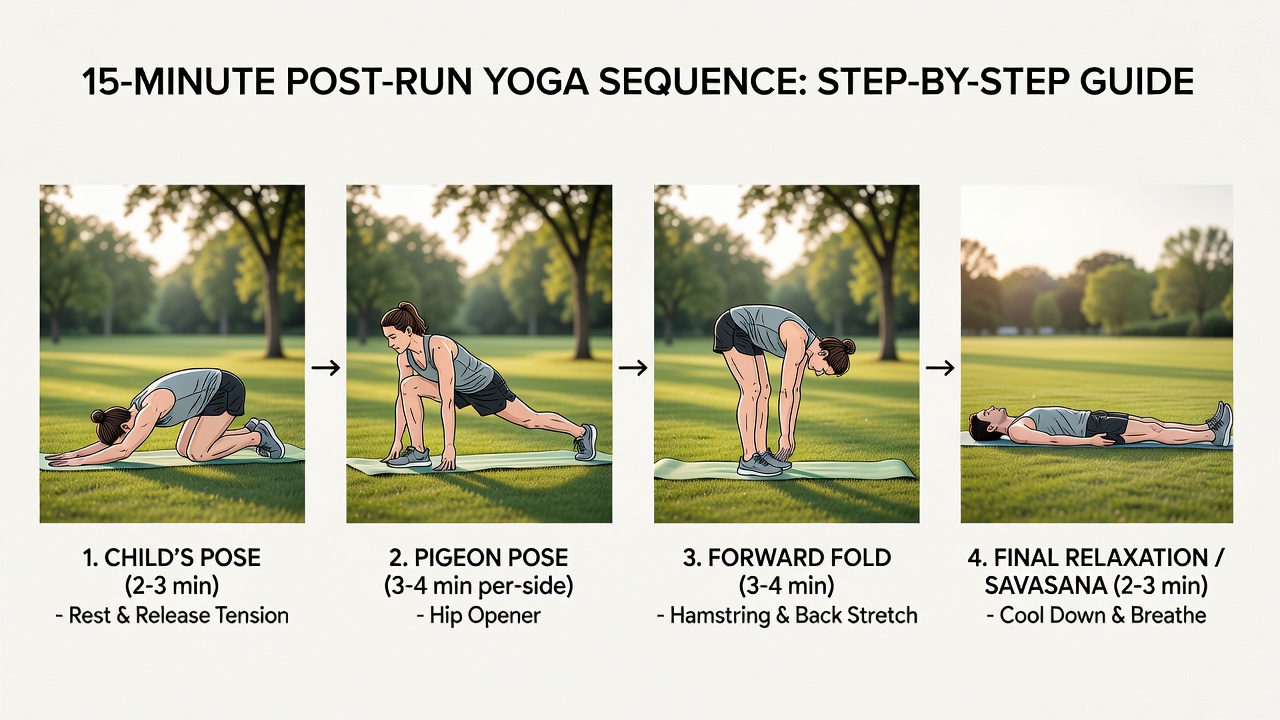
Perform this sequence immediately after cooling down from a run. It requires no equipment beyond a mat and can be adjusted for any fitness level. Begin with 1-2 minutes in Child's Pose, kneeling and folding forward while breathing deeply to center yourself and release tension from the lower back. Move into 3-5 minutes of Downward-Facing Dog, holding the pose and gently pedaling the feet to release calves and hamstrings. Spend 6-9 minutes in Pigeon Pose on each side, focusing on hip opening and using breath to sink deeper without forcing. Follow with 10-12 minutes in Standing Forward Fold, bending the knees slightly if needed to protect the lower back. Finish with 13-15 minutes in Supine Twist, lying on the back and twisting gently for spinal mobility and detoxification. Add mindful breathing throughout, inhaling for four counts and exhaling for six, to enhance the mental benefits. Repeat this routine 3-4 times weekly to notice improved recovery within two weeks, and track how it affects your next run's ease and enjoyment.
Real-World Examples of Runners Who Improved Consistency
Consider Sarah, a 32-year-old beginner who added yoga after struggling with motivation during her first 5K training. By incorporating two 15-minute sessions weekly, she increased her running frequency from three to five days without fatigue and completed her first race feeling stronger than expected. Similarly, marathon newcomer Jamal used restorative yoga to manage work stress, reporting he completed his first half-marathon with fewer missed training days and better sleep quality. Another example is Lisa, a 45-year-old office worker who combined gentle vinyasa flows with her weekend long runs; within six weeks she reduced her perceived exertion during runs and avoided the typical mid-program slump. These stories highlight how yoga integration turns sporadic runners into consistent athletes by addressing both physical recovery and mental hurdles.
Practical Steps for Weekly Integration
Start small to build the habit and avoid overwhelm. Schedule yoga right after runs on Mondays, Wednesdays, and Fridays for seamless incorporation. Track progress in a simple journal noting energy levels, motivation scores, and any tightness or improvements. Join a beginner yoga class once weekly for guidance, then practice at home using free online resources. Combine with easy runs initially to avoid overload, and gradually increase session length as flexibility improves over four to six weeks. Create a sample weekly plan: Monday post-run restorative yoga, Tuesday rest or light walk, Wednesday post-run yoga, Thursday easy run, Friday yoga flow, Saturday longer run, Sunday full rest. This structure ensures balanced training while building mental resilience through regular mindfulness practice.
Common Pitfalls to Avoid
Many beginners rush into advanced poses or skip warm-ups, leading to strain or discouragement. Avoid forcing flexibility—use props like blocks and straps to support proper alignment. Another mistake is neglecting breathwork, which reduces yoga's mental benefits and leaves runners without tools for stress management during tough runs. Finally, do not skip rest days; yoga supports recovery but does not replace full rest or sleep. Watch for signs of overdoing it, such as increased soreness instead of relief, and scale back accordingly. Learning from these pitfalls helps maintain motivation and prevents setbacks that could derail beginner progress.
FAQ: Addressing Time Constraints and Flexibility Concerns
How do I fit yoga in with a busy schedule? The 15-minute routine fits easily post-run and can be shortened to five minutes of focused breathing on hectic days. Many runners find early morning or evening sessions work best when combined with existing habits.
What if I'm not flexible? Yoga builds flexibility over time rather than requiring it upfront. Start with modified versions and props; consistency matters more than depth, and most beginners see noticeable improvements within three to four weeks.
Can yoga replace strength training? It complements strength work well by targeting mobility and stability, but pair it with bodyweight exercises like squats for comprehensive lower-body support.
Is yoga suitable for all ages? Yes, restorative styles adapt to any fitness level or age group, making it accessible for beginners regardless of prior experience.
Does yoga really help with running motivation? Yes, the mindfulness aspect reduces anxiety around performance and builds mental toughness that carries over to longer runs and race days.
Conclusion
Integrating yoga into beginner running routines delivers lasting motivation through better recovery, mental clarity, and injury prevention. By selecting complementary poses, following structured routines, and avoiding common mistakes, runners build sustainable habits that support long-term success. Explore resources from Runner's World and Yoga Journal to deepen your practice, and consider guidance from Mayo Clinic on exercise integration. Start today and experience the difference in your running journey.


No comments yet. Be the first!