 The Runner Story

Introduction to the Taper Phase
The taper phase is one of the most critical yet often misunderstood elements of marathon training. In 2026, runners aiming for peak performance must understand how to reduce volume strategically while preserving fitness. This guide provides in-depth strategies, sample schedules, and practical checklists to help you master tapering. Many athletes spend months building mileage only to undermine their efforts with a poorly planned final three weeks. Effective tapering allows your body to recover from high mileage while maintaining aerobic capacity. Studies show that a well-executed taper can improve race times by 2-3%. The process involves balancing rest with enough stimulus to keep muscles sharp and minds focused. Runners who skip this phase or treat it casually often arrive at the start line fatigued or underprepared mentally.
The Science Behind Tapering
Tapering works by reducing training stress, which lowers fatigue markers such as elevated cortisol and muscle soreness. Research from National Institutes of Health indicates that tapering increases muscle glycogen stores and enhances neuromuscular efficiency. During the final two weeks, mitochondrial adaptations continue even as mileage drops. The body shifts from breakdown to supercompensation, allowing damaged tissues to repair fully. Hormonal balance improves, reducing inflammation that accumulates from long runs. Blood volume also stabilizes, supporting better oxygen delivery on race day. Understanding these physiological changes helps runners trust the process instead of panicking when legs feel heavy from reduced activity.
Optimal Duration and Intensity Reductions
For most marathoners, the taper lasts 2-3 weeks. Elite athletes often use a 21-day taper, while recreational runners benefit from 14 days. Reduce weekly mileage by 20-25% in week one of the taper, then another 40-50% in the final week. Intensity should include one or two short sessions at race pace, but never exceeding 20 minutes total. The goal is to keep the neuromuscular system primed without accumulating new fatigue. Runners with higher base mileage may need the full three weeks, whereas those coming from lower volumes can shorten it slightly. Always individualize based on how your body responds to prior training blocks.
Sample Weekly Schedules
Here are detailed examples for different runner levels. Beginners might start with lower absolute numbers while following the same percentages.
- 3 Weeks Out (70% mileage): Peak week was 50 miles, so run 35 miles. Include one 8-mile long run at easy pace and two short tempo efforts totaling 15 minutes at marathon pace.
- 2 Weeks Out (50% mileage): Drop to 25 miles. Feature a 5-mile run with 4x1 mile at marathon pace and plenty of easy recovery miles around it.
- 1 Week Out (30% mileage): Only 15 miles total. One 3-mile easy run mid-week plus 6x30-second strides. Rest completely the final two days.
These schedules prevent the common mistake of running too much while still providing touch points for race-day rhythm.
Monitoring Fatigue Markers
Track resting heart rate, sleep quality, and perceived exertion daily. A sudden spike in resting heart rate signals the need for extra rest. Use a simple checklist: rate energy levels 1-10 each morning and adjust runs accordingly. Additional markers include muscle soreness that lingers beyond 48 hours, mood changes, and motivation dips. Wearable devices can provide data on heart rate variability, but subjective feelings remain equally important. If fatigue markers rise sharply, insert an extra rest day rather than pushing through. Consistent monitoring prevents the overtraining that ruins many otherwise solid training cycles.
Adjusting Nutrition During the Taper
Focus on carbohydrate loading in the final 48-72 hours, aiming for 7-10g per kg of body weight. Maintain protein intake to support muscle repair. Hydration remains key—drink to thirst rather than forcing fluids. Increase complex carbs from sources like oats, rice, and pasta while keeping fiber moderate to avoid digestive issues. Sample day: breakfast of oatmeal with banana, lunch of chicken and rice, dinner of pasta with lean protein. Avoid drastic calorie cuts; the body still needs fuel for recovery even with fewer miles. Runners who under-eat during taper often feel flat on race morning.
Practical Examples from Elite Runners
Many top marathoners, such as those following Hansons-Brooks training, keep one quality session during the taper. Kipchoge-style approaches emphasize complete rest 48 hours before the race while maintaining light movement. Athletes like Eliud Kipchoge typically run easy 5-6 miles daily in the final week with one short shakeout including strides. American record holders often incorporate visualization and mental rehearsals alongside physical tapering. These examples show that tapering is not complete inactivity but controlled reduction tailored to the individual.
Successful vs. Failed Taper Approaches
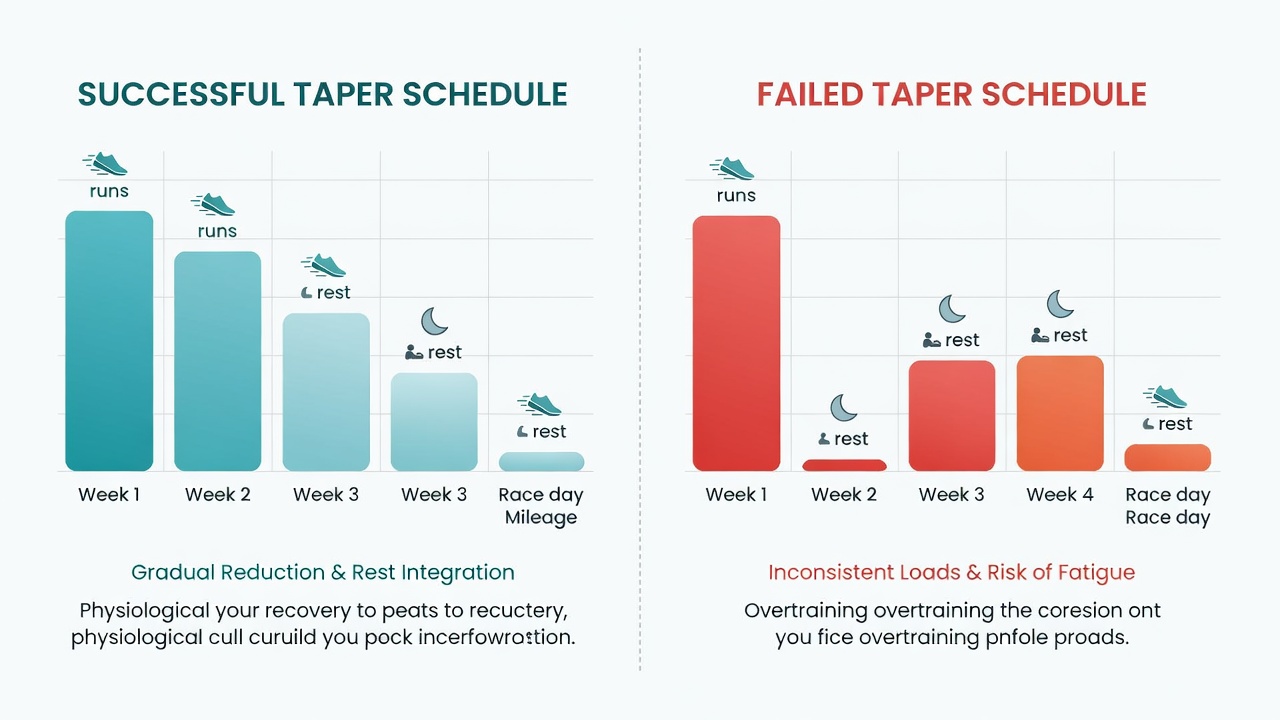
Successful tapers feature gradual reductions and consistent sleep. Failed attempts often involve last-minute long runs or complete inactivity, leading to stiffness. Comparison: runners who taper properly report better mental freshness on race day. A successful runner might feel slightly antsy but energetic at the start line, while a failed taper produces heavy legs and doubt. Case studies from training groups show that athletes who added an unplanned 10-mile run in week two saw 5-7 minute slower finishes compared to those who followed the plan.
Step-by-Step Checklists
- Week 3: Log all workouts and note fatigue. Reduce long run by 25% and add an extra recovery day if needed.
- Week 2: Reduce volume further, add recovery runs, and practice race nutrition on one easy day.
- Week 1: Focus on nutrition and visualization. Keep runs short and easy except for one stride session.
- Race week: Prioritize sleep and light strides. Pack gear early and avoid new foods or activities.
Common Pitfalls to Avoid
Overtraining in the taper or under-recovery both hurt performance. Avoid adding extra miles out of anxiety. Instead, trust the process built over months of training. Other pitfalls include ignoring sleep, introducing new shoes, or skipping warm-ups before short quality sessions. Runners who stay overly active with daily chores or travel also risk arriving fatigued. Plan logistics in advance to minimize stress.
Maintaining Mental Sharpness
Mental preparation matters as much as physical rest. Use the extra time for visualization of race scenarios, reviewing pacing strategies, and reading positive race reports. Avoid doom-scrolling injury stories or comparing splits with training partners. Light cross-training like walking can clear the mind without taxing the legs.
Conclusion
Mastering the taper phase sets you up for a strong marathon finish in 2026. Apply these evidence-based strategies, monitor your body, and execute the plan with confidence. The final weeks are when all the hard work pays off.
FAQ
How do I maintain fitness while resting? Short strides and easy runs preserve fitness without adding fatigue.
Can I cross-train during taper? Light cycling or swimming is acceptable if it does not elevate heart rate significantly.
What if I feel too rested? Trust the science—rest translates to faster race times.
Should I change my diet drastically? No, make gradual carbohydrate increases rather than sudden shifts.
How many days completely off before the race? Most runners benefit from 48 hours of very light activity or full rest.


No comments yet. Be the first!