 The Runner Story

From Setback to Starting Line: A 2026 Marathon Comeback Story
Running injuries can feel like the end of the road, but for many athletes they become powerful catalysts for growth. This case study follows Alex, a dedicated marathoner who suffered a tibial stress fracture in late 2024 and used the recovery process to rebuild stronger than ever. By May 2026, Alex crossed the finish line of a major city marathon with renewed purpose and improved performance metrics. The story highlights practical recovery steps, weekly training examples, and the mental shifts that turned frustration into lasting motivation. Search trends show growing interest in authentic runner stories and post-injury motivation. Readers often seek relatable accounts that combine medical insights with actionable plans. Below, we break down every phase of Alex’s journey so you can adapt the lessons to your own training.
The Injury That Changed Everything
Alex had been consistently logging 50-mile weeks when sharp shin pain appeared during a long run. An MRI confirmed a tibial stress fracture. Initial treatment involved six weeks of non-weight-bearing activity followed by gradual loading under physical therapy guidance. This period forced a complete reset of training habits and priorities. Symptoms began subtly with discomfort after runs but escalated quickly during a 16-mile long run when pain became sharp and localized. Ignoring early warning signs like mild swelling led to the full diagnosis. Medical professionals emphasized that stress fractures often stem from rapid mileage increases, inadequate recovery, and insufficient strength work in the hips and core. Alex learned the hard way that even experienced runners can overlook biomechanical imbalances that place extra load on the lower legs.
Key Lessons from the Acute Phase
- Immediate rest and medical imaging prevented further damage.
- Cross-training with swimming and cycling maintained cardiovascular fitness without impact.
- Nutrition adjustments focused on calcium and vitamin D supported bone healing.
- Regular follow-up scans every four weeks tracked bone remodeling progress.
Phased Return-to-Run Protocol
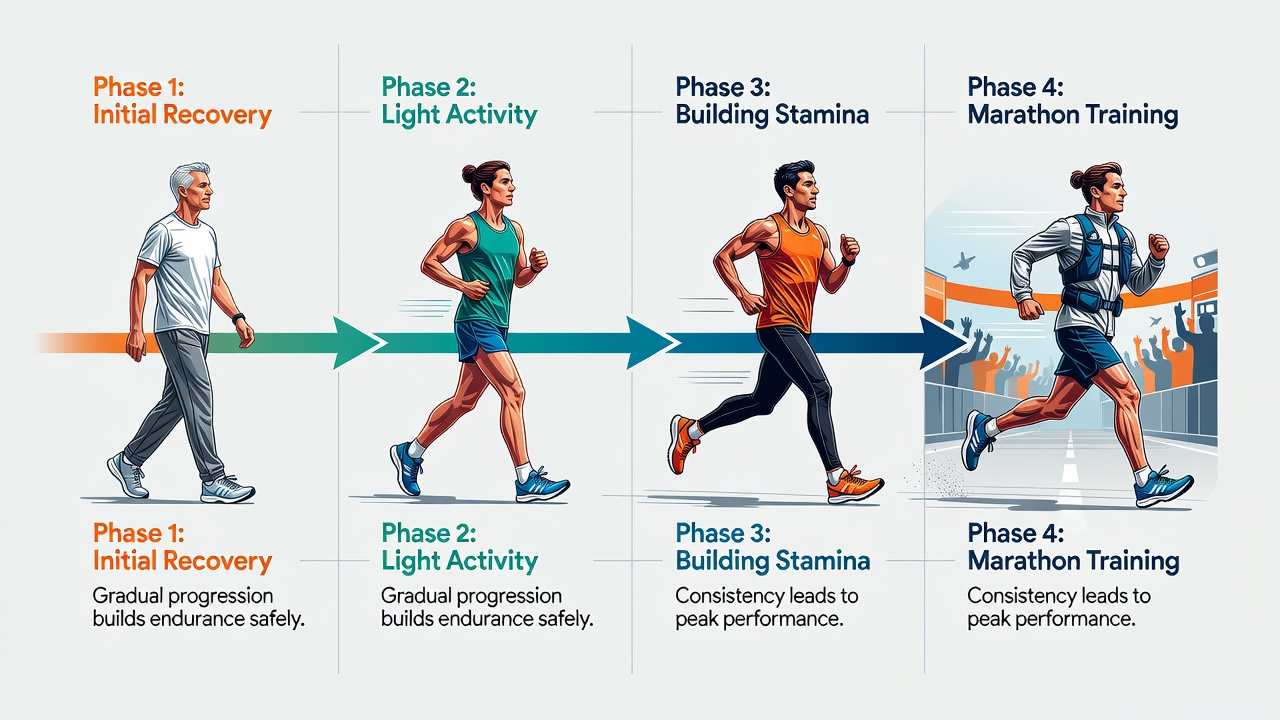
Return-to-run programs follow a structured progression to minimize re-injury risk. Alex followed a four-phase model recommended by sports medicine professionals. Each phase lasted roughly four to eight weeks, with clear exit criteria such as pain-free movement and improved strength test scores before advancing.
Phase 1: Walking and Mobility (Weeks 1-4 post-cast)
Daily walks of 20-40 minutes combined with gentle mobility drills. Pain was monitored using a 0-10 scale; any reading above 2 prompted immediate rest. Examples of drills included ankle circles, calf stretches against a wall, and seated marches to maintain hip mobility. Alex also incorporated pool walking for 30 minutes three times weekly to reduce gravitational stress while rebuilding confidence in movement.
Phase 2: Run-Walk Intervals (Weeks 5-8)
Short intervals began: 1 minute run, 2 minutes walk, repeated for 20 minutes total. Frequency started at three sessions per week. Alex tracked heart rate to stay in an easy aerobic zone and used a metronome app set at 170 steps per minute to improve running form and reduce impact. Progress was measured by extending the total session time by five minutes every two weeks if pain remained at zero.
Phase 3: Building Continuous Miles (Weeks 9-16)
Runs extended to 30-45 minutes continuously. Long runs increased by no more than 10% weekly. Sample sessions included hilly routes to build resilience and flat tempo efforts at marathon pace. Alex introduced single-leg balance exercises on a BOSU ball twice weekly to address previous stability deficits that contributed to the original injury.
Phase 4: Marathon-Specific Training (Weeks 17-32)
Peak weeks reached 45-55 miles with one long run of 18-20 miles and two quality sessions including tempo and interval work. Key workouts featured 5x1-mile repeats at goal pace with full recovery and a weekly long run that incorporated the last three miles at marathon effort. This phase also included a dedicated strength day focused on posterior chain development.
Sample Weekly Schedule During Build Phase
Here is an example mid-build week Alex used six months before the 2026 race:
- Monday: 8 miles easy + strength circuit
- Tuesday: 6 miles including 4x800m intervals
- Wednesday: 45-minute cross-train swim
- Thursday: 7 miles tempo run
- Friday: Rest or yoga
- Saturday: 16-mile long run
- Sunday: 5 miles recovery + core work
Total weekly volume: 42 miles. Every fourth week included a recovery week with 20% reduced volume. Additional variations included adding strides on easy days and incorporating hill repeats every other Tuesday to build power without high mileage.
Mindset Shifts That Sustained Daily Motivation
Physical healing was only half the battle. Alex adopted several mental strategies that kept training consistent even on difficult days. Process goals replaced outcome goals. Instead of fixating on race time, Alex tracked metrics like sleep quality and weekly consistency using a simple spreadsheet. Gratitude journaling highlighted small wins, such as completing the first pain-free 5K or hitting a new deadlift personal record during strength sessions. Community support through local running groups provided accountability and perspective, with weekly virtual check-ins that normalized the ups and downs of recovery. Visualization techniques involved mentally rehearsing the 2026 finish line during tough workouts, which helped maintain emotional connection to the goal when physical progress felt slow.
Pre-Injury vs Post-Injury Performance Comparison
Before the injury, Alex averaged 3:45 marathon times with frequent niggles. After structured recovery and strength work, the 2026 performance improved to 3:32 with zero injuries during the build. Key changes included twice-weekly strength sessions and better sleep hygiene. These adaptations turned a potential career setback into a personal record. Biomechanical assessments post-recovery showed improved hip strength and a more efficient stride length, directly contributing to faster times and reduced injury recurrence risk.
Common Questions About Running Injuries
How long does it take to return after a stress fracture?
Most runners need 3-6 months depending on severity and adherence to progressive loading. Always follow medical clearance and consider working with a physical therapist experienced in running athletes for personalized timelines.
Can I cross-train during recovery?
Yes. Low-impact activities like cycling and pool running preserve fitness while protecting healing tissue. Consult a physical therapist for personalized plans that match your current fitness level and injury stage.
What signs indicate I’m returning too quickly?
Persistent pain, swelling, or altered gait are red flags. Back off immediately and reassess with a professional. Early detection of these signals can prevent setbacks of several additional weeks.
Should I change my running shoes after an injury?
Many runners benefit from replacing shoes every 300-500 miles and considering models with better cushioning or stability features. Alex switched to a neutral cushioned shoe with a higher stack height during the return phase, which helped absorb impact more effectively.
Final Takeaway
Alex’s 2026 marathon finish proved that injuries, while painful, can fuel stronger comebacks when approached with patience and smart planning. Whether you are dealing with your first setback or a recurring issue, focus on phased progression, consistent mindset work, and listening to your body. Your next starting line may be closer than you think. For more evidence-based guidance on bone stress injuries, visit Mayo Clinic and explore training resources at Runner’s World. Additional insights on sports medicine protocols are available from American College of Sports Medicine.


No comments yet. Be the first!