 The Runner Story

Introduction: Revitalizing Your Fitness Journey with Interval Training
Sticking to a consistent running routine can be challenging, especially when motivation wanes during long fitness journeys. Interval training offers a dynamic solution by alternating bursts of high-intensity effort with recovery periods. This approach not only builds physical endurance but also keeps the mind engaged, making runs feel more purposeful and less monotonous. Runners seeking to maintain running motivation often find that structured intervals transform their fitness journey into an exciting progression rather than a chore. Whether you are new to running or have been logging miles for years, incorporating intervals can reignite enthusiasm by providing variety and measurable achievements at every stage.
Unlike steady-state runs that maintain a constant pace, intervals introduce variety that combats boredom and provides clear milestones for tracking improvement. Research from authoritative health sources supports the mental and physical benefits of varied exercise intensities, helping runners stay committed over months or even years of training.
The Science Behind Interval Training and Mental Engagement
Interval training leverages the body's energy systems, alternating between anaerobic and aerobic efforts. This variety stimulates the release of endorphins and dopamine, which are key neurotransmitters linked to improved mood and motivation. Studies show that shorter, intense segments prevent the mental fatigue associated with prolonged steady efforts. By breaking runs into manageable chunks, runners experience frequent wins, reinforcing positive habits in their fitness journey. The repeated start-and-stop pattern also enhances focus because each interval demands attention, reducing the tendency for the mind to wander during long efforts.
Progress tracking becomes simpler with intervals because each session yields measurable data like speed improvements or recovery times. This data-driven feedback loop sustains running motivation over months or years. Physiological adaptations such as improved VO2 max and lactate threshold occur more rapidly with intervals, giving runners tangible evidence of advancement that fuels continued dedication.
Comparing Interval Training to Steady-State Runs
Steady-state running builds a strong aerobic base but can lead to plateaus in motivation due to its repetitive nature. In contrast, interval sessions deliver faster fitness gains in less time, often leading to quicker visible results. For example, a 30-minute interval workout can match or exceed the calorie burn and cardiovascular benefits of a longer easy run. Runners report higher satisfaction when incorporating intervals because the structured format feels like a strategic challenge rather than endless mileage.
However, both methods complement each other. A balanced fitness journey combines intervals for speed and motivation with steady runs for endurance. Consider these key differences:
- Time efficiency: Intervals often achieve similar benefits in shorter durations.
- Mental variety: Intervals break monotony through changing intensities.
- Adaptation rate: Intervals accelerate improvements in speed and power.
- Recovery demands: Steady runs typically require less immediate recovery.
Many runners find that blending the two prevents burnout while maximizing both physical and psychological gains.
Beginner-Friendly Interval Setups
Starting with intervals requires minimal equipment but careful planning. Begin with a 5-10 minute warm-up jog, followed by short work intervals of 30-60 seconds at a challenging pace, then equal or longer recovery walks or jogs. Repeat 6-10 times and finish with a cool-down. Use a running app or watch to time efforts precisely. For absolute beginners, start on a treadmill or flat path to control pace easily. Focus on effort level rather than exact speed; a good rule is to rate the work interval as 7 or 8 out of 10 on a perceived exertion scale.
Practical steps include assessing your current fitness level, choosing flat terrain initially, and listening to your body. Increase intensity gradually over weeks to avoid injury. An example session might be: warm-up walk/jog, then 8 repetitions of 45 seconds brisk running followed by 90 seconds walking, ending with stretching. Track how you feel after each session to refine future workouts.
Sample Weekly Schedules with Rest Guidelines
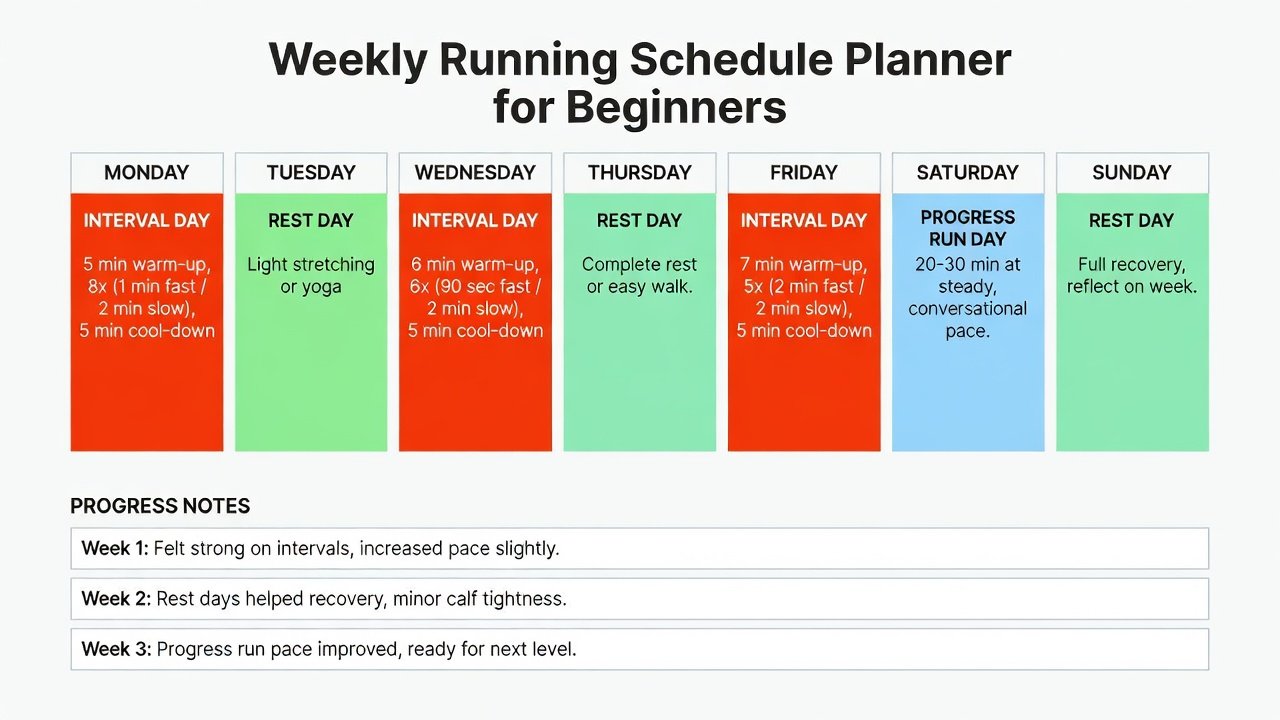
Here is a beginner-to-intermediate weekly plan focused on running motivation:
- Monday: Rest or light walk
- Tuesday: 30-minute interval session (8x1 minute hard/1 minute easy)
- Wednesday: Easy 3-mile steady run
- Thursday: Rest or cross-training like cycling
- Friday: 25-minute intervals (6x2 minutes hard/2 minutes recovery)
- Saturday: Longer easy run of 4-5 miles
- Sunday: Full rest
Rest days are crucial for recovery and preventing burnout. Aim for at least two full rest days weekly. Adjust based on how your body responds. An intermediate variation could add hill intervals on one day or increase repetitions to 10-12 while shortening recovery. Always include a dynamic warm-up before intervals and static stretching afterward to support joint health and muscle recovery throughout your fitness journey.
Real-Runner Examples of Motivation Gains
Many runners share stories of renewed passion after adding intervals. One beginner who struggled with 2-mile runs reported completing a 5K after eight weeks of twice-weekly intervals, citing the variety as the key to staying consistent. Another experienced runner used intervals to break through a motivation slump during marathon training, achieving personal bests in shorter races along the way. A third runner, returning after a six-month break, credited structured intervals with rebuilding confidence quickly because each session produced clear data showing speed gains week over week. These examples illustrate how intervals turn vague goals into actionable steps that keep runners engaged.
Common Pitfalls to Avoid
Avoid starting too intensely, which can lead to injury or demotivation. Skipping warm-ups, ignoring recovery signals, or failing to track progress are frequent mistakes. Always prioritize form over speed in early sessions. Additional pitfalls include neglecting proper nutrition on interval days, comparing your times to others instead of your own baseline, and failing to progress gradually by adding too many intervals too soon. Runners who overlook rest days often experience stalled motivation due to accumulated fatigue. To sidestep these issues, keep a simple training log and review it weekly.
Progress Metrics and Implementation Tips
Track metrics such as average pace per interval, heart rate recovery, and weekly mileage. Set small goals like improving recovery time by 10 seconds. Implement by scheduling intervals on non-consecutive days and celebrating milestones to keep running motivation high throughout your fitness journey. Additional tips include using music playlists timed to interval lengths, running with a partner for accountability, and reviewing monthly trends rather than daily fluctuations. Over time, these practices create a sustainable system that supports long-term adherence.
FAQ
Is interval training safe for beginners?
Yes, when started gradually with proper warm-up and rest. Consult a doctor if you have health concerns, following guidelines from Mayo Clinic.
How can I customize intervals for my fitness level?
Adjust work-to-rest ratios and duration based on your pace and goals. Beginners might use longer recoveries initially while advanced runners shorten them.
What if I feel too fatigued during sessions?
Reduce intensity or add extra rest days. Listen to your body to sustain long-term running motivation.
Should I do intervals year-round?
Many runners cycle through phases, using intervals more heavily during build periods and reducing them during recovery weeks, per recommendations from CDC physical activity resources.
How do intervals affect injury risk?
When done correctly with adequate rest, intervals can actually strengthen muscles and reduce overuse injury risk compared to high-volume steady running alone, as noted by American Heart Association.
Conclusion
Interval training stands out as an effective tool for boosting running motivation and advancing your fitness journey. With thoughtful implementation, sample schedules, awareness of pitfalls, and consistent progress tracking, runners can enjoy sustained progress and enjoyment on the road for years to come.


No comments yet. Be the first!