 The Runner Story
Introduction: Why Weather Resilience Matters in 2026 Ultras
Ultra trail running in 2026 demands more than endurance. Unpredictable weather can turn a strong performance into a DNF within hours. This guide delivers actionable preparation for heat, cold, rain and wind, backed by real-world examples and decision frameworks that help intermediate runners finish safely. Building resilience starts months before race day with targeted training that simulates extreme conditions, allowing athletes to understand their personal limits and response times to temperature shifts.
Understanding 2026 Weather Patterns in Major Races
Events such as UTMB, Western States and Hardrock 100 continue to see rapid temperature swings. Runners who monitor forecasts from NOAA and adapt early reduce medical withdrawals by up to 30 percent according to recent race reports. Climate trends show increased variability, with afternoon thunderstorms becoming more frequent in mountain regions and heat waves extending into traditionally cooler shoulder seasons. Monitoring multiple data sources including satellite imagery and local station reports provides the most accurate picture of on-course conditions that can change every 500 meters of elevation gain.
Heat Management Strategies
Start with pre-cooling techniques the night before. Wear light-colored, UPF-rated clothing and carry at least two 500 ml soft flasks plus a 1.5 L hydration vest. Adjust pace by 15–20 percent slower than goal pace when temperatures exceed 28 °C. Electrolyte intake should increase to 600–800 mg sodium per hour. Additional tactics include soaking bandanas at aid stations and using evaporative cooling vests during long exposed sections. Training runs in similar heat help calibrate sweat rates and identify early signs of heat stress such as dizziness or reduced coordination.
Step-by-Step Heat Checklist
- Check forecast at 6 a.m. race morning
- Apply sunscreen and anti-chafe balm
- Fill all bottles with ice at aid stations
- Walk technical climbs to lower core temperature
- Monitor urine color every 90 minutes
- Carry a small spray bottle for misting face and neck
- Plan crew assistance for ice replenishment at key points
Cold and Hypothermia Prevention
Layering systems must allow quick adjustments. A merino base layer, lightweight wind shell and packable insulated vest form the core kit. Carry mittens and a buff even on mild days. If body temperature drops below 35 °C, stop and add layers immediately. Cold exposure often strikes during long descents when wind chill accelerates heat loss. Practice changing layers while moving to minimize time stopped. Insulated gloves with touchscreen compatibility help maintain dexterity for navigation devices in freezing conditions.
Rain and Wind: Staying Dry and Stable
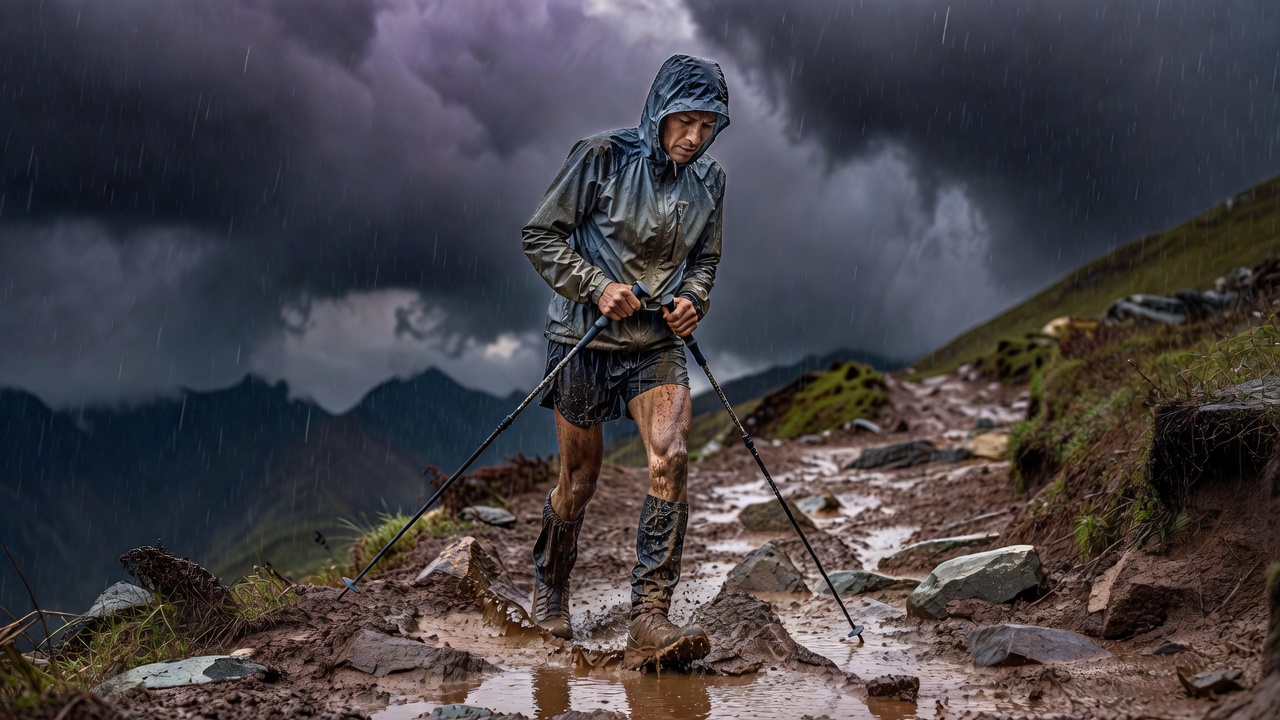
Waterproof/breathable jackets with pit zips prevent overheating. Gaiters keep debris out of shoes on muddy trails. In high winds, shorten stride length and lower center of gravity on exposed ridges. CDC extreme weather guidance recommends checking wind chill charts before exposed sections. Rain can turn technical terrain into slippery hazards, increasing fall risk and energy expenditure. Waterproof pants with side zips allow quick on/off adjustments without removing shoes. Windproof mitts and a buff that covers the neck and ears provide critical protection during sustained gusts over 40 km/h.
Real-World Examples from 2026 Races
At the 2026 Hardrock 100, sudden afternoon storms forced 42 percent of runners to add insulation layers within a 90-minute window. Those who carried the recommended shell finished 18 percent more often than those who skipped it. In the same year, Western States saw record heat that prompted medical teams to increase ice availability at every aid station, resulting in fewer heat-related DNFs compared to previous editions. UTMB 2026 featured high winds on the final descent, where runners who shortened their stride and used poles maintained better balance and avoided the slips that sidelined many competitors.
Common Weather Pitfalls and How to Avoid Them
- Overdressing at the start – leads to early dehydration; combat by starting slightly cool and adding layers only after the first 5 km
- Ignoring micro-climate forecasts on course – causes hypothermia on descents; always check elevation-specific updates
- Skipping gaiters in rain – results in blisters and lost time; test them in training to ensure fit
- Running too fast in heat – spikes heart rate and core temperature; use perceived effort rather than pace
- Neglecting foot care in wet conditions – leads to maceration; change socks at major aid stations
Race-Day Decision Framework
Use a simple traffic-light system: green = proceed with plan, yellow = slow pace and add layers, red = seek shelter and reassess. Update the color every 30 minutes using on-course weather apps. Incorporate body signals such as shivering, excessive sweating or loss of appetite into the decision matrix. Having a pre-planned bailout point every 10 km allows quick exits if conditions deteriorate faster than expected.
Expanded Gear Recommendations
Invest in versatile pieces that serve multiple conditions. A 3-layer waterproof jacket with adjustable hood and hem drawcord offers protection without bulk. Lightweight down or synthetic insulated vests pack small yet provide rapid warmth. Trekking poles with cork grips reduce hand fatigue in wind and help maintain balance on slick surfaces. Test all gear combinations during long training runs that replicate race weather scenarios.
Pacing Adjustments Across Conditions
Heat requires deliberate slowing on climbs and conservative effort on flats. Cold demands steady movement to generate internal heat without spikes that cause sweating. Rain and wind call for shorter, quicker steps on technical terrain to maintain traction. Create a pacing chart that factors in temperature, wind speed and precipitation probability for each segment of the course.
Hydration and Nutrition in Varying Weather
Adjust fluid intake based on conditions rather than fixed schedules. Hot weather increases needs by 50 percent or more, while cold can dull thirst signals. Carry easily digestible calories that remain palatable when wet or frozen. Practice race nutrition during training sessions that include weather simulation to identify what works under stress.
FAQ: Hydration and Safety Protocols
How much should I drink in variable weather?
Target 500–750 ml per hour in heat and 300–500 ml in cold. Adjust based on sweat rate tests performed in training.
When should I drop out due to weather?
Any sign of confusion, uncontrollable shivering or inability to maintain forward motion signals immediate withdrawal.
What is the best way to monitor core temperature on course?
Use a simple oral thermometer at aid stations or rely on subjective symptoms like intense shivering or inability to warm up after adding layers.
How do I prepare for sudden weather changes in training?
Schedule runs that start in one condition and finish in another, such as early morning starts that warm up midday, to build adaptability.
Conclusion: Building Weather Resilience
Consistent practice with these strategies turns unpredictable conditions into manageable variables. Runners who prepare thoroughly finish more ultras and enjoy the experience even when the weather turns extreme. The key lies in proactive monitoring, flexible gear systems and disciplined pacing that prioritizes safety alongside performance goals.

No comments yet. Be the first!