 The Runner Story

Introduction to Sustainable Trail and Ultra Running
Trail running and ultra-distance events connect athletes with nature, but they also carry environmental responsibilities. In 2026, eco-conscious runners seek ways to enjoy these sports while minimizing harm to trails, wildlife, and ecosystems. This guide provides practical, performance-focused strategies for sustainable ultra practices that allow athletes to push their limits without leaving a lasting footprint on the landscapes they cherish.
Ultra running often spans 50 to 100 miles or more through remote wilderness areas, amplifying the potential for impact through repeated foot traffic, discarded nutrition wrappers, and resource consumption at aid stations. Sustainable approaches integrate seamlessly with training regimens and race strategies, ensuring that performance remains high while ecological awareness grows. Runners who adopt these methods often report deeper connections to their environments and greater long-term satisfaction from their sport.
Leave No Trace Principles for Long-Distance Events
Leave No Trace (LNT) forms the foundation of responsible trail use. The seven principles adapt well to ultras: plan ahead, travel on durable surfaces, dispose of waste properly, leave what you find, minimize campfire impacts, respect wildlife, and be considerate of others. In the context of long-distance events, these guidelines require proactive preparation because participants spend extended time in sensitive habitats where recovery from disturbance can take years.
For multi-hour or multi-day events, plan routes to avoid sensitive areas and carry all waste. Many races now enforce strict LNT policies, with volunteers monitoring aid stations. Adapting LNT to ultras means anticipating variable weather that could force detours, packing lightweight tools for waste management, and briefing crew members on minimal-impact protocols. Real-world applications show that events incorporating LNT education see higher compliance rates and cleaner finish areas.
Practical Steps for Runners
- Pack reusable containers and avoid single-use plastics at aid stations by pre-planning hydration strategies.
- Use a lightweight trowel for proper waste burial when restrooms are unavailable, digging at least six inches deep and covering thoroughly.
- Stay on marked trails to prevent erosion in fragile ecosystems, especially in alpine zones where vegetation grows slowly.
- Brief support crews on quiet movement near wildlife corridors to reduce stress on animal populations.
Choosing Eco-Conscious Gear and Apparel
Traditional running products often rely on virgin plastics and harmful dyes. Sustainable alternatives use recycled materials, organic fibers, and responsible manufacturing without compromising durability or comfort. When selecting shoes, compare models constructed from ocean-recovered plastics against standard versions; the former often feature comparable cushioning while diverting waste from landfills. Apparel made from responsibly sourced merino wool or recycled polyester provides odor resistance and temperature regulation suited for variable ultra conditions.
Look for repair programs and take-back initiatives that extend product life cycles. Brands offering modular designs allow runners to replace only worn components rather than entire items. Testing gear during training runs helps confirm that sustainable options meet the demands of long efforts without blisters or failures. Comparisons reveal that many eco-options now incorporate advanced moisture-wicking technologies previously exclusive to conventional lines.
Leave No Trace Center for Outdoor Ethics offers detailed guidance on gear selection that aligns with conservation goals.
Waste Reduction Strategies During Races
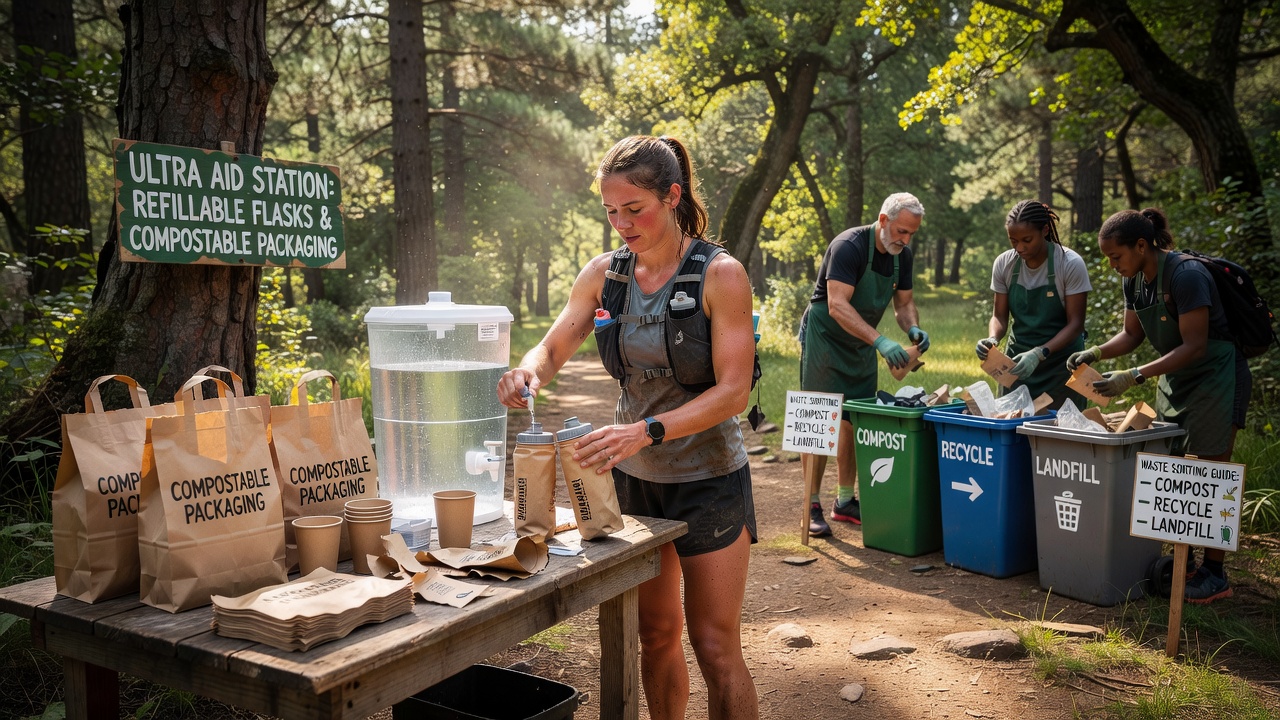
Ultras generate significant waste from gels, bottles, and packaging. Runners can reduce impact by planning nutrition around reusable systems and participating in races with progressive waste policies. Effective strategies include pre-packaging calories in silicone pouches that can be refilled at crew access points and choosing electrolyte powders over bottled liquids when possible.
- Using refillable soft flasks instead of disposable cups at every opportunity conserves resources and reduces cleanup burdens for volunteers.
- Choosing bulk nutrition or homemade options to cut packaging waste dramatically while allowing precise fueling tailored to individual needs.
- Participating in races that provide compostable or reusable systems, which have demonstrated measurable reductions in landfill contributions at recent events.
- Sorting waste at aid stations into designated streams for recyclables, compostables, and landfill to maximize diversion rates.
Real-world examples include events like the Western States Endurance Run, which has implemented zero-waste initiatives at checkpoints, and the Ultra-Trail du Mont-Blanc, which encourages reusable gear through strict rules. These events provide models for how large-scale races can integrate sustainability without slowing participants.
Sustainable Training and Preparation Practices
Beyond race day, training offers opportunities for eco-friendly habits. Schedule runs to coincide with public transit access to trailheads when feasible, or carpool with fellow athletes to lower transportation emissions. Incorporate local trail maintenance days into weekly routines to give back directly to the paths used most often. Nutrition planning during training can mirror race strategies by experimenting with low-waste food options that sustain energy over long distances.
Supporting Conservation Efforts
Beyond personal actions, runners can contribute through donations, volunteering, and advocacy. Many trail organizations partner with races to fund habitat restoration and trail maintenance. Supporting groups that focus on trail preservation ensures future generations enjoy the same pristine environments. Even small efforts, such as picking up litter during training runs, create cumulative benefits across communities.
National Park Service resources detail how recreational users can actively protect public lands. Additional guidance is available through the U.S. Forest Service, which manages vast trail networks and promotes responsible recreation.
FAQ: Common Concerns About Sustainable Ultra Running
Does eco-friendly gear cost more or perform worse?
Many sustainable products now match or exceed traditional performance at similar price points, with added durability benefits that reduce replacement frequency over time.
How can I reduce waste without sacrificing nutrition needs?
Pre-portion homemade foods in reusable pouches and practice with them during training to ensure they meet energy demands without digestive issues.
Are there truly zero-impact races?
While complete zero impact is challenging, many events achieve near-zero waste through careful planning and participant cooperation, setting benchmarks for the industry.
What role does transportation play in overall impact?
Travel to remote events contributes substantially; runners can offset this by choosing nearby races or combining trips with other outdoor activities.
Conclusion
Adopting sustainable practices enhances the trail running experience while protecting the environments we love. By integrating LNT principles, selecting responsible gear, minimizing waste, and supporting conservation, runners can pursue ultras responsibly in 2026 and beyond. These habits not only preserve trails but also foster a community dedicated to long-term stewardship of natural spaces.


No comments yet. Be the first!