 The Runner Story

Introduction
Trail running and ultra running depend on access to pristine natural environments, yet these activities can quickly degrade the very paths that enable them when etiquette is ignored. Sustainable trail use requires deliberate practices around yielding, waste disposal, wildlife interactions, and erosion control. This comprehensive guide draws from major ultra events including the Western States 100, UTMB, Leadville 100, and Hardrock 100 to illustrate real-world applications. Runners who internalize these principles protect public lands, reduce conflicts with other trail users, and ensure future generations can enjoy the sport. Whether preparing for a 50-kilometer race or a multi-day stage event, adopting these behaviors supports long-term trail preservation and community harmony.
Yielding Protocols on Shared Trails
Yielding remains the cornerstone of trail etiquette because ultra runners frequently travel at speeds that surprise hikers, mountain bikers, and equestrians. The universal rule is to yield to uphill travelers, anyone on horseback, and slower-moving parties. When overtaking, announce your approach early with a calm verbal cue such as “On your left” and reduce speed until the other party acknowledges and moves aside. Never assume the trail belongs to you simply because you are racing.
Singletrack sections common in ultras like the Leadville 100 often create natural bottlenecks. Step completely off the trail tread rather than squeezing past, which prevents widening of the path and soil compaction. In steep terrain, wait at a safe pullout and allow descending traffic to pass first when it is safer for everyone. Practicing these steps during everyday training runs builds muscle memory that carries over to race day.
Waste Management During Long Runs
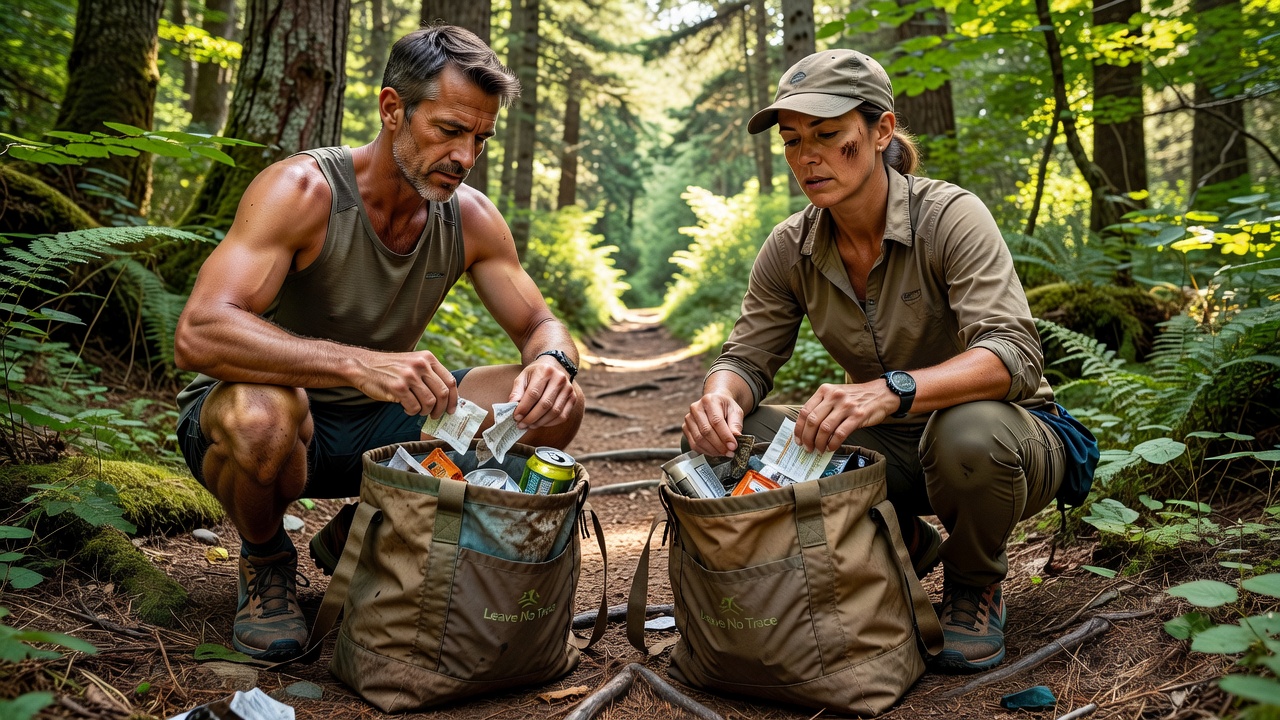
Long-duration efforts generate substantial waste from nutrition packaging, hydration mixes, and personal care items. Every wrapper, gel packet, and tissue must be packed out. Even “biodegradable” items such as apple cores or orange peels can take weeks or months to break down and may attract wildlife. Carry at least two dedicated waste bags—one for food wrappers and another for used tissues or hygiene products—and keep them easily accessible in a vest pocket or waist belt.
At aid stations, use designated trash receptacles rather than leaving items on tables. Events that strictly enforce Leave No Trace principles consistently report lower litter volumes when runners receive pre-race briefings. Never bury waste or attempt to hide it under rocks, as precipitation can wash contaminants into streams. After finishing an event, conduct a final sweep of your drop bags and vehicle to remove any stray wrappers that may have escaped during the race.
Respecting Wildlife and Natural Habitats
Many ultra courses traverse protected habitats where wildlife encounters are common. Maintain a minimum distance of 25 yards from most animals and 100 yards from large predators such as bears or mountain lions. Make noise on blind corners and carry bear spray in regions where it is recommended by local agencies. Never feed or attempt to photograph animals at close range, as this habituates them to humans and increases future conflict risks.
Stay strictly on established tread to protect fragile vegetation and prevent the creation of social trails. During spring wildflower blooms or nesting season, extra caution is required. Guidance from the National Park Service emphasizes that even small deviations can lead to lasting habitat fragmentation. Runners should also avoid disturbing water sources by filling bottles quickly and moving away from stream banks.
Preventing Erosion and Supporting Trail Maintenance
Repeated foot traffic accelerates erosion, especially on steep grades and switchbacks. Avoid cutting corners or creating new lines around obstacles. When trails are muddy, “mud runners” who skirt around puddles widen the corridor and damage surrounding vegetation. Instead, run straight through the center of the trail and accept that your shoes will get dirty.
Many trail systems rely on volunteer maintenance days. Participating in at least one work day per season helps restore drainage features and repair damage caused by heavy race traffic. The U.S. Forest Service and local land managers often publish calendars of upcoming projects that runners can join.
Common Etiquette Mistakes Versus Ideal Behaviors
Real ultra events provide clear contrasts between poor and exemplary conduct:
- Mistake: Playing loud music without headphones on remote singletrack. Ideal: Use bone-conduction headphones or keep volume low enough to hear approaching users and greet them.
- Mistake: Leaving empty flasks or gel wrappers at scenic viewpoints during photo stops. Ideal: Secure all items before pausing and resume running only after confirming nothing remains.
- Mistake: A large training group running four abreast and blocking the entire trail width. Ideal: Run single-file, rotate the lead position every ten minutes, and yield promptly to faster parties.
- Mistake: Ignoring course markings and cutting switchbacks to save time near the finish. Ideal: Follow every flagged turn exactly, even when exhausted, to protect the trail and respect race permits.
These patterns, repeated across events, have led to temporary closures or permit restrictions at several popular venues.
Educating Beginners and Building Community Standards
New runners often learn etiquette through observation rather than formal instruction. Seasoned athletes can model correct behavior during group runs and offer gentle corrections when needed. Local clubs frequently host trail-specific workshops covering topics such as proper pole handling, night-running light courtesy, and post-race cleanup responsibilities. Sharing official resources from the U.S. Fish and Wildlife Service helps beginners understand seasonal restrictions and protected species.
Handling Trail Conflicts Effectively
Conflicts typically arise from speed differentials or differing expectations of quiet. Remain calm, offer a sincere apology if you startled someone, and focus on de-escalation. When a situation involves unsafe behavior, report details to race officials or land managers after the run rather than confronting others on the trail. Preemptive communication—such as posting group-run guidelines on social media—reduces misunderstandings on busy weekends.
FAQ
How should groups manage dynamics on narrow trails?
Run single-file, announce passes clearly, and designate a sweep runner responsible for ensuring no one is left behind. Rotate the front position regularly to share navigation duties.
What if signage is missing or confusing during a training run?
Carry a map and GPS backup, but never create new paths. Report missing or damaged signs to land managers after completing your run so they can be replaced promptly.
Can I run with trekking poles on crowded trails?
Yes, but collapse poles and carry them horizontally when passing others. Always yield right-of-way and avoid swinging poles near other users.
How do I handle nighttime encounters with other trail users?
Dim or angle your headlamp downward when approaching someone, announce your presence early, and pass slowly while thanking them for yielding.
Conclusion
Mastering trail etiquette elevates ultra running from an individual pursuit into a collective responsibility. By consistently applying yielding rules, meticulous waste management, wildlife respect, erosion prevention, and thoughtful conflict resolution, runners safeguard the landscapes they cherish. Integrate these practices into every training session and race to support sustainable access and inspire the broader trail community.


No comments yet. Be the first!