 The Runner Story

Introduction to Creek Crossings in Ultra Trail Running
Ultra trail running in 2026 demands mastery over varied terrain, including unpredictable water crossings that can derail even seasoned athletes. Creek crossings test balance, decision-making, and risk management on technical courses. This guide delivers actionable skills to reduce injury risk while maintaining race efficiency, drawing from real events like UTMB. Runners often encounter these obstacles in remote mountain environments where conditions change rapidly due to weather or seasonal snowmelt. Understanding how to approach them systematically can save valuable time and prevent race-ending incidents.
Understanding the Risks of Water Obstacles
Fast-moving water, slippery rocks, and cold temperatures create hazards that lead to falls, hypothermia, or lost time. Runners must assess depth, current speed, and entry/exit points before committing. Poor choices amplify fatigue in long-distance events. In alpine regions, water levels can rise unexpectedly within minutes, turning a shallow stream into a dangerous torrent. Cold water immersion also shocks the system, reducing muscle function and increasing the chance of cramps. Historical data from major ultras shows that a significant portion of DNFs stem from injuries sustained during poorly executed crossings rather than pure endurance failure.
Foot Placement Techniques for Stability
Plant feet firmly on flat rock surfaces or gravel beds rather than rounded stones. Angle toes slightly downward for grip and keep knees soft to absorb impact. Shift weight forward gradually to avoid sudden slips. Practice scanning three steps ahead to plan your path through the flow. Focus on distributing pressure evenly across the midfoot to maintain traction on algae-covered surfaces. In deeper sections, use a slight side-step motion to counteract current force while keeping your center of gravity low. These techniques become second nature only after deliberate repetition in training environments that mimic race conditions.
Balance Drills to Build Confidence
Beginners start with single-leg stands on stable surfaces for 30 seconds per side. Progress to unstable platforms like foam pads, then add light resistance bands. Advanced athletes simulate crossings on slacklines or in shallow streams while maintaining upright posture. Repeat drills three times weekly to sharpen proprioception. Incorporate dynamic variations such as catching a ball while balancing or closing eyes briefly to heighten sensory awareness. Over several weeks, these exercises translate directly to faster, more secure movements when facing real currents during races.
Gear Recommendations for Quick-Dry Performance
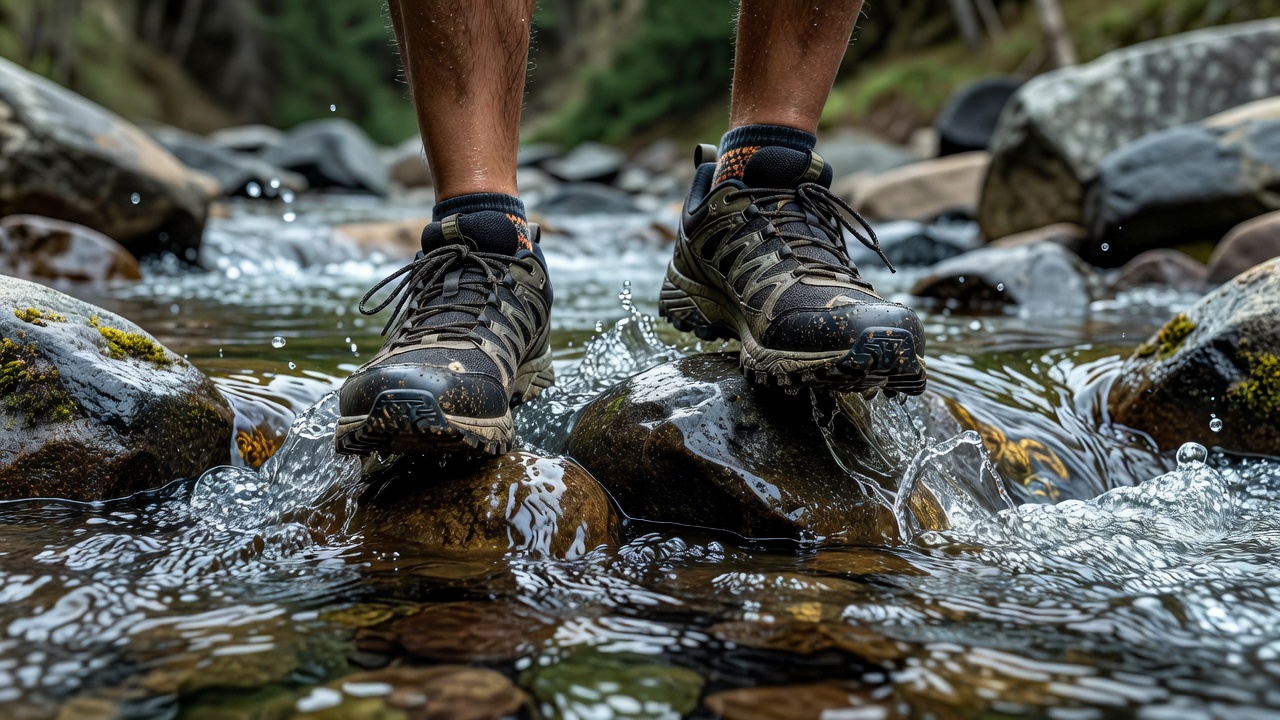
Choose trail shoes with aggressive lugs and quick-dry uppers. Pair them with lightweight gaiters to block debris. Consider trekking poles for added stability in deeper flows. Test all equipment in training to confirm comfort during prolonged wet conditions. Modern quick-dry models feature mesh panels that expel water rapidly, reducing weight gain by up to half compared to older designs. Poles with cork grips provide better purchase when hands are wet, while adjustable lengths allow customization for different water depths. Always carry spare socks in a waterproof bag for post-crossing comfort on long stages.
Real-World Examples from UTMB and Similar Events
At the UTMB Mont-Blanc, runners face multiple alpine creeks where precise footwork prevents race-ending slips. Veterans often pause briefly to evaluate currents before crossing, saving precious seconds overall through better route choices. Similar challenges appear in events like the Hardrock 100 and TDS, where athletes report that mastering crossings early in the race preserves energy for later climbs. One documented case involved a top finisher who lost fifteen minutes after a slip but recovered by applying learned pole-assisted techniques in subsequent fords.
Step-by-Step Progressions for All Levels
Beginner: Practice in ankle-deep water focusing on slow, deliberate steps and breathing control. Intermediate: Introduce faster currents with poles for support while timing each crossing. Advanced: Incorporate timed crossings under race simulation conditions while monitoring heart rate and fatigue levels. Build volume gradually to avoid overuse injuries. Structure sessions as progressive overload: start with ten short crossings, then increase duration and complexity over four-week cycles. Include recovery protocols such as immediate warm-up routines after cold water exposure to maintain circulation.
Comparison of Crossing Methods
- Direct wading: Fastest in shallow water but higher slip risk on uneven bottoms.
- Pole-assisted: Improves balance in moderate flows with minimal time loss and better stability.
- Rock-hopping: Efficient on exposed stones yet demands precise timing and strong ankles.
- Detour route: Safest option in high water but adds distance and elevation gain.
Each method requires situational judgment based on water speed, visibility, and personal fatigue. Direct wading suits calm, clear conditions while pole use excels when currents exceed walking pace.
Training in Varied Conditions
Simulate race scenarios by training in different weather and water temperatures. Schedule sessions after long runs to practice crossings when legs are already fatigued. Use local streams or controlled environments like indoor pools with current generators for consistent practice. Track progress through metrics such as crossing time and perceived stability to identify weaknesses.
Common Mistakes to Avoid
Many runners rush into crossings without scouting, leading to poor foot placement. Others over-rely on one technique instead of adapting to conditions. Ignoring post-crossing drying can cause blisters or chills that compound over hours. Always prioritize controlled movement over speed in the moment.
Safety Protocols and Decision Making
Establish clear criteria for when to abort a crossing, such as water above knee height or visible debris. Carry a whistle and know race-specific emergency signals. Reference authoritative outdoor safety guidelines from organizations like the National Park Service for broader principles on water hazards. In group settings, communicate plans with fellow runners before entering the water.
Frequently Asked Questions
How do I overcome fear of deep water?
Start with controlled training sessions and visualize successful crossings. Focus on breathing to stay calm and reduce panic responses. Gradual exposure therapy through repeated low-stakes practice builds resilience.
What safety protocols apply during races?
Always scout ahead, avoid solo crossings in unknown areas, and carry a whistle. Follow race briefings for mandatory gear like life vests in extreme conditions.
Should I remove shoes for crossings?
Generally no, as shoes protect feet from rocks and provide grip. Only consider removal in very shallow, sandy areas where traction is not an issue.
How does cold water affect performance?
It causes vasoconstriction and reduced muscle efficiency. Quick transitions and immediate movement post-crossing help restore warmth and function.
Conclusion
Mastering creek crossings transforms potential obstacles into manageable elements of ultra trail running. Consistent practice, smart gear, and methodical progressions prepare athletes for 2026 events with greater confidence and safety. By integrating these skills into regular training, runners can approach technical courses with the competence needed to finish strong.


No comments yet. Be the first!